Why Fresh Food Vending Improves Employee Retention
Fresh food vending and employee retention have a stronger connection than most organizations realize — and it's not just about snacks. In a labor market where employees have genuine leverage, workplace amenities increasingly influence whether people stay or leave. Among those amenities, food access consistently ranks in the top tier of what workers say matters to them.
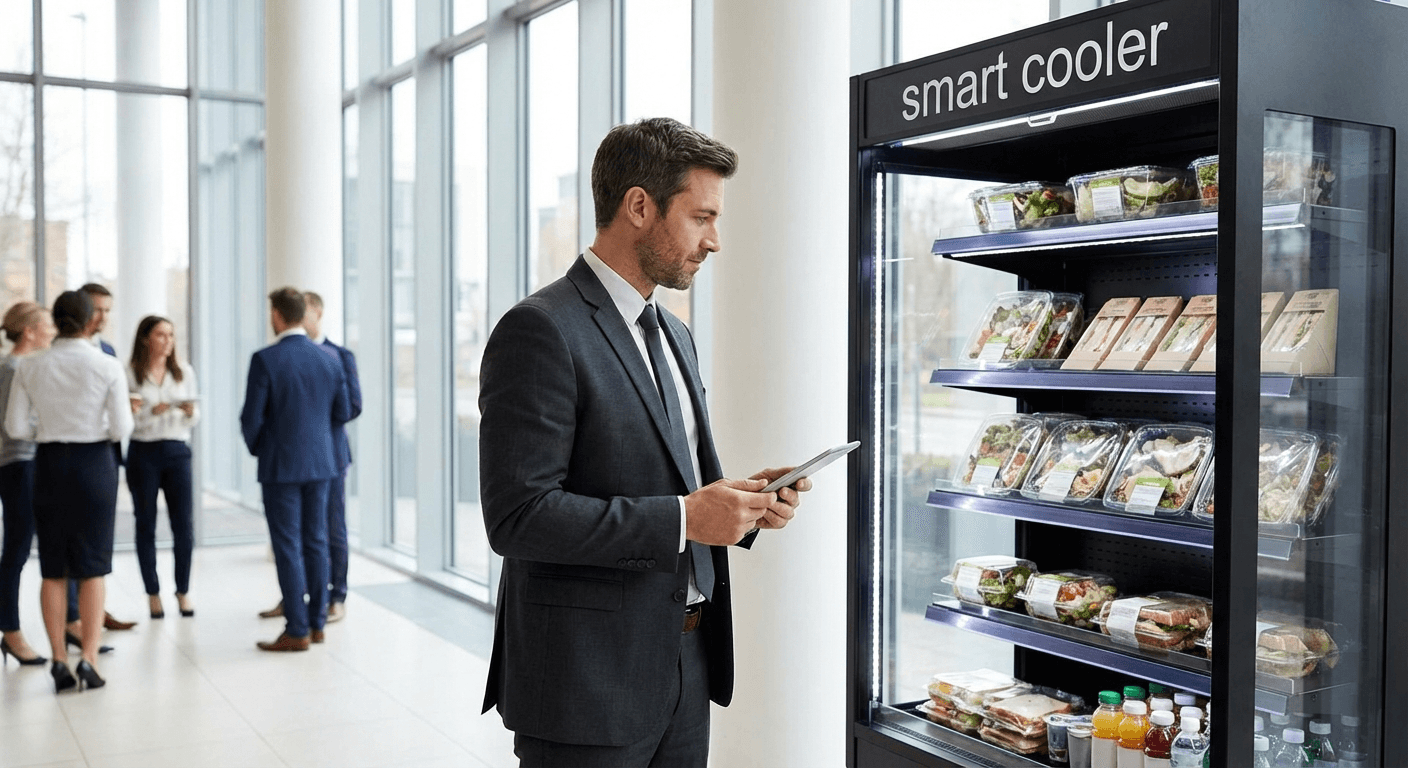
Smart coolers are one of the highest-ROI retention tools available to facility managers: low cost to implement (often zero with managed service agreements), high visibility to employees, and directly tied to something people experience every single day.
Here's why fresh food vending moves the needle on retention — and how to think about implementing it strategically.
1. Fresh Food Access Signals That the Organization Cares
Employees make constant informal assessments of whether their employer respects them. The quality of the breakroom, the state of the bathrooms, the responsiveness of facilities — these things communicate something about organizational culture even when no one says it out loud.
Stocking a spiral vending machine with Doritos and year-old granola bars sends a message. So does replacing it with a refrigerated unit full of fresh salads, quality sandwiches, and real beverages.
When organizations invest in visible quality-of-life improvements, employees notice. And employees who feel seen and valued are less likely to update their LinkedIn profiles.
2. It Reduces the Daily Friction That Wears People Down
Long lunch departures are one of the understated sources of workplace dissatisfaction. When the nearest food option requires a 15-minute drive, a 30-minute wait, and the inevitable post-lunch traffic, employees lose more than time — they lose the mental decompression that a real break provides.
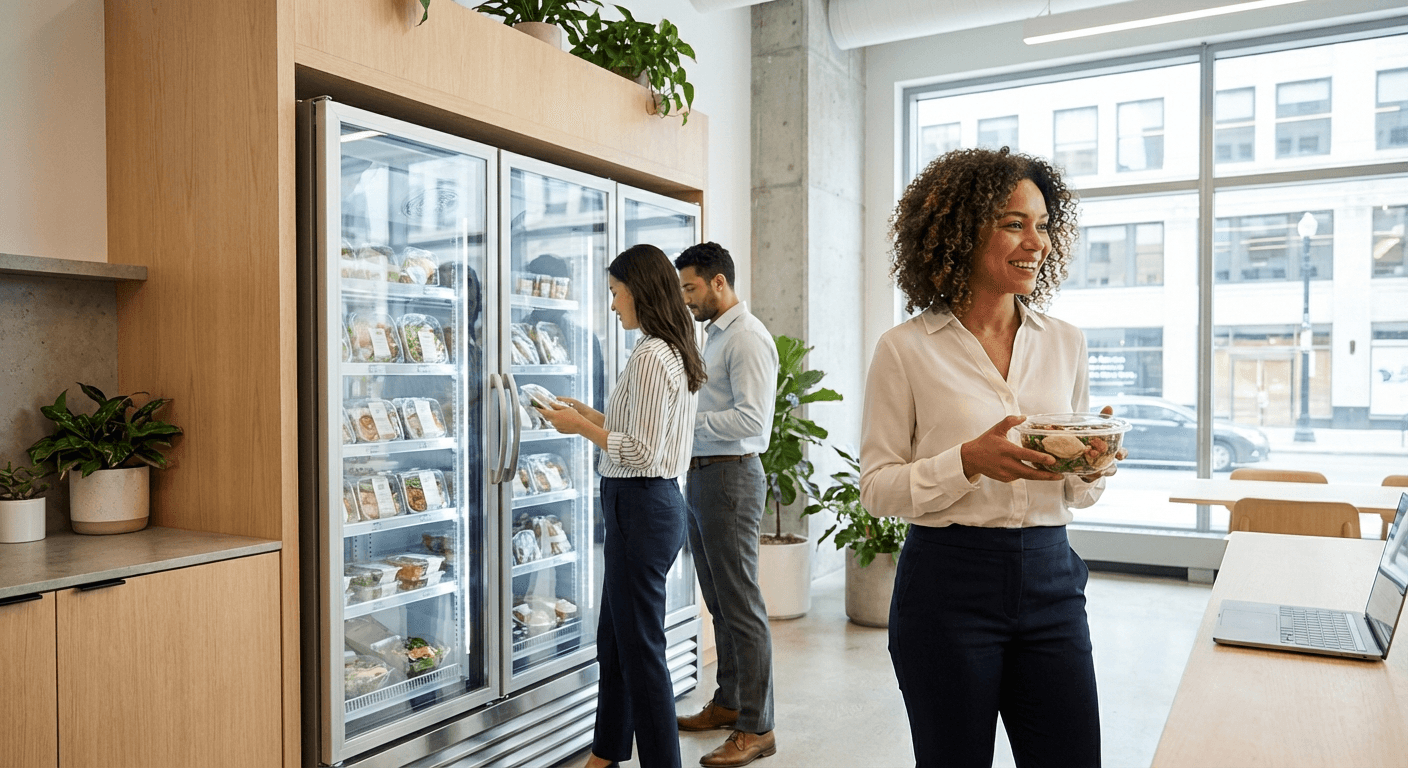
Smart coolers give employees the option to grab a quality meal in under 5 minutes without leaving the building. For suburban office parks, industrial facilities, and healthcare campuses where off-site options are limited or nonexistent, this is a material quality-of-life improvement.
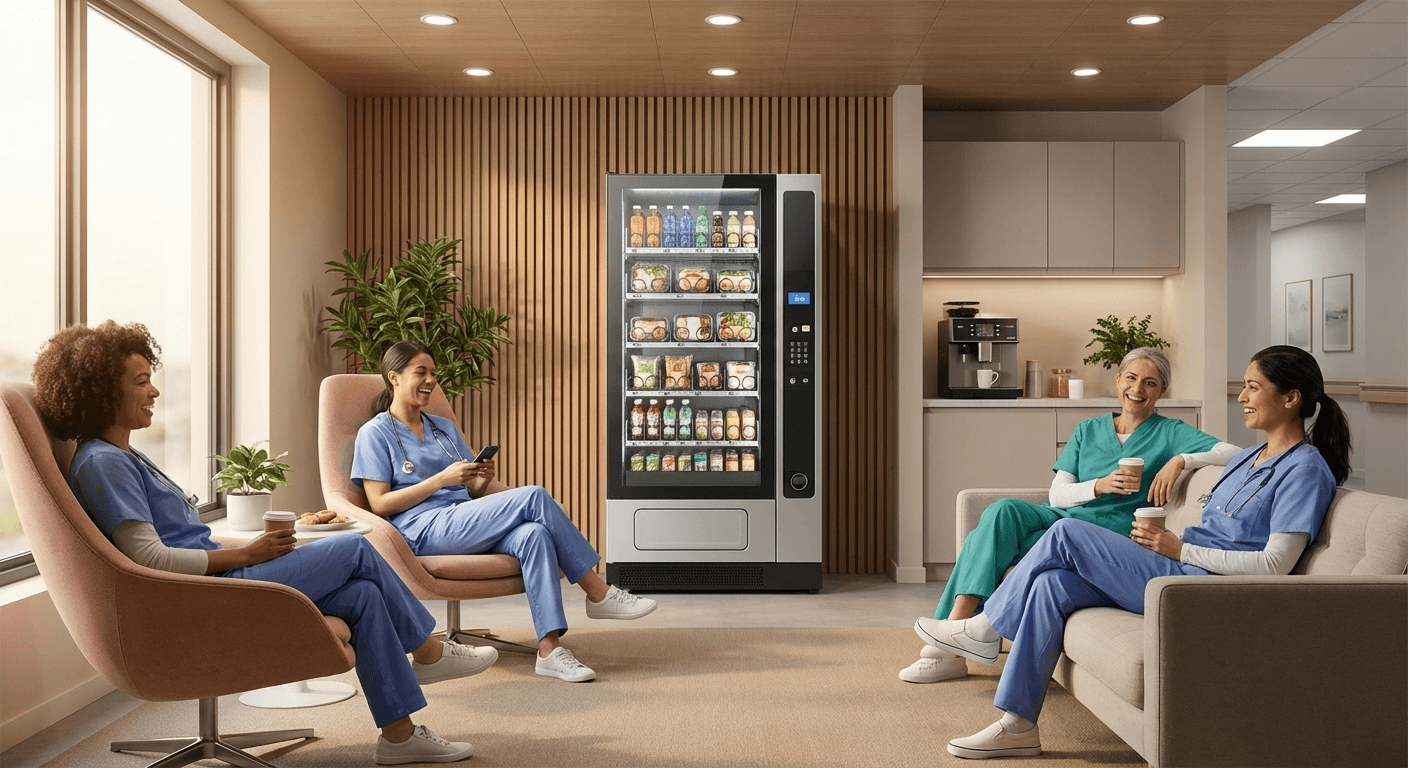
For shift workers specifically — healthcare staff, manufacturing employees, call center teams — a quick, accessible meal option during a short break can mean the difference between a manageable shift and a grueling one.
3. It Supports the Health Benefits You're Already Paying For
Organizations spend significant money on health insurance premiums, wellness programs, and benefits administration. Fresh food vending complements that investment. Employees who have convenient access to nutritious food make better choices — not because of willpower, but because the healthy option is the easy option.
This matters for retention in two ways: employees who feel physically better at work are more satisfied with their job, and organizations that demonstrably invest in employee health have stronger cultures that attract health-conscious talent.
The alternative — stocking machines with high-sodium, high-sugar shelf-stable items — actively undermines the wellness message employers spend heavily to communicate.
4. It's a Differentiator in Competitive Talent Markets
In metro Atlanta's competitive hiring environment, candidates evaluate job offers holistically. Base salary matters most, but secondary factors — commute, culture, benefits, office quality — influence the final decision, especially when offers are close.
"We have fresh food in the office" is a small but concrete differentiator. It's the kind of detail that gets mentioned in interviews, referenced in employee reviews on job sites, and shared in conversations between employees and prospective candidates.
For companies competing with larger organizations that offer full cafeterias, a well-run smart cooler program narrows that gap meaningfully.
5. Night-Shift and Non-Standard Hours Workers Notice Especially
The employees most affected by poor food access are those working outside normal business hours: night-shift nurses, second-shift manufacturing workers, evening call center staff, weekend security teams.
These employees often feel like second-class citizens in facilities designed around a 9–5 world. When a facility invests in food access that actually serves their hours, the impact on satisfaction and loyalty is disproportionate.
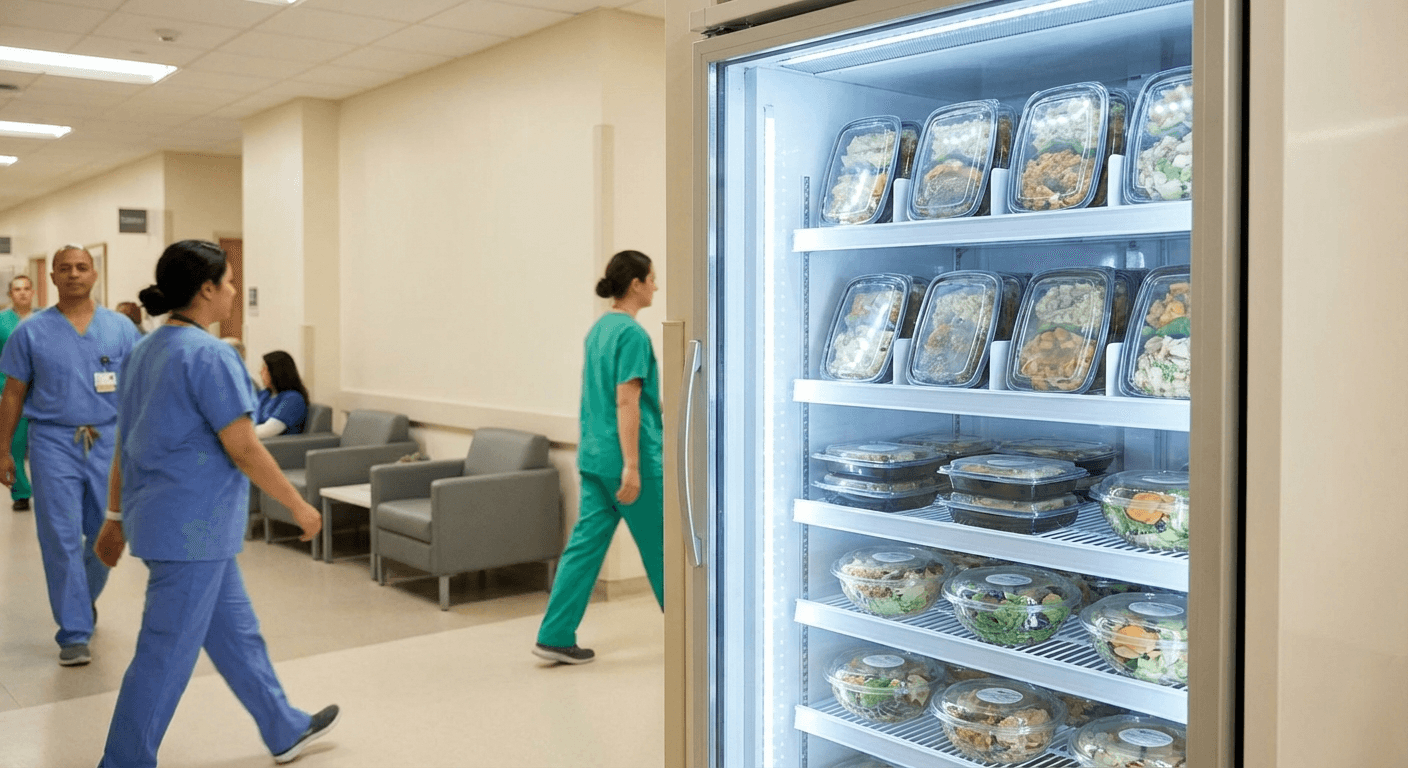
For healthcare facilities in particular, this is a significant opportunity. Nursing shortages are severe, turnover is expensive, and night-shift staff consistently report food access as one of their top workplace complaints. Solving it is a low-cost, high-signal investment. See more in our post on healthcare staff retention and workplace amenities.
6. It Supports Return-to-Office Efforts
Organizations asking employees to come back to the office need to make the office worth coming back to. Free coffee used to be enough. It isn't anymore.
Fresh food access is one of the amenities that consistently appears in employee surveys about what would make them more willing to spend time in the office. It's practical, immediate, and signals investment in the in-person work experience.
For facility managers navigating the return-to-office dynamic, smart coolers are a cost-effective way to improve the daily experience without construction, renovation, or long procurement cycles.
How to Implement Fresh Food Vending as a Retention Tool
The program works best when it's positioned and managed deliberately, not just installed and forgotten.
Get Employee Input First
Survey your workforce before installation. Ask what they'd want to see in the cooler, what dietary needs to accommodate, and what times of day food access matters most. This produces a better menu and creates buy-in — employees who shaped the program are more likely to use and advocate for it.
Communicate the Investment
When the cooler goes in, tell employees why. A short message from facilities or HR framing it as an investment in their wellbeing costs nothing and multiplies the goodwill the program generates.
Track Usage and Iterate
Work with your vendor to review usage data monthly. Which items sell consistently? Which never move? What times of day see the most activity? Menu optimization based on real data keeps the program fresh (literally and figuratively) and prevents the staleness that kills utilization over time.
Offer Subsidies When Possible
Some organizations use fresh food vending as part of a broader meal subsidy program — contributing a fixed amount per employee per day toward purchases. Even modest subsidies dramatically increase utilization and reinforce the message that the organization is investing in employee wellbeing.
The ROI of Fresh Food Vending for Retention
Replacing an employee costs the equivalent of 6–9 months of their salary when you account for job posting costs, recruiter fees, interview time, onboarding, and the productivity gap while the new hire ramps up.
Fresh food vending programs with managed service agreements typically cost the facility nothing upfront. Even if the program contributes to retaining just one or two employees per year who might otherwise have left, the financial return is substantial.
The non-financial returns — improved morale, stronger culture, better recruitment storytelling — are harder to quantify but equally real.
See What's Possible for Your Facility
Replenished Markets installs and manages smart cooler programs across metro Atlanta for corporate offices, healthcare facilities, manufacturing plants, and more. Our fresh food programs are zero cost to the facility and fully managed by our team.
Contact us to schedule a consultation. We'll discuss your facility's specific needs, show you sample menus, and walk through what a program would look like for your team. You can also explore fresh food vending for corporate offices to see how similar businesses approach it.