Why Hospitals Are Switching to Fresh Food Vending in 2026
Hospitals switching to fresh food vending in 2026 aren't doing it because it's trendy. They're doing it because the operational and financial case is becoming impossible to ignore — and because healthcare workers are demanding better.
The convergence of three factors is driving adoption: an ongoing nursing shortage that makes retention investments essential, a managed service model that eliminates facility cost and burden, and a generation of healthcare workers who won't accept substandard food access as a baseline expectation.
Here's what's actually driving the shift.
The Problem That's Been Ignored Too Long
Hospital cafeterias were designed for a different era. They're built around the assumption that food service demand is highest at 7 AM, 12 PM, and 5 PM — which it is for day-shift employees and visiting families. For the thousands of healthcare workers who arrive at 7 PM and leave at 7 AM, the cafeteria might as well not exist.
Traditional vending machines filled the gap for decades. In 2026, after three years of intense healthcare labor market competition, that gap is no longer acceptable.
Night-shift nurses, ER technicians, ICU staff, and support workers have options. They can leave your facility for a competitor that has invested in their daily experience. Many are doing exactly that.
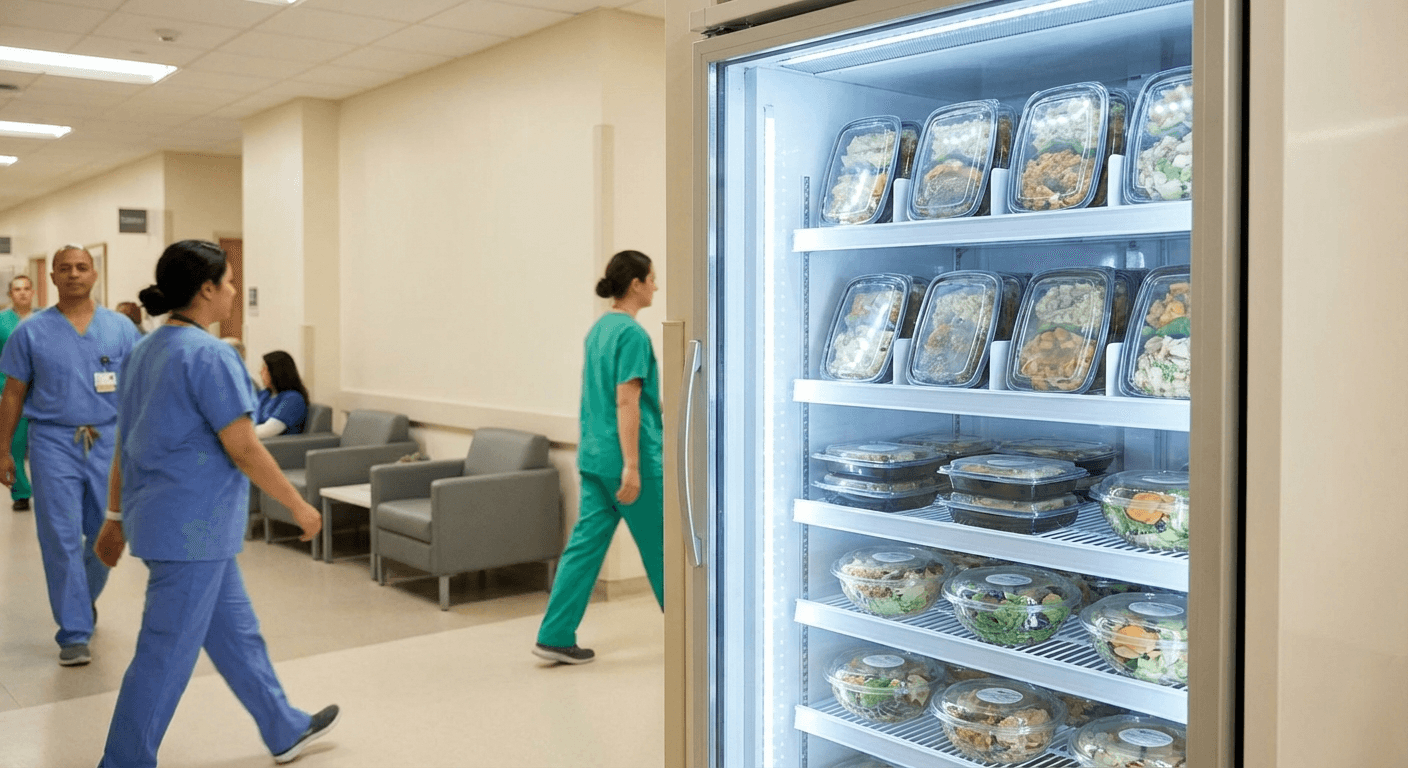
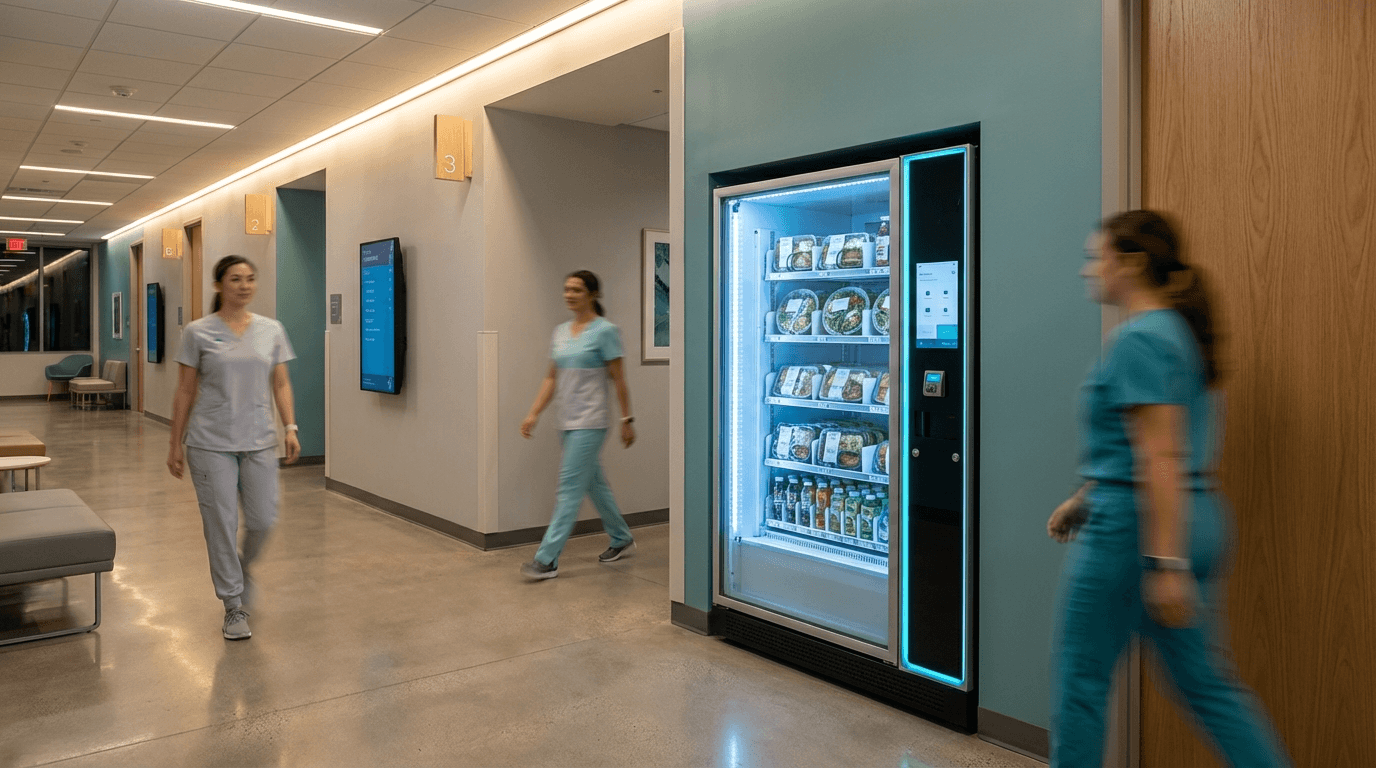
Fresh food vending for hospitals addresses the root cause: quality, accessible nutrition available at any hour, without any operational burden on the facility.
Five Reasons Hospitals Are Making the Switch
1. Nursing Retention Is Expensive to Ignore
Replacing a registered nurse costs the equivalent of months of salary when you account for recruitment, onboarding, and the productivity gap during ramp-up. Nursing turnover at many facilities runs at high enough rates that the annual cost of replacement is a significant line item.
Workplace amenities, including food access, are among the factors nurses cite when evaluating whether to stay at a facility. They're not the primary factor, but they accumulate. A nurse who consistently has poor food access on night shifts — who feels like the organization doesn't invest in basic quality of life — is more likely to accept the next recruiter call.
Fresh food vending is one of the lowest-cost, highest-visibility retention investments available. And under a managed service model, it's often free.
2. The Managed Service Model Removes Every Objection
Three years ago, hospitals hesitated to adopt smart coolers because they were perceived as a capital investment and operational responsibility. That model has been largely replaced.
Today, the standard arrangement is:
- Equipment: Provided by the vendor at no cost
- Installation: Handled by the vendor
- Stocking: Managed by the vendor, based on consumption data
- Maintenance: Vendor's responsibility
- Food safety: Vendor's liability, with full documentation
The hospital provides floor space and an electrical outlet. Everything else is the vendor's problem.
With zero capital investment and zero operational burden, the question changes from "can we afford this?" to "why haven't we done this yet?"
3. Night-Shift Staff Have a Documented, Solvable Problem
Healthcare organizations spend significant energy on nursing satisfaction surveys and root-cause analysis of turnover. Food access is a recurring finding in those analyses, particularly for night-shift and weekend staff.
The frustrating aspect is that it's clearly solvable. Unlike staffing ratios or management culture — which require significant time and resources to address — food access can be improved in weeks with the right vendor.
Hospitals that have installed smart coolers in ED break rooms, ICU staff areas, and nursing station corridors consistently report improvements in staff satisfaction scores related to facility and workplace quality.
4. Patient Experience Is Connected to Staff Experience
The correlation between staff experience and patient experience in healthcare is well established. Nurses who feel cared for by their organization provide better patient care. HCAHPS scores — which factor into Medicare reimbursements — reflect this relationship.
Investing in staff food access isn't just a retention strategy; it's a patient care strategy. Facilities that treat staff wellbeing seriously see the signal ripple through to patient satisfaction metrics.
5. Fresh Food Technology Has Caught Up
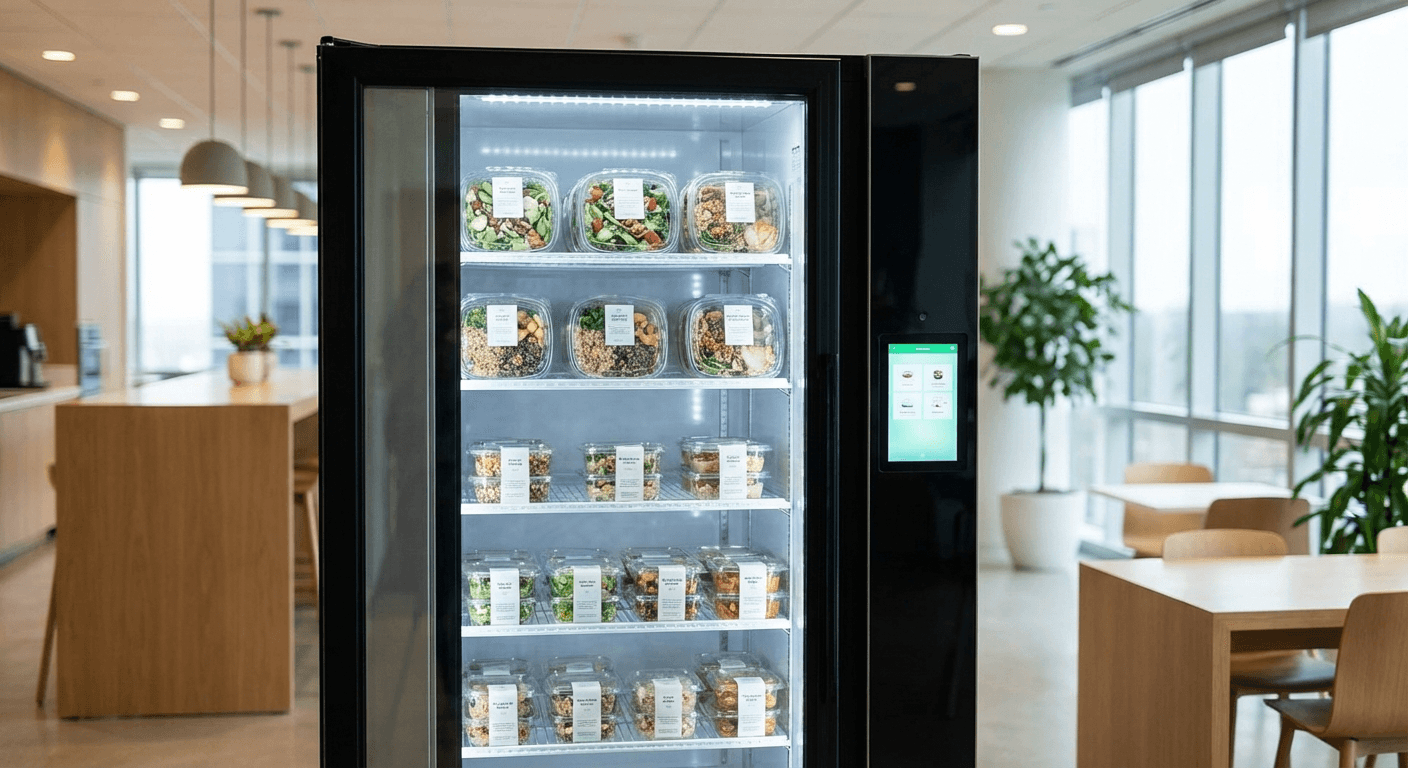
Early smart coolers were expensive, unreliable, and temperamental. The technology has matured significantly. Current-generation units offer:
- Continuous temperature monitoring with automated alerts
- Real-time inventory tracking that prevents stockouts
- Multi-payment options including contactless, mobile wallets, and badge integration
- Compact footprints that fit in hospital break rooms
- Remote monitoring so vendors know about issues before staff report them
The reliability concern that drove some facilities to hesitate is no longer relevant with mature vendors operating proven equipment.
What Hospitals Should Look for in a Fresh Food Vending Partner
The quality of the program depends entirely on the quality of the vendor. For healthcare environments specifically, look for:
Healthcare experience: Has the vendor served other hospitals? Do they understand the food safety standards, the security protocols, and the operational constraints of a healthcare environment?
HACCP-compliant food preparation: All food should be prepared under Hazard Analysis Critical Control Points protocols. Ask for documentation.
Continuous temperature monitoring: Not manual daily checks — automated, real-time monitoring with alert protocols for temperature excursions.
References from comparable accounts: Call other hospitals they serve. Ask specifically about service reliability, food quality consistency, and how they handle problems.
Menu diversity for a healthcare workforce: Plant-based options, gluten-free items, high-protein choices — a healthcare workforce is diverse and the menu needs to reflect that.
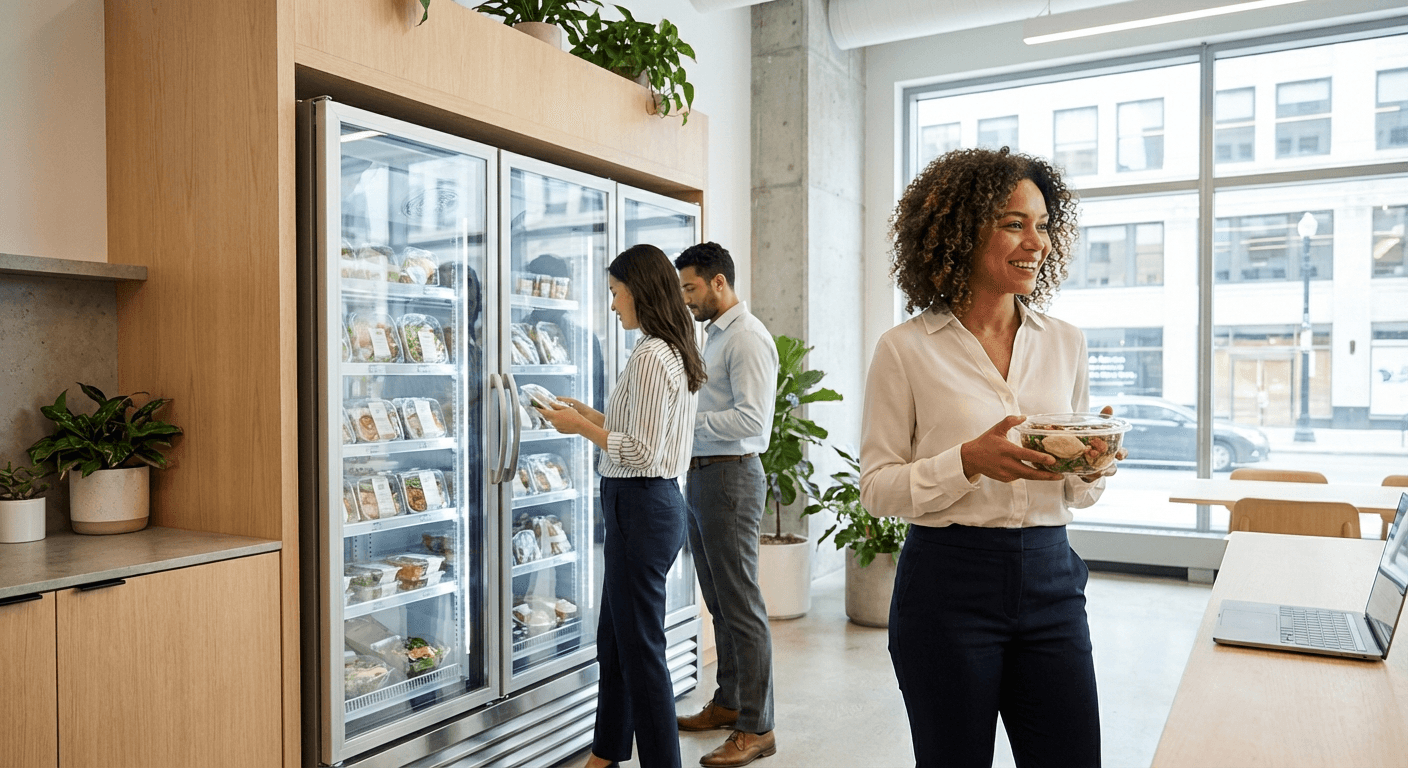
Local sourcing where possible: Fresh food from local kitchens means shorter supply chains, better ingredient quality, and more frequent restocking cycles.
Which Hospital Departments Benefit Most
While smart coolers improve food access across an entire facility, the departments with the most to gain are those with the most severe food access gaps:
- Emergency departments: Unpredictable breaks, 24/7 operations, high staff turnover — see fresh food vending for emergency departments
- ICU and CCU units: Staff who often can't leave their section for extended periods
- Night-shift nursing floors: The population most consistently underserved by cafeteria operating hours
- Environmental services and security: Support staff who work overnight and are often invisible in amenity conversations
Making the Business Case Internally
For hospital administrators making the case for fresh food vending investment to leadership:
The cost is often $0: Under managed service agreements, there's typically no capital investment. The only "cost" is floor space.
The comparison is against current spend: Compare the cost of smart cooler implementation against the cost of one additional nursing turnover. The math is straightforward.
Frame it as a retention investment, not a luxury: Amenity improvements that demonstrably affect retention are retention investments. Document the implementation as such for reporting purposes.
Start with a pilot: A single unit in the most impacted department — typically the ED break room — generates utilization data and staff feedback that makes the expansion case for you.
Ready to Explore Fresh Food Vending for Your Hospital?
Replenished Markets provides smart cooler programs for healthcare facilities across metro Atlanta. We bring the equipment, manage the stocking and maintenance, handle all food safety compliance, and give your team zero operational burden.
Contact us to schedule a consultation and taste test. We'll walk through your facility's specific layout and staffing patterns and recommend a program that addresses your actual needs.