Smart Cooler Vending in Atlanta: What Facility Managers Need to Know
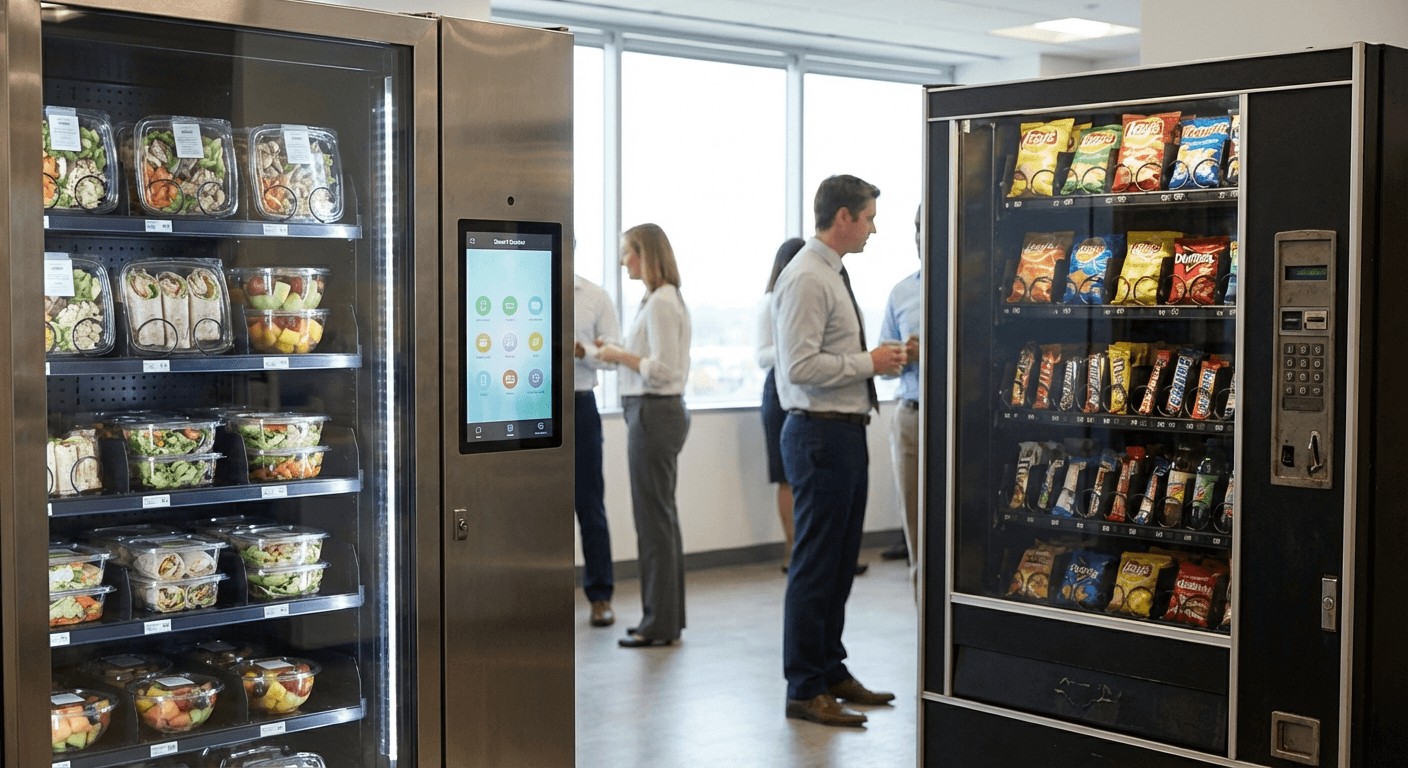
Smart cooler vending in Atlanta has moved from a novelty to a standard amenity across the metro area's corporate offices, hospitals, universities, and manufacturing facilities. If you manage a building in Atlanta and you're still relying on spiral vending machines from the 1990s, you're behind — and your employees know it.
This guide covers everything: what smart cooler vending is, which Atlanta facility types benefit most, how to evaluate providers, what implementation looks like, and how to calculate whether it makes sense for your building.
What Is Smart Cooler Vending?
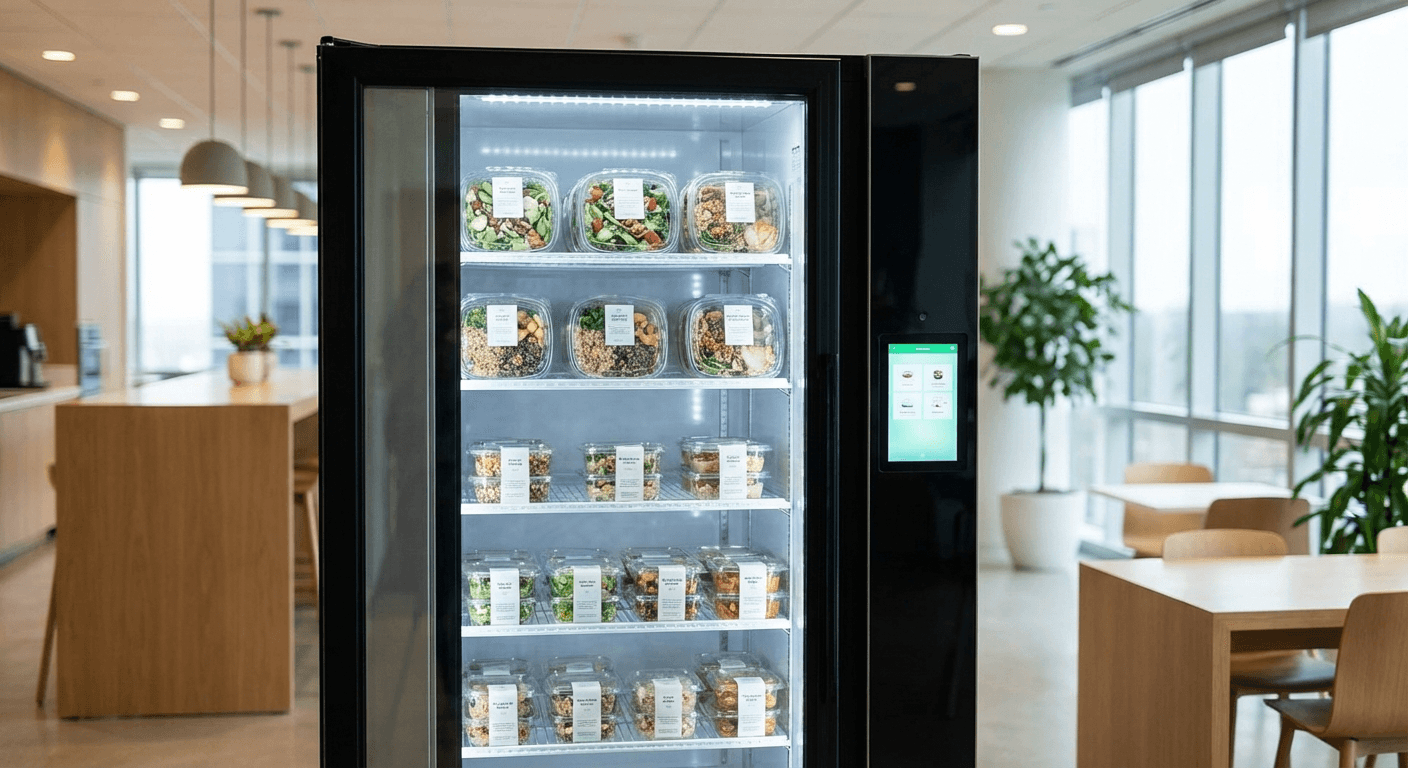
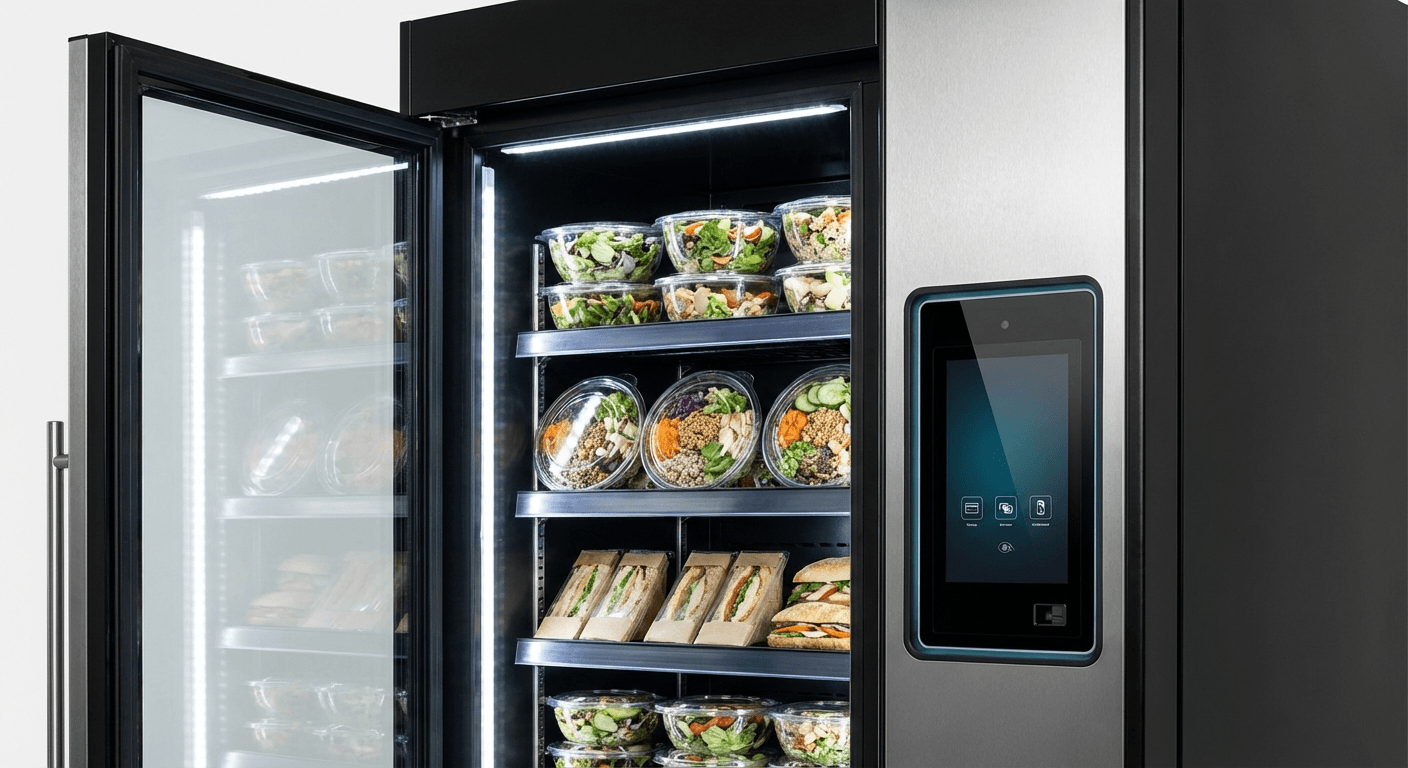
A smart cooler is a refrigerated, self-service food unit that holds fresh-prepared meals alongside cashless payment technology and real-time inventory monitoring. Unlike traditional vending machines that dispense shelf-stable snacks, smart coolers hold perishable items — salads, sandwiches, grain bowls, soups, yogurt, fresh beverages — maintained at safe temperatures 24 hours a day.
The "smart" part refers to the backend: sensors that track exactly what's in the unit, payment systems that accept tap-to-pay and mobile wallets, and management dashboards that alert the service team when inventory is low, temperatures drift, or a product is about to expire.
For a full breakdown of the technology, see what is a smart cooler.
Why Atlanta Facilities Are Making the Switch
Atlanta's business environment creates specific demand drivers for smart cooler vending that are stronger than in many other markets.
The Competition for Talent
Metro Atlanta is one of the fastest-growing business markets in the Southeast. Healthcare, logistics, fintech, media, and professional services companies are all competing for the same talent pool. Workplace amenities — including quality food access — have become legitimate differentiators in recruiting and retention decisions. Candidates compare job offers; employees compare workplaces. Smart coolers are a visible, tangible signal that a company invests in its people.
Atlanta's Suburban Office Market
Much of Atlanta's office density is in suburban corridors — Midtown, Buckhead, Perimeter, Gwinnett, Marietta — where many employees work in office parks with limited walkable lunch options. When the nearest restaurant is a 15-minute drive, a well-stocked smart cooler isn't just convenient; it's the only option.
Atlanta's Healthcare Footprint
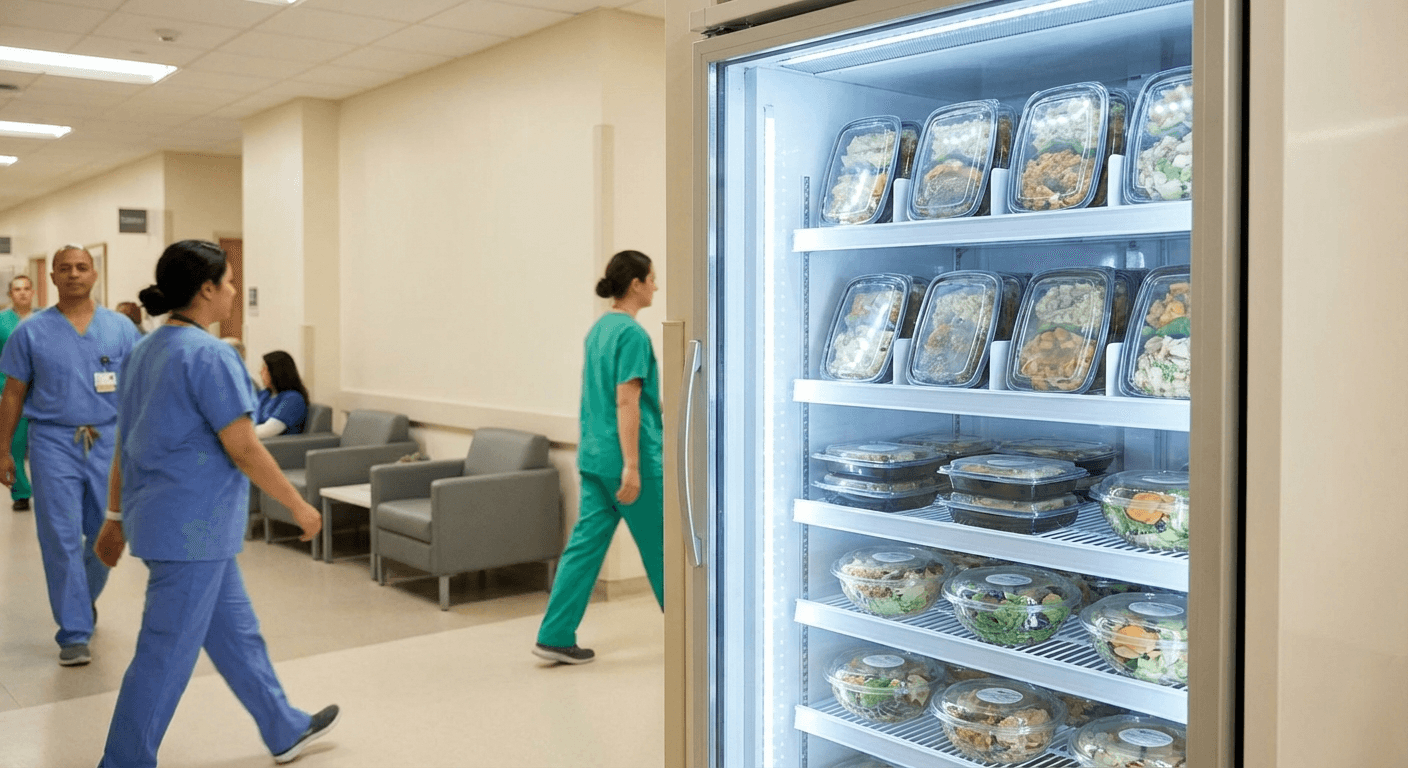
Metro Atlanta is home to one of the largest concentrations of healthcare facilities in the Southeast. WellStar, Emory, Grady, Northside, and dozens of other hospital systems operate around the clock. Night-shift nutrition is a real and persistent problem for healthcare facilities, and smart coolers are the most practical solution. See how hospitals are approaching this in why hospitals are switching to fresh food vending in 2026.
Workforce Diversity
Atlanta's workforce is one of the most diverse in the country — by diet, culture, and health needs. A smart cooler program that only offers ham sandwiches will fail. Providers who customize menus to reflect the actual workforce demographics at each account see far better adoption rates.
Which Atlanta Facility Types Benefit Most
Corporate Offices (50–500+ Employees)
Mid-size companies in office parks without on-site cafeterias are the ideal fit. Smart coolers fill the food service gap without requiring kitchen construction, food service staff, or operational management. Employees get fresh meals; facility managers get a zero-burden amenity.
Explore fresh food vending for corporate offices.
Hospitals and Healthcare Facilities
24/7 operations demand 24/7 food access. Smart coolers serve night-shift staff, ER teams, and on-call physicians who can't leave the facility for meals. See fresh food vending for hospitals.
Universities
Atlanta universities face the dining gap problem: dining halls close, but students study until midnight. Smart coolers in libraries, dormitories, and academic buildings extend food access without extending food service hours.
Manufacturing Plants
Industrial facilities with multiple shifts and limited nearby restaurants rely on smart coolers to keep workers fueled without long break departures. See fresh food vending for manufacturing facilities.
Senior Living Communities
Assisted living facilities use smart coolers to supplement structured meal programs, giving residents and visiting families convenient snack access between scheduled dining times.
Property Managers and Commercial Office Buildings
Building owners use smart coolers as a tenant amenity — a differentiator in a competitive leasing market where tenant experience directly affects renewal rates.
How to Evaluate Smart Cooler Vendors in Atlanta
Not all smart cooler vendors are equal. The differences matter more than they appear upfront.
Food Quality Is the Foundation
Everything else is secondary to the food. Vendors should be able to show you their current menus at comparable accounts and offer a taste test before you sign anything. If they can't or won't, that tells you something.
Ask where the food comes from. Local kitchen partnerships produce fresher product than national distribution networks. In Atlanta, local sourcing also matters culturally — employees notice and appreciate it.
Service Frequency and Reliability
How often does the vendor restock, and what triggers a restocking visit? Demand-driven restocking (based on real-time inventory data) is superior to fixed schedules. Ask about average time-to-restock after a low-stock alert and response time for maintenance issues.
Technology Standards
At minimum, require:
- Contactless payment (tap, mobile wallet, chip)
- Real-time inventory tracking
- Continuous temperature monitoring with automated alerts
- Regular usage reporting shared with the facility
References from Similar Accounts
Ask for references from Atlanta facilities with similar size and industry. Call them and ask specifically about what happens when service problems occur — not just whether they're satisfied overall.
Contract Terms
Multi-year agreements are standard, but they should include performance clauses. You should be able to exit if the vendor consistently fails to meet service standards. Read the exclusivity terms carefully — some contracts restrict all alternative food vendors, others are narrower.
The Implementation Process
A typical Atlanta smart cooler installation looks like this:
Assessment (1–2 weeks)
- Site visit to identify optimal placement locations
- Electrical and network infrastructure review
- Employee count and shift structure analysis
- Review of existing vending or food service contracts
Proposal and Agreement (1–2 weeks)
- Vendor presents equipment recommendations and menu plans
- Contract review and negotiation
- Agreement on service frequency, reporting, and performance standards
Installation (1 day)
- Equipment delivery and positioning (typically 2–4 hours per unit)
- Electrical and internet connectivity setup
- System calibration and initial stocking
- Staff walkthrough and communication
Optimization (ongoing)
- Weekly or biweekly menu rotation based on consumption data
- Monthly reports shared with facility management
- Quarterly business reviews to align on performance and goals
What Atlanta Facilities Typically Pay
The most common model for Atlanta businesses is a managed service agreement: the vendor provides the equipment, handles all stocking and maintenance, and carries all food safety responsibility — at zero cost to the facility.
In exchange, the vendor earns revenue from product sales. Some agreements include revenue sharing for the facility (typically 5–15% of gross sales at high-volume accounts).
Facilities that prefer to own their equipment can purchase units outright (range: $5,000–$25,000+ depending on specs) and negotiate service agreements separately. This model makes sense for very high-volume accounts or facilities with in-house food service capacity.
Calculating ROI for Your Atlanta Facility
Return on investment for smart cooler programs is typically calculated across three dimensions:
Direct Financial Return
Revenue sharing from product sales, if applicable to your agreement.
Retention Value
If your smart cooler program contributes to employee retention, the value is significant. Replacing a single employee costs the equivalent of 6–9 months of salary when you account for recruitment, onboarding, and productivity ramp-up. Even modest retention improvements justify the program.
Productivity Value
Shorter lunch departures mean more time on-site. Employees who can grab a meal in 3 minutes instead of leaving for 45 minutes represent meaningful productivity recovery — especially in shift-work environments where coverage matters.
Get Started with Smart Cooler Vending in Atlanta
Replenished Markets is a metro Atlanta-based provider specializing in fresh food smart cooler programs for corporate offices, healthcare facilities, universities, and industrial campuses. We provide equipment, stocking, maintenance, and full food safety management at no cost to the facility.
Contact us to schedule a site assessment and free taste test. We'll walk through your facility's specific needs, recommend the right equipment and menu approach, and provide a proposal with no obligation.