Smart Cooler vs Traditional Vending: The Complete Comparison
The smart cooler vs traditional vending question is increasingly one-sided in 2026 — but it's worth understanding why, and where traditional vending machines still have a legitimate role.
For facility managers evaluating food service options, this comparison covers the dimensions that matter: food quality, payment experience, reliability, cost, food safety, and ROI. The goal is a clear-eyed assessment, not a sales pitch.
What Is a Traditional Vending Machine?
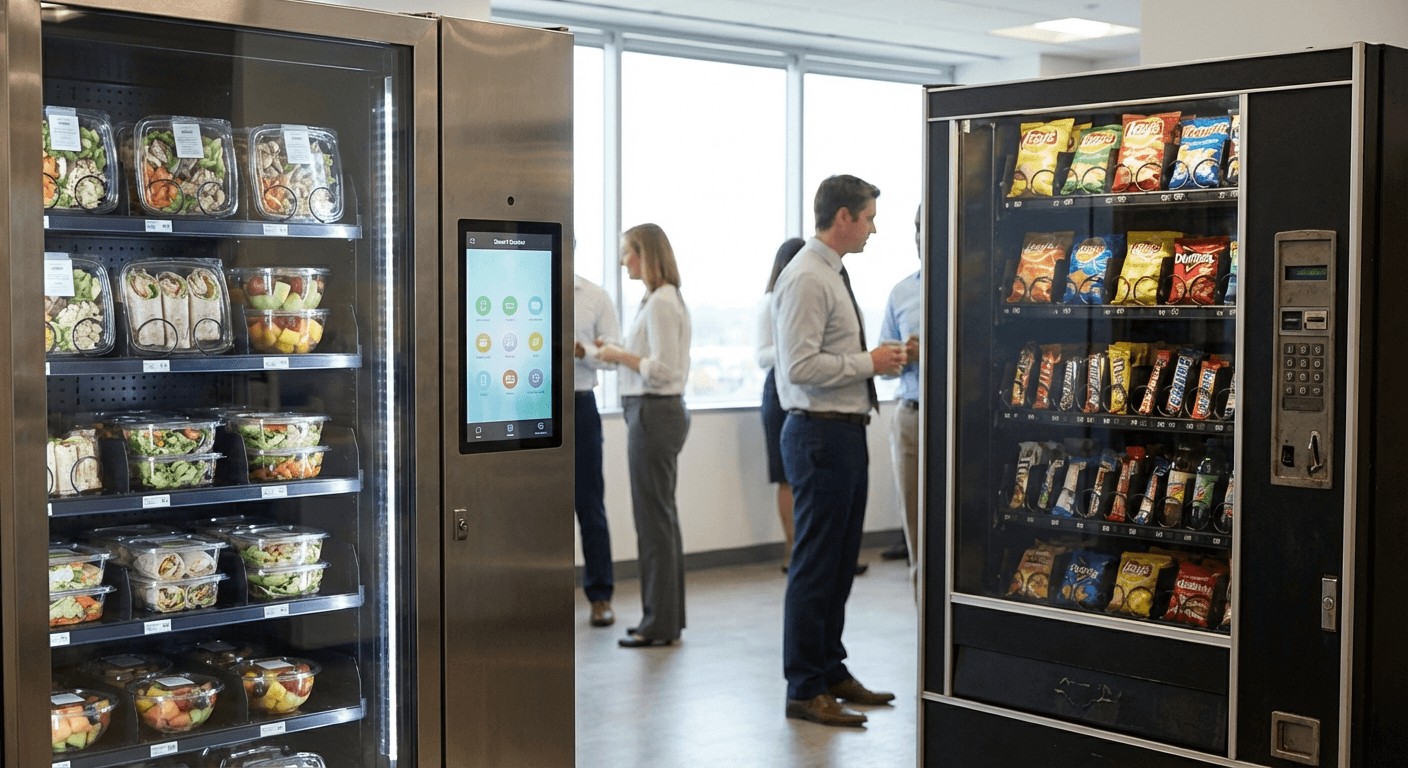
Traditional vending machines — the spiral or coil dispensing machines found in most office buildings and factories — dispense shelf-stable packaged items. Chips, candy bars, packaged pastries, shelf-stable granola bars, bottled water, and canned or bottled beverages.
These machines have been a workplace staple for decades. They're familiar, relatively low-maintenance, and available from dozens of vendors. Their limitations are equally familiar.
What Is a Smart Cooler?
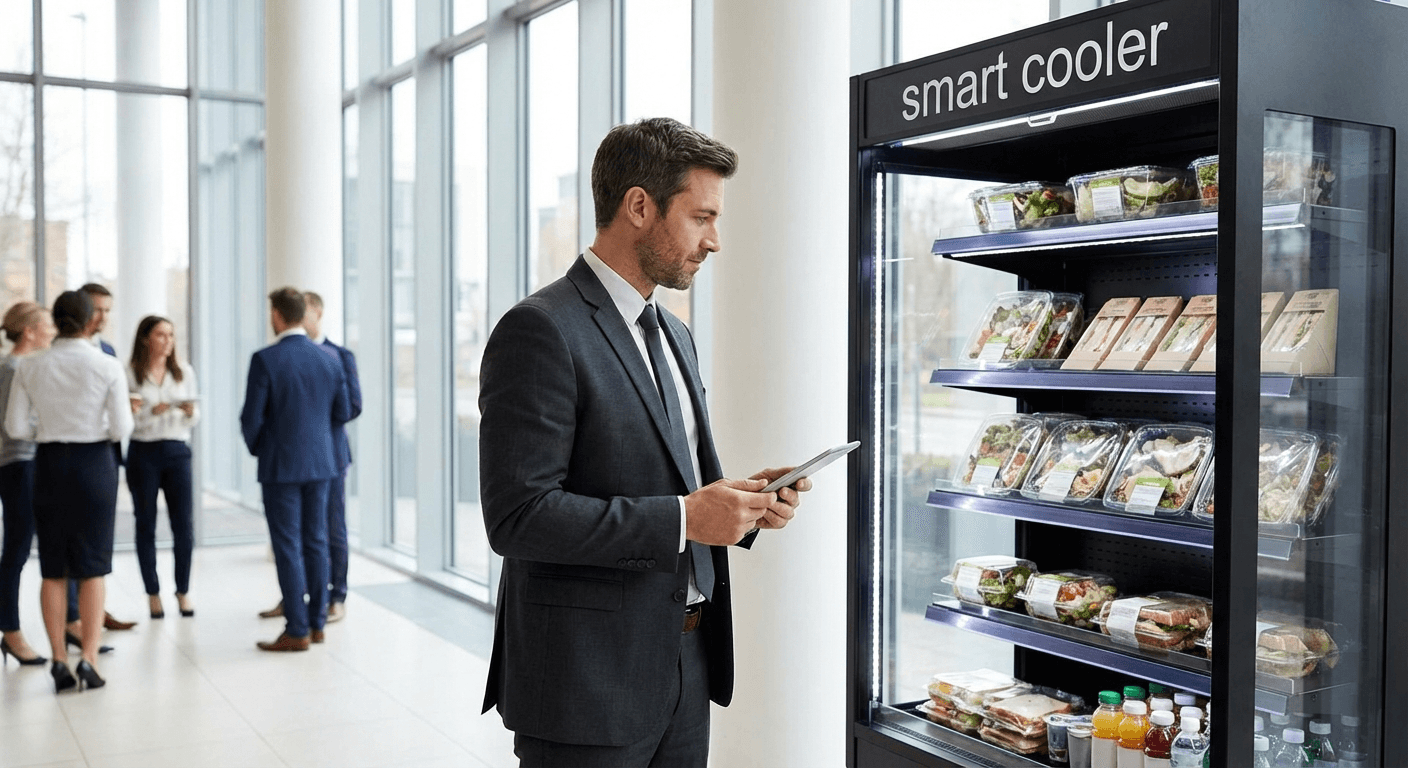
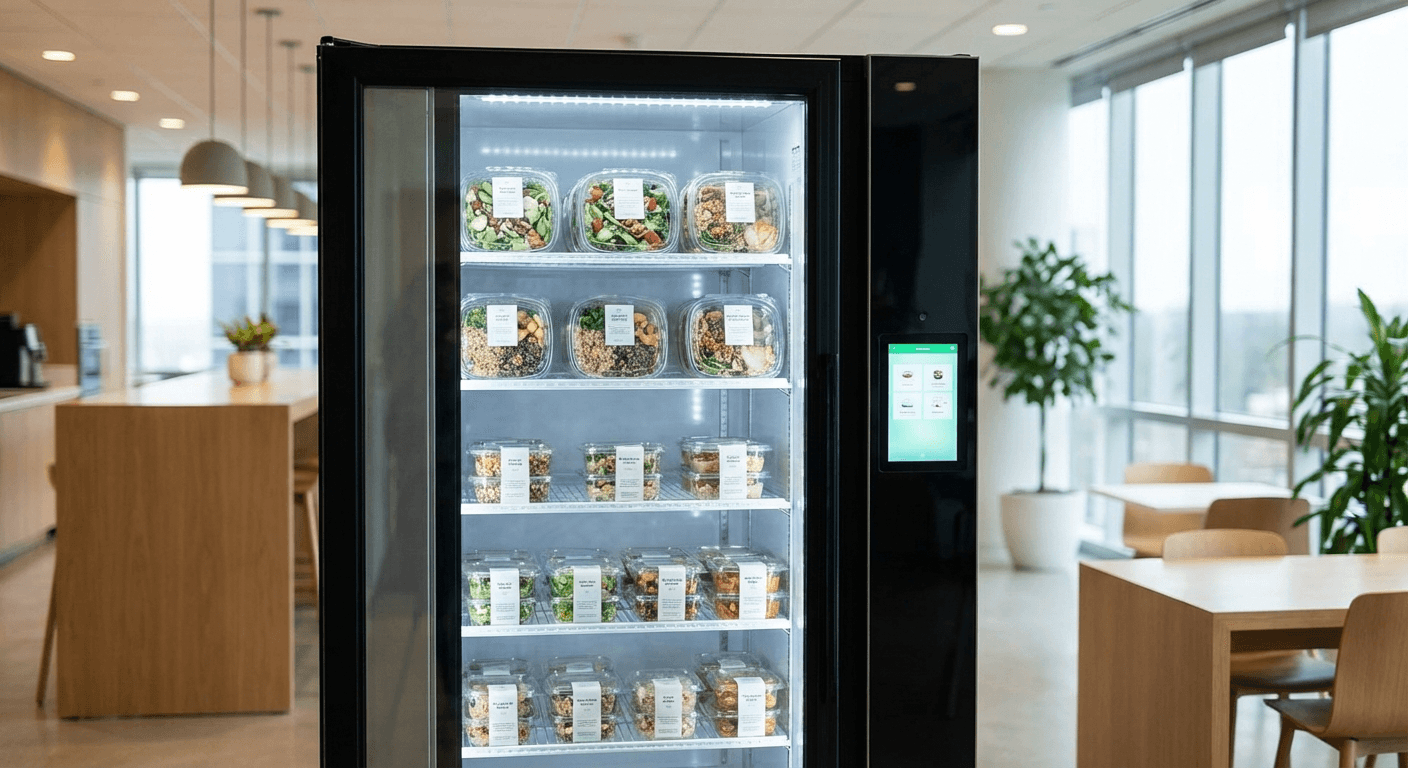
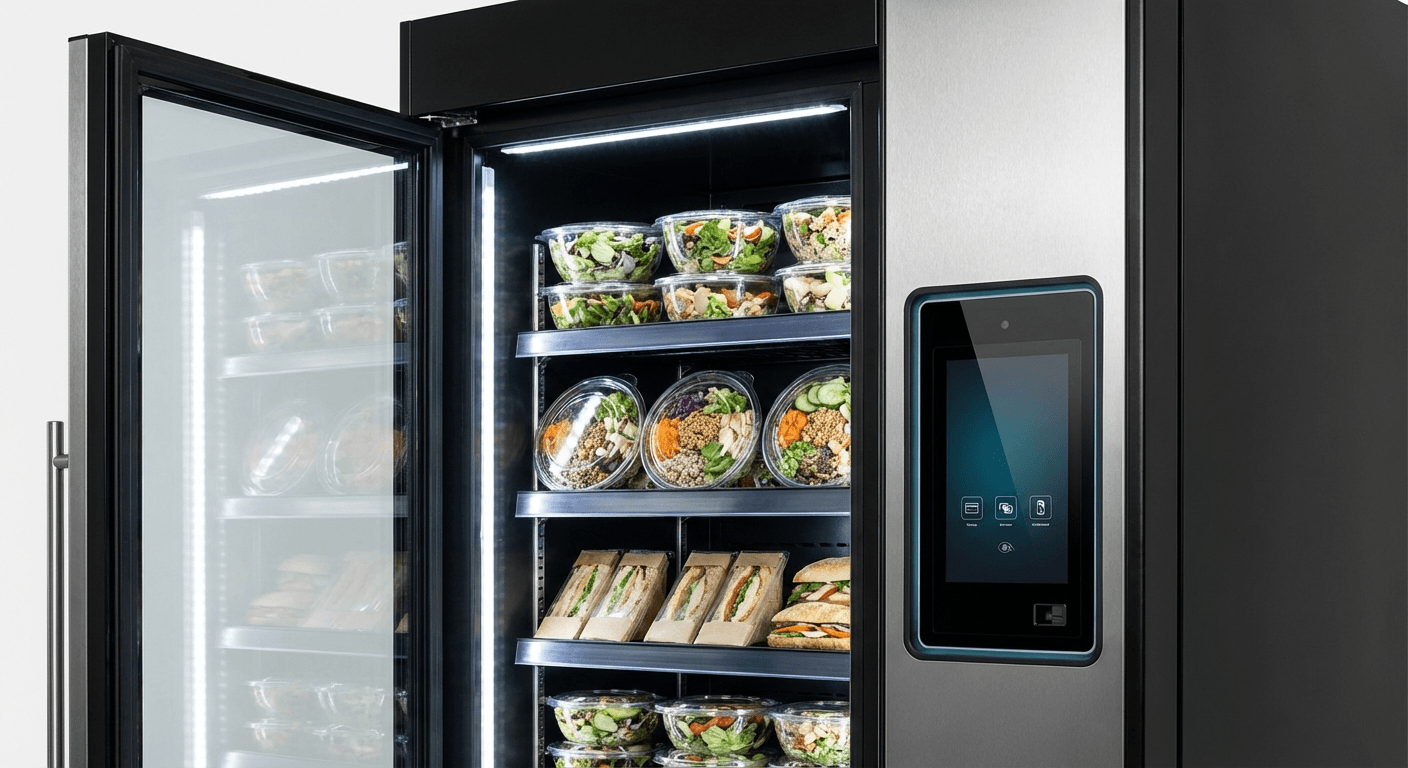
A smart cooler is a refrigerated vending unit that holds fresh-prepared, perishable foods: salads, sandwiches, hot entrées, yogurt, fresh juice, and other refrigerated items. It integrates touchscreen ordering, cashless payment, and real-time inventory monitoring.
For a complete overview of the technology, see what is a smart cooler.
Head-to-Head Comparison
Food Quality and Nutritional Value
Traditional vending: Shelf-stable products only. High sodium, high sugar, and low protein are the defining nutritional characteristics of the typical traditional vending machine. The food is designed for a long shelf life, not nutritional quality.
Smart cooler: Fresh-prepared meals with real ingredients. High-protein options, balanced meals, fresh produce, and quality beverages that employees would actually choose — not just tolerate.
Winner: Smart cooler. Not close.
Payment Experience
Traditional vending: Many machines still require cash or coins. Card readers, when present, are often unreliable — declined transactions, stuck swipes, and cards not returned are common complaints. NFC/contactless is rare on older machines.
Smart cooler: Contactless card, Apple Pay, Google Pay, and employee badge integration are standard on modern units. Payment completes in under 2 seconds. No cash, no coins, no frustration.
Winner: Smart cooler.
Reliability
Traditional vending: Coil-dispensing mechanisms are mechanically simple but prone to jamming. Items frequently get stuck, coins and cards are lost to malfunctions, and the experience is universally frustrating. Maintenance schedules are typically reactive rather than proactive.
Smart cooler: Modern smart coolers use refrigeration technology without moving dispensing parts (items are accessed directly from the shelf after the door unlocks). Fewer mechanical failure points. Remote monitoring allows vendors to identify issues proactively before they affect users.
Winner: Smart cooler.
Food Safety
Traditional vending: No temperature monitoring or food safety systems. Products are shelf-stable by design — there's nothing to monitor. But this limits you to foods with poor nutritional profiles and long shelf lives.
Smart cooler: Continuous temperature monitoring with automated alerts, HACCP-compliant food preparation, cold chain documentation, and regular product rotation. More robust food safety infrastructure than most commercial food service operations.
Winner: Smart cooler (for fresh food specifically; traditional vending doesn't have food safety issues because it doesn't serve perishable food).
Space Requirements
Traditional vending: Compact — typically 2–3 feet wide, 6 feet tall. Can fit in very tight spaces.
Smart cooler: Larger footprint — typically 6–8 feet wide, 3–4 feet deep. Requires more floor space.
Winner: Traditional vending (for space-constrained environments only).
Product Variety
Traditional vending: Limited to shelf-stable items. Typically 40–60 SKUs per machine.
Smart cooler: Fresh meals, beverages, snacks, and specialty dietary items. 30–50 fresh SKUs with regular rotation.
Winner: Smart cooler (for variety and quality); traditional vending (for ambient snack variety in large mixed-product machines).
Cost to Facility
Traditional vending: Often provided at zero cost to the facility under managed service agreements, similar to smart coolers. However, older contracts may have had different terms. Some facilities own machines and carry maintenance costs.
Smart cooler: Managed service model (zero cost to facility) is standard. Equipment, installation, maintenance, and service are vendor-provided.
Winner: Tie (both can be zero cost under managed service).
Energy Efficiency
Traditional vending: Older spiral machines are often energy inefficient, with continuous-run compressors and fluorescent lighting. Energy consumption of 300–500 kWh/month is common for older units.
Smart cooler: Modern units with variable-speed compressors, LED lighting, and energy-saving modes. Typical consumption of 150–300 kWh/month.
Winner: Smart cooler (for modern equipment comparisons).
User Experience
Traditional vending: The user experience is largely unchanged from the 1990s. Select a number, insert money, hope it dispenses. No nutritional information, no browsing, no personalization.
Smart cooler: Touchscreen interface showing products, prices, nutritional information, and allergen details before purchase. Clean, modern interface that matches the payment experience employees expect.
Winner: Smart cooler.
Summary Table
| Feature | Smart Cooler | Traditional Vending |
|---|---|---|
| Food type | Fresh, perishable | Shelf-stable only |
| Nutrition quality | High | Low |
| Payment options | Contactless, mobile, badge | Cash + card (often unreliable) |
| Reliability | High (remote monitoring) | Moderate (mechanical failures) |
| Space required | 20–30 sq ft | 6–8 sq ft |
| Food safety monitoring | Continuous, automated | None |
| Energy efficiency | Better (150–300 kWh/mo) | Older units: 300–500 kWh/mo |
| Cost to facility | $0 (managed service) | $0 (managed service) |
| User experience | Modern touchscreen | 1990s interface |
| Nutritional info | On-screen display | Label only |
Where Traditional Vending Still Makes Sense
Traditional vending machines aren't obsolete in every context. They remain a reasonable choice when:
- Space is severely constrained and a larger smart cooler footprint isn't feasible
- Volume is too low for a vendor to profitably service fresh food (generally below 30–50 employees)
- Ambient snack access is the primary need and fresh food is supplementary
- Budget doesn't support even energy-cost differences for electricity
In most standard office, healthcare, educational, and industrial environments, these conditions don't apply. Smart coolers have become the default choice for a reason.
Transitioning from Traditional Vending to Smart Coolers
If your facility is currently operating traditional vending machines, transitioning to smart coolers is straightforward under a managed service model:
- Review your existing vending contract for early termination provisions
- Contact a smart cooler vendor for a site assessment
- Schedule installation to coincide with your existing contract's end or transition window
- Communicate the program change to employees before installation
Most Atlanta-area facilities can have a smart cooler installed and operational within 2–4 weeks of making the decision to move forward.
Ready to Make the Switch?
Replenished Markets installs and manages smart cooler programs for corporate offices, healthcare facilities, manufacturing plants, and educational campuses across metro Atlanta. We provide equipment, stocking, maintenance, and all food safety management at zero cost to the facility.
Contact us to schedule a site assessment and complimentary taste test. We'll show you what a modern fresh food program looks like compared to what you have today.