How to Choose a Food Vending Partner for Your Corporate Office
Choosing a food vending partner for your corporate office is more consequential than most facility managers realize going in. Get it right, and you have an amenity that employees actually use and appreciate — one that contributes to retention and signals that the organization invests in people. Get it wrong, and you're stuck with a mediocre machine, a rigid contract, and a vendor who disappears after installation.
This guide walks through the criteria that matter: food quality, technology, service reliability, contract terms, and the questions to ask every vendor you're evaluating.
Start with Your Employees' Actual Needs
Before you talk to a single vendor, spend 20 minutes understanding who you're feeding.
Employee Count and Density
Volume drives the economics of every vending service model. A vendor who serves 500-person buildings will have different pricing, service frequency, and menu options than one specializing in 50-person offices. Know your headcount and typical occupancy patterns before starting conversations.
Shift Structure
Do all your employees work 9–5, or do you have evening and weekend teams? If food access gaps exist outside normal hours, you need a vendor whose program covers those windows — not one who restocks Monday through Friday and calls it done.
Dietary Needs and Preferences
Survey your employees before making decisions. You'll likely find a mix of preferences: some want hearty lunches, others want light snacks, some have dietary restrictions that standard vending programs ignore. A vendor who customizes the menu based on actual usage data is worth far more than one with a fixed planogram.
Location and Convenience Context
Is your building near restaurants? If employees can easily walk to a lunch spot, your vending program needs to compete on quality and convenience — not just fill a gap. If you're in a suburban office park or industrial area with limited walkable options, reliability matters more than variety.
Evaluate the Food First
Technology and pricing are secondary to the core question: is the food good enough that employees will actually want it?
Fresh vs. Shelf-Stable
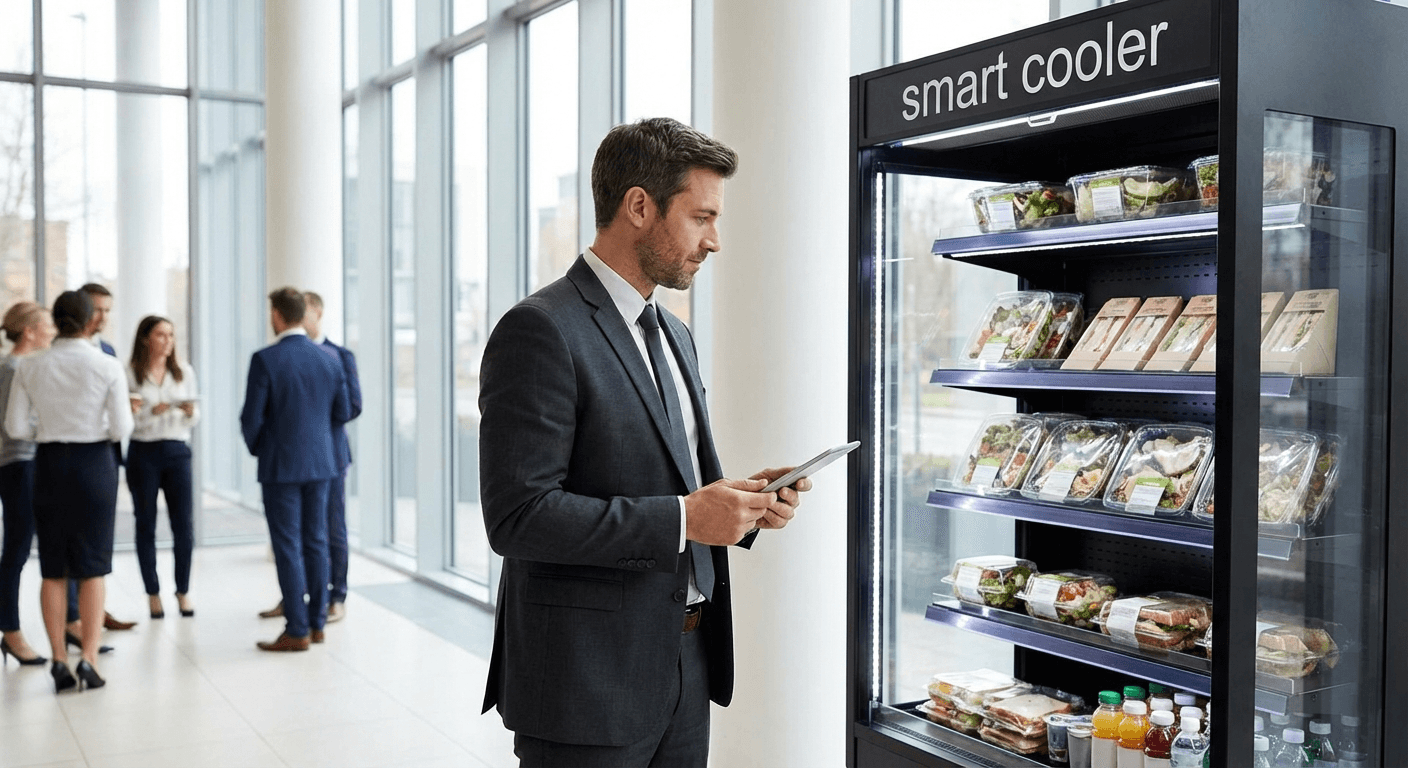
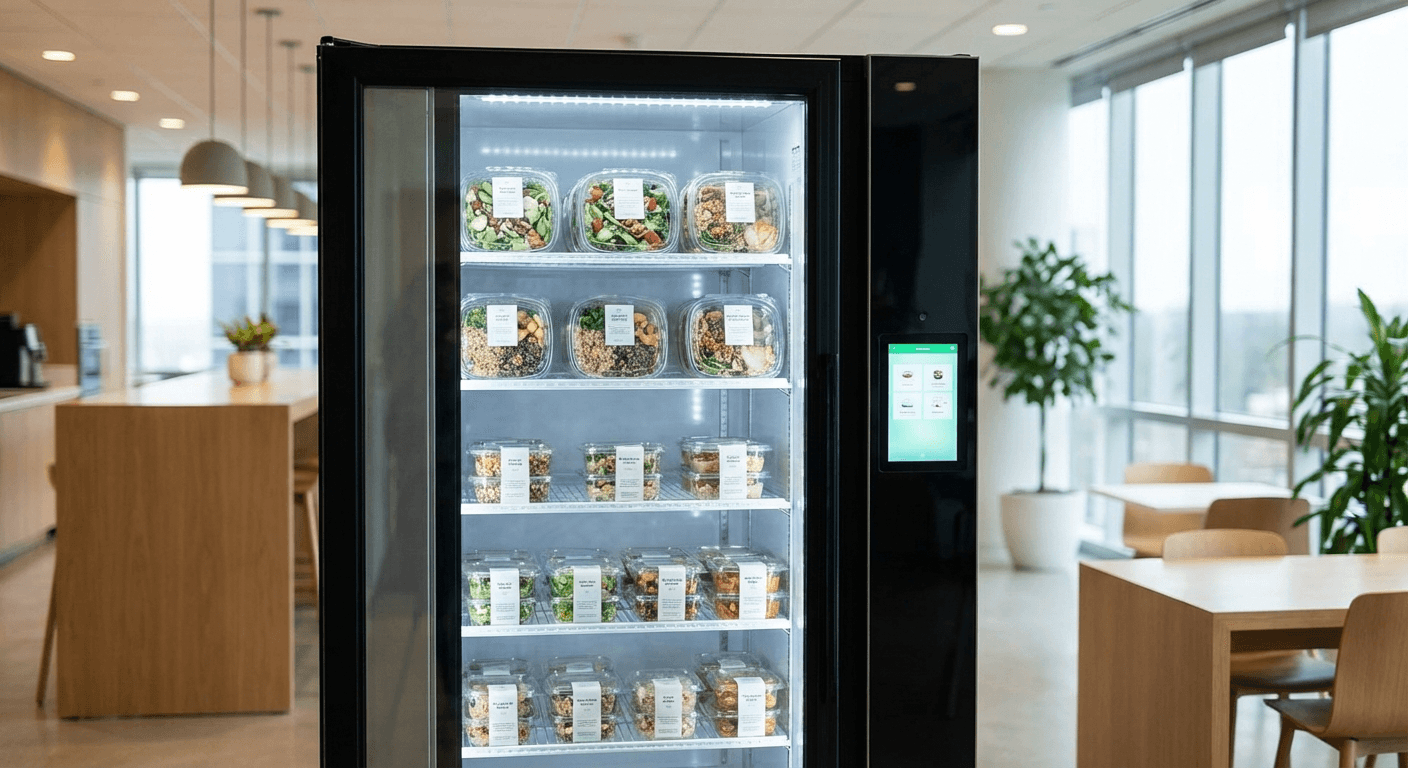
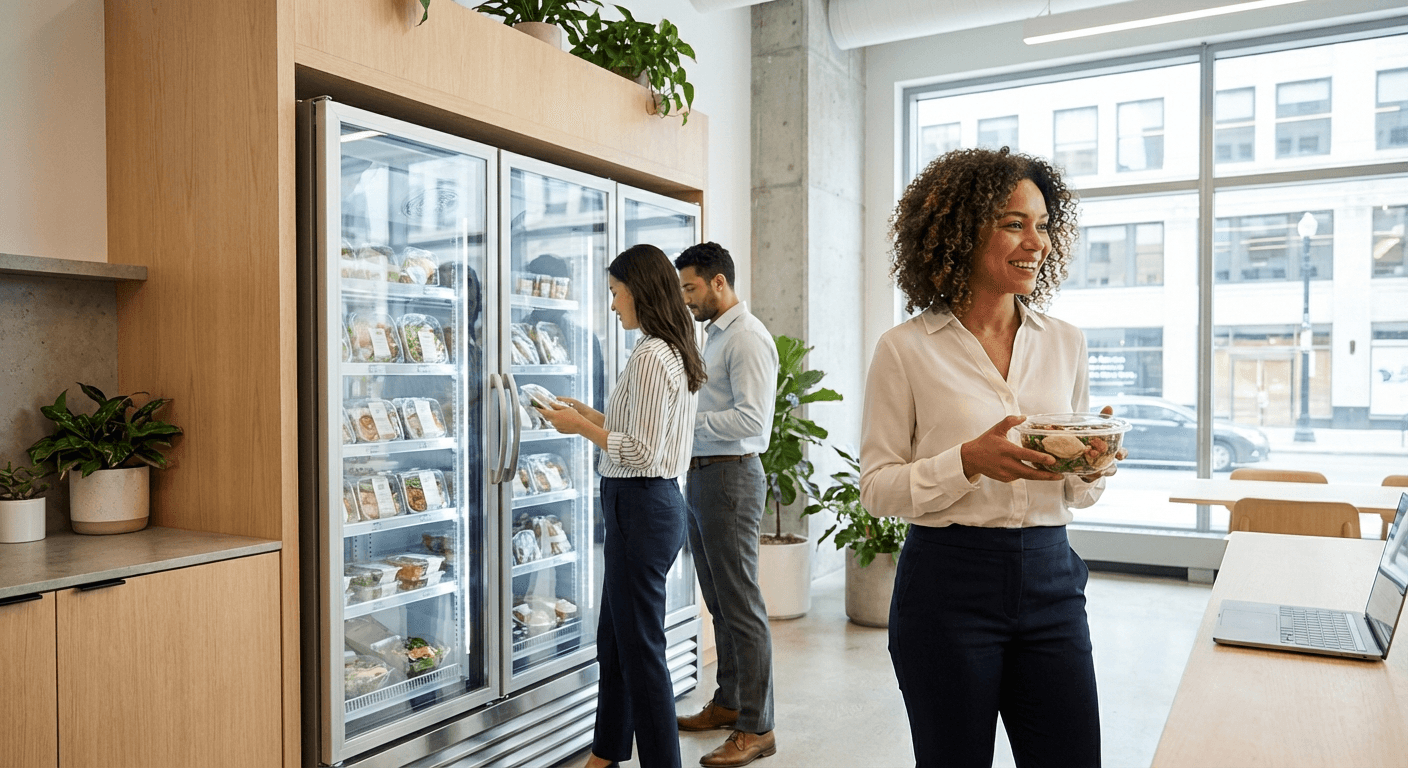
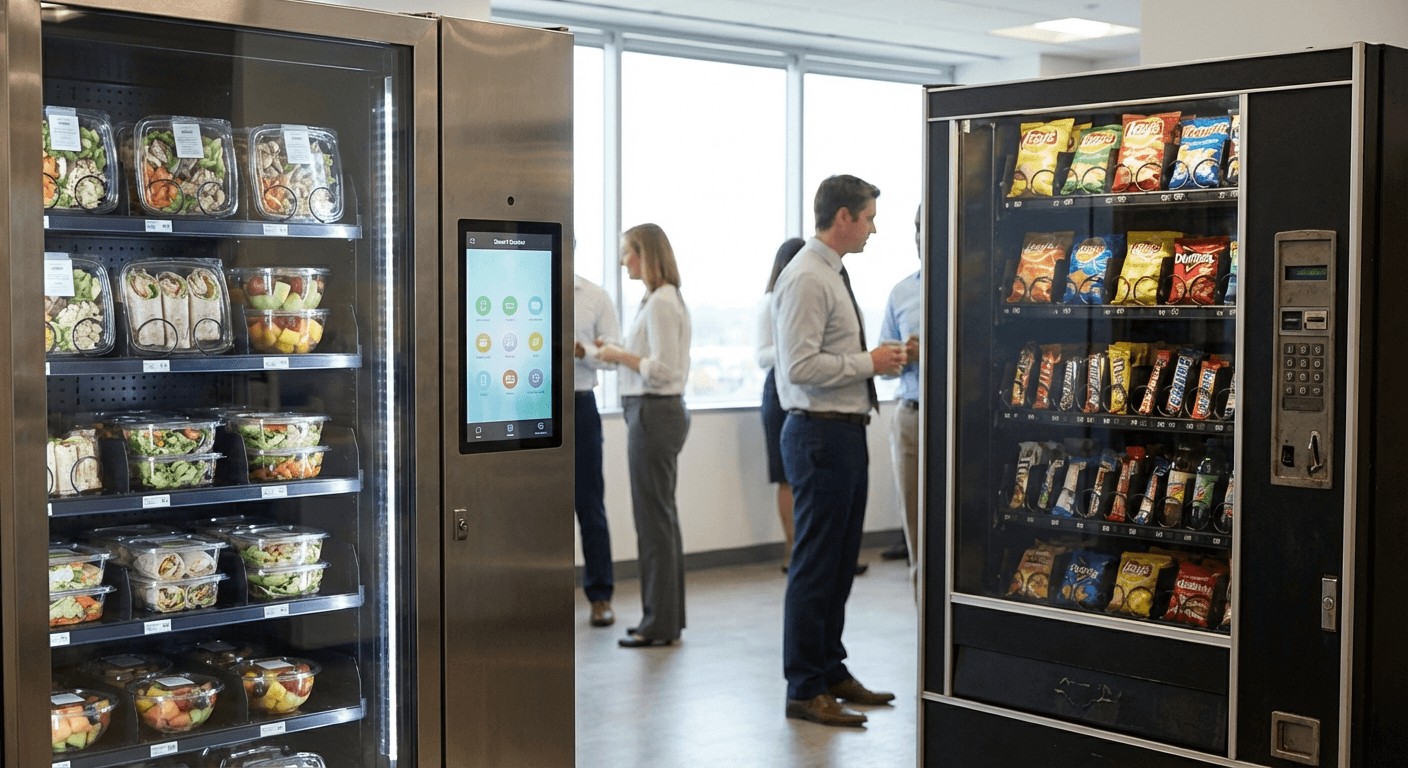
The most important fork in the road. Traditional vending machines offer shelf-stable snacks — chips, candy bars, packaged crackers. Smart coolers offer refrigerated, fresh-prepared meals with real ingredients and meaningful nutritional value.
If employee health and satisfaction are genuine priorities for your organization, the argument for fresh food is hard to counter. Shelf-stable vending is a fallback; fresh food vending is a benefit.
Menu Variety and Rotation
A good vendor rotates the menu regularly — weekly or bi-weekly — to prevent the fatigue that kills utilization. Ask vendors to show you 6–8 weeks of menu rotation from an existing account. If they can't, their rotation program probably doesn't exist.
Dietary Accommodation
Does the vendor reliably offer vegetarian, vegan, gluten-free, and low-sodium options — or do they offer one token item and call it diverse? Check existing accounts to see how dietary options look in practice, not just on a sales pitch.
Sourcing
Where does the food come from? Local kitchen partnerships produce fresher food with better ingredients and support the local economy — a point some organizations care about for their sustainability reporting. Ask for specifics, not vague claims about "local sourcing."
Assess the Technology
Modern food vending runs on technology. Evaluate vendors on:
Payment Systems
At minimum, your corporate office vending should accept:
- Contactless credit and debit cards
- Apple Pay and Google Pay
- Mobile app payment
Bonus: employee badge or corporate account integration that enables subsidized meal programs or spending reports. If a vendor is still running cash-only machines, move on.
Inventory Management
How does the vendor know when to restock? Vendors with real-time inventory monitoring (weight sensors, RFID, or computer vision) will have fewer stockout incidents and less food waste. Ask what their average stockout rate is at comparable accounts.
Temperature and Food Safety Monitoring
For fresh food specifically, continuous temperature monitoring with automated alerts is non-negotiable. Ask vendors how they detect and respond to temperature excursions. A manual daily check is not sufficient.
Reporting and Analytics
Will you receive usage reports? Good vendors provide regular data on what's selling, when, and at what rates — information you can use to optimize the program over time. Vendors who don't share data are harder to hold accountable.
Evaluate Service Reliability
A smart cooler that's empty or broken is worse than no smart cooler. Investigate:
Restocking Frequency
How often will the vendor restock your unit, and what determines their schedule? Demand-driven restocking based on real-time data produces better results than fixed-schedule visits. Ask about their average time-to-restock after a low-stock alert.
Maintenance Response Time
When something breaks — and at some point, something will — how quickly does the vendor respond? Industry standard for an urgent maintenance issue is under 4 hours. Ask for their stated SLA and verify it with existing customers.
References
Any serious vendor will provide references from comparable accounts — similar industry, similar facility size. Call them. Ask specifically about what happens when things go wrong, not just whether they're happy overall.
Understand the Contract
This is where many facility managers get burned. Read every term carefully.
Contract Length
Multi-year exclusivity agreements are common in vending. That's reasonable for a vendor investing in equipment and setup costs — but make sure you have performance clauses that let you exit if service quality drops. A 3-year deal with no exit clause is a significant commitment.
Service Level Guarantees
What does the vendor commit to in writing? Minimum restocking frequency, response times for maintenance issues, and food safety standards should be documented and enforceable, not just promises made during the sales process.
Equipment Ownership
Who owns the equipment? In managed service models (the most common for corporate offices), the vendor owns and maintains the equipment at no cost to you. If a vendor asks you to purchase equipment upfront, understand what ongoing service and support you're getting for that investment.
Revenue Sharing
Some vendors offer facilities a percentage of sales as a revenue-sharing component. If you're large enough to generate meaningful volume, it's worth asking about. Amounts vary widely but typically range from 5–15% of gross sales.
Exclusivity Terms
Be aware of what you're agreeing to restrict. Some contracts prevent you from having any other food vending option in the building. Others are narrower. Know what you're signing.
The Right Partner Looks Like This
The best corporate office food vending partners share these characteristics:
- They ask more questions than they answer in the first conversation — they want to understand your facility before pitching a solution
- They show you real menus from real accounts, not just aspirational examples
- They invite you to taste the food before signing anything
- They have healthcare or enterprise references you can actually call
- They're local enough to service you reliably — a national vendor with no Atlanta presence is a risk
See What's Possible for Your Office
Replenished Markets serves corporate offices, healthcare facilities, and industrial campuses across metro Atlanta. We specialize in fresh food smart cooler programs with zero cost to the facility and full-service management from our team.
Explore fresh food vending for corporate offices to see what a well-run program looks like, or contact us to schedule a consultation and complimentary taste test.