What Is a Smart Cooler?
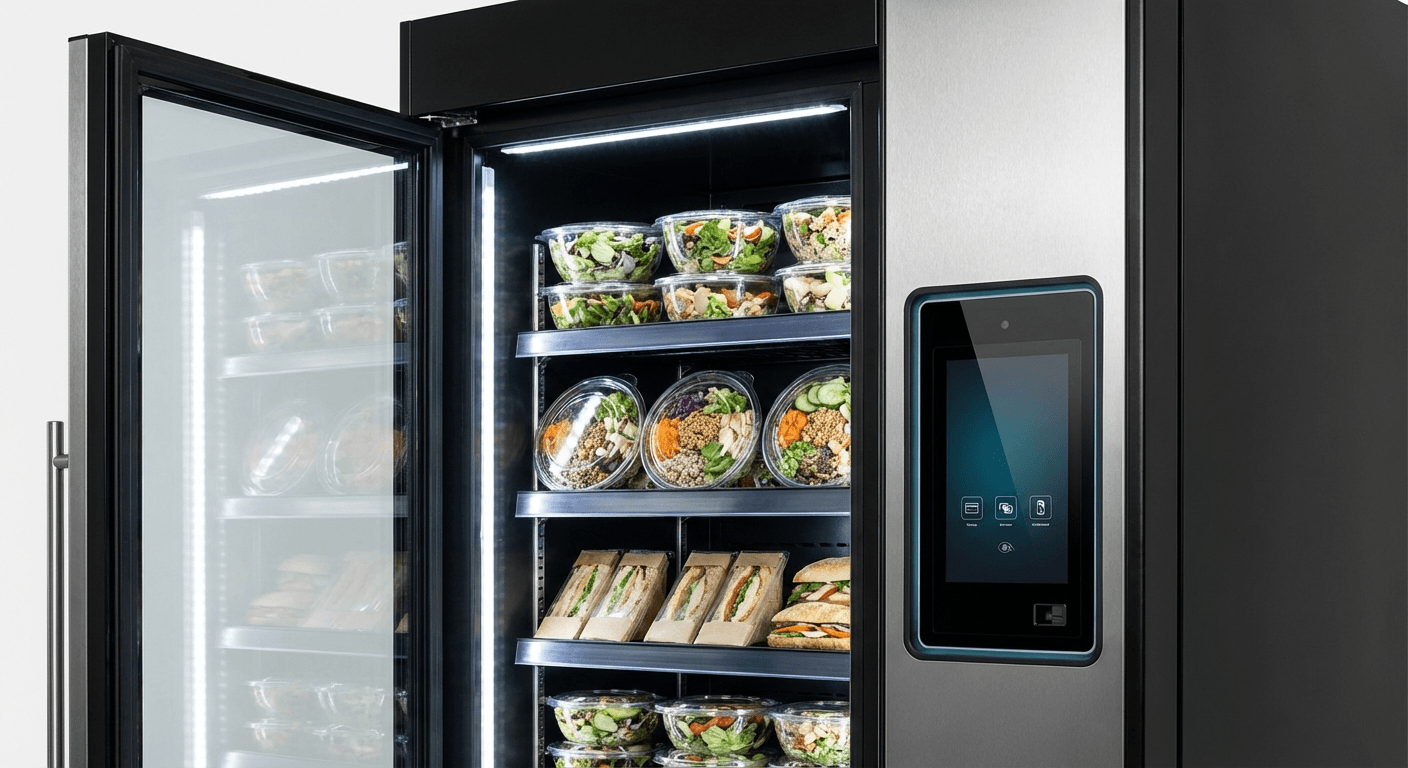
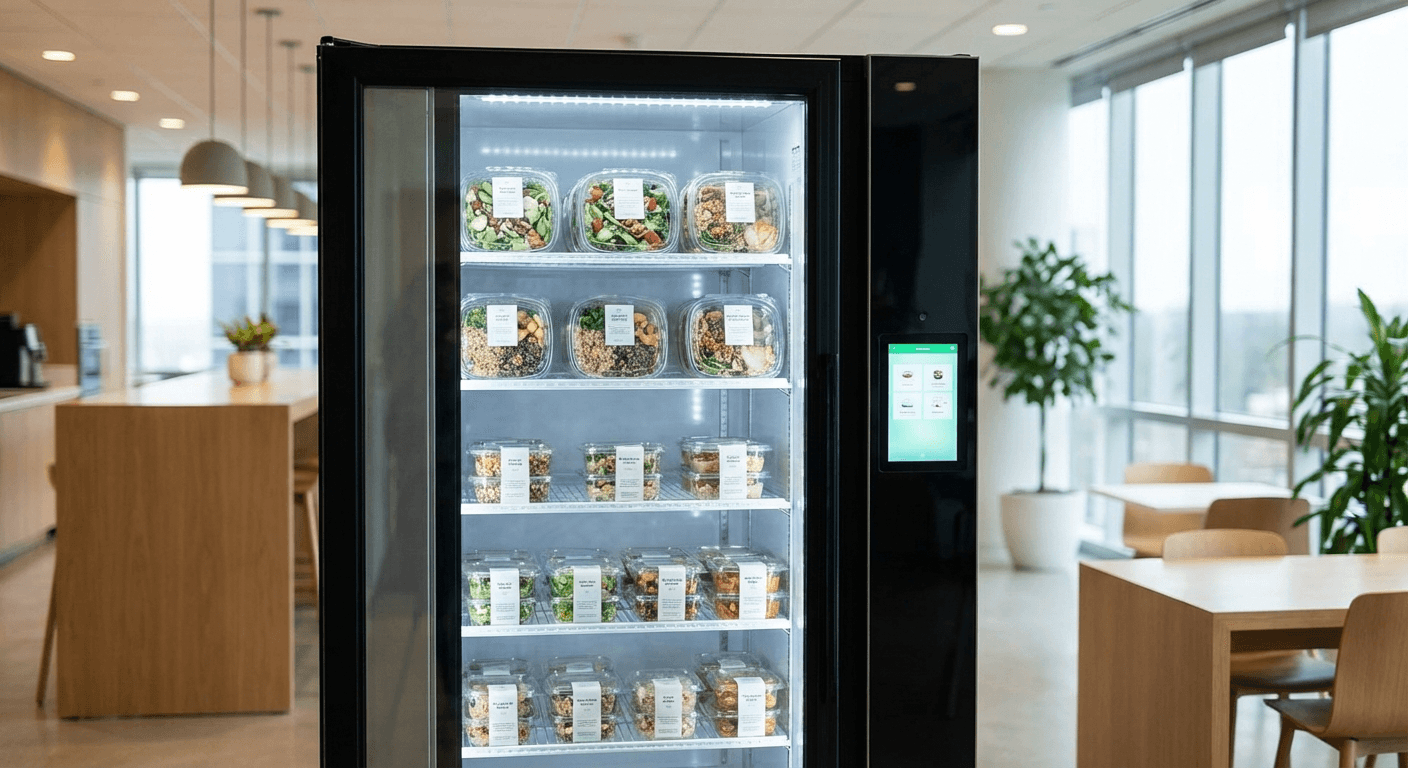
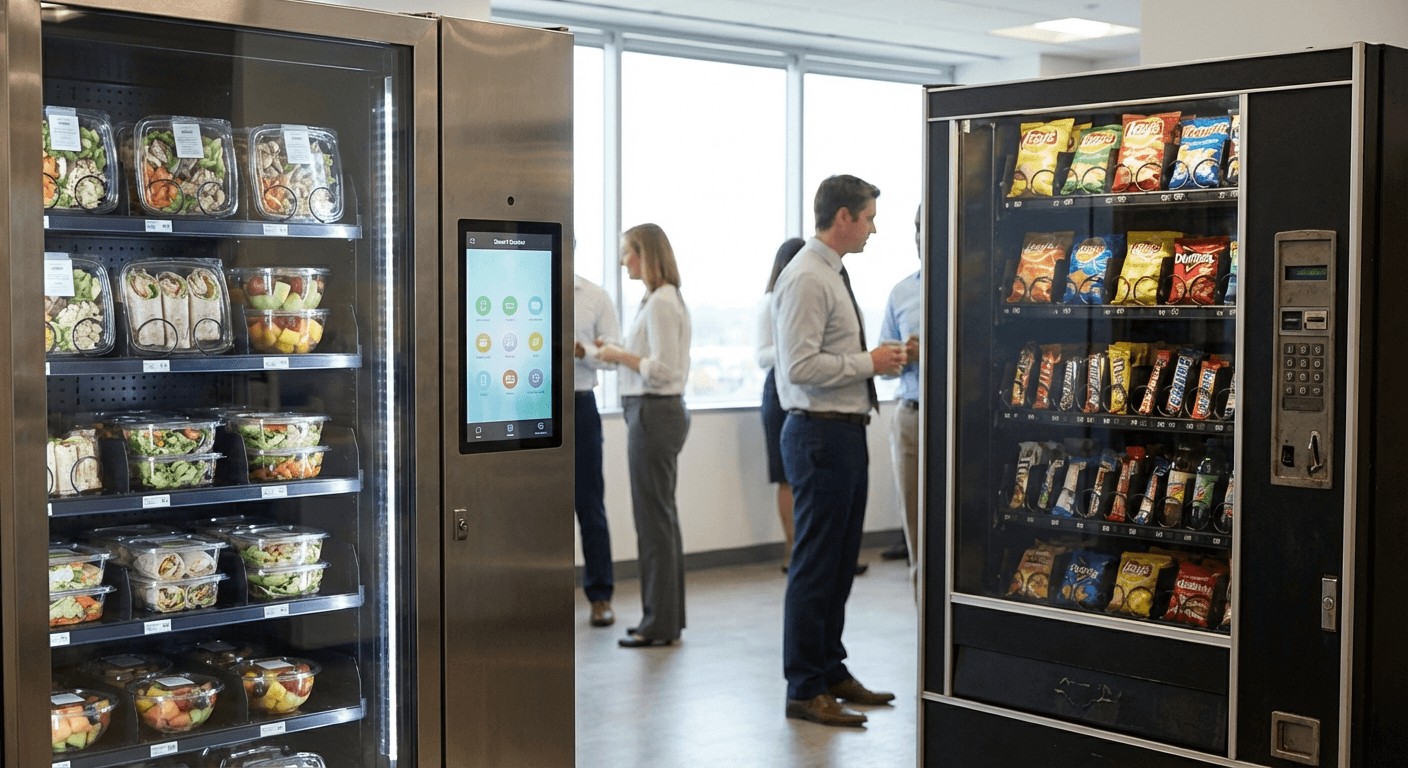
A smart cooler is a refrigerated, self-serve food vending unit that combines fresh-food storage with cashless payment technology and real-time inventory management. Unlike the old spiral vending machines that dispense chips and candy bars, a smart cooler holds fresh meals, salads, sandwiches, yogurts, and beverages — all maintained at safe temperatures around the clock.
For facility managers in Atlanta evaluating food service upgrades, understanding what a smart cooler actually is — and how it differs from traditional vending — is the essential first step. This guide covers how the technology works, what it can hold, where it performs best, and what questions to ask before you install one.
How a Smart Cooler Works
Refrigeration and Temperature Control
Smart coolers maintain interior temperatures between 35°F and 41°F — the safe zone for perishable foods. Most units use multi-zone refrigeration, so dairy products and fresh produce can sit in the same cooler without compromising each other's ideal conditions.
Temperature data is logged continuously. If the unit drifts outside safe parameters, the management platform sends an alert to the service team. This matters for food safety compliance and is a core reason healthcare facilities trust smart coolers for night-shift nutrition.
How Items Are Tracked
Modern units use one or more of the following to track what's in the cooler:
- Weight sensors — Shelves detect when an item is removed and update inventory counts automatically.
- RFID tags — Products carry tags that the system reads, enabling expiration-date tracking and detailed consumption analytics.
- Computer vision — Cameras identify products visually, flag low-stock shelves, and verify planogram compliance.
This combination means your vendor knows what sold, what's expiring, and what needs restocking — often before you notice anything is low.
Payment Systems
Smart coolers support the payment methods employees actually use:
- Contactless credit/debit cards
- Apple Pay and Google Pay
- Employee badge or ID integration
- Mobile apps for pre-ordering
- Standard chip-and-swipe as fallback
No cash handling, no coins, no stuck coil at 2 AM. Cashless payment is one of the features employees cite most when asked why they prefer smart coolers over traditional vending.
User Interface
A touchscreen on the unit shows available products, pricing, nutrition facts, and allergen information. Users see exactly what they're buying before they tap to pay. Some units allow app-based browsing so employees can check the menu from their desk before walking to the cooler.
What Foods a Smart Cooler Can Hold
Fresh Meals
- Prepared salads and grain bowls
- Sandwiches and wraps
- Hot entrées in microwave-safe containers
- Soups and stews
- Sushi and specialty dishes
Snacks and Lighter Options
- Fresh fruit and pre-cut vegetables
- Yogurt and dairy products
- Hummus, cheese, and protein snacks
- Nuts and healthy mixes
Beverages
- Fresh juices and smoothies
- Specialty coffee drinks
- Flavored waters and sports drinks
- Kombucha and probiotic drinks
Specialty Dietary Options
- Vegan and vegetarian meals
- Gluten-free items
- Keto-friendly snacks
- Low-sodium and diabetic-friendly choices
Where Smart Coolers Perform Best
Corporate Offices
Smart coolers are ideal for offices without an on-site cafeteria, or where the cafeteria closes before the evening shift ends. Employees get fresh meals without leaving the building — reducing long lunch departures and keeping energy levels steady through the afternoon.
Explore fresh food vending for corporate offices to see how Atlanta companies are using smart coolers as a retention tool.
Healthcare Facilities
Hospitals and medical centers rely on smart coolers for 24/7 nutrition access for night-shift nurses, ER staff, and ICU teams. Traditional cafeterias close; smart coolers don't. Learn more about fresh food vending for hospitals.
Universities and Educational Campuses
Dormitories, libraries, and academic buildings benefit from smart coolers during late study hours when dining halls are closed.
Manufacturing and Industrial Facilities
Plants with multiple shifts and limited cafeteria space use smart coolers to feed workers on breaks without requiring off-site food runs. See our guide on fresh food vending for manufacturing facilities.
Senior Living Communities
Assisted living and memory care facilities use smart coolers to supplement meal programs and give residents convenient snack access between scheduled dining times.
Physical Requirements
Most commercial smart coolers need:
- Floor space: 6–8 feet wide × 3–4 feet deep
- Height: 6–7 feet
- Electrical: 110V or 220V depending on unit size
- Internet: Stable Wi-Fi or ethernet for payment processing and remote monitoring
- Clearance: 3–6 inches on sides for ventilation
Installation typically takes 2–4 hours and includes electrical hookup, internet setup, system calibration, and initial stocking. ADA compliance and emergency egress should be confirmed during site assessment.
Smart Cooler vs. Traditional Vending: The Key Differences
| Feature | Smart Cooler | Traditional Vending |
|---|---|---|
| Food type | Fresh, perishable | Shelf-stable snacks |
| Temperature | Refrigerated (35–41°F) | Ambient |
| Payment | Cashless (tap, phone, badge) | Cash + card (often unreliable) |
| Inventory tracking | Real-time, automated | Manual count |
| Food safety monitoring | Continuous temperature logs | None |
| Nutrition info | On-screen display | Label only |
| Restocking | Demand-driven, data-guided | Fixed schedule |
For a deeper comparison, see smart cooler vs. traditional vending.
Maintenance and Ongoing Service
Most facilities partner with a full-service vendor who handles:
- Daily temperature log reviews
- Regular cleaning (interior and exterior)
- Restocking based on consumption data
- Software updates and hardware maintenance
- Emergency response for mechanical issues
With a managed service model, the facility carries zero operational burden. The vendor owns the equipment, stocks the food, and services the unit — the facility just provides floor space and an electrical outlet.
Cost: What Facilities Actually Pay
With a managed service agreement (the most common model for businesses), the facility typically pays $0 for equipment and installation. The vendor recovers costs through product sales. Some agreements include a revenue-sharing component where the facility earns a percentage of sales.
For facilities that prefer to own their equipment, purchase prices range from $5,000–$25,000+ depending on unit size and features. Leasing options are also available.
See our full breakdown in how much does a smart cooler cost.
Is a Smart Cooler Right for Your Facility?
Consider a smart cooler if your facility has:
- 50+ employees (lower counts may not generate enough volume for the vendor to justify service)
- Limited or no cafeteria — or a cafeteria that closes before all shifts end
- Multiple shift schedules requiring food access outside normal business hours
- A wellness or retention initiative that would benefit from fresh food access
- Space constraints that rule out a full micro-market setup
If you have 200+ employees and want a broader product mix including ambient items, hot food, and a seating area, a micro-market may be a better fit. Smart coolers are the right choice for smaller footprints and focused fresh-food programs.
Ready to See One in Action?
Replenished Markets installs and services smart coolers across metro Atlanta — from corporate offices in Buckhead to hospitals in Marietta to manufacturing plants in Gwinnett County. We provide equipment, stocking, and service at no cost to the facility.
Contact us to schedule a consultation and free taste test. We'll assess your space, recommend the right unit, and walk you through exactly what to expect.