Fresh Food Vending for Emergency Departments: The Nutrition Problem No One Talks About
Fresh food vending for emergency departments addresses one of the most overlooked quality-of-life issues in healthcare: ER staff have unpredictable schedules, unbreakable patient care responsibilities, and the worst food access in the hospital.
The emergency department is the hardest place in a hospital to maintain consistent nutrition. Breaks are unpredictable or nonexistent during surges. Shift lengths stretch from 8 to 12 to occasionally 14 hours. The cafeteria closes at 8 PM, and the vending machines down the hall offer the same chips and granola bars they've offered since 2003.
Smart cooler fresh food vending is purpose-built for environments like this. Here's why it works in EDs specifically, and what implementation looks like.
The Unique Nutritional Challenges ER Staff Face
Emergency departments operate differently from every other hospital department.
Unpredictable Break Timing
In most workplaces, break time is scheduled. In an ED, it depends on patient volume, acuity, and staffing levels. When the waiting room is full and a trauma comes in, no one is walking to the cafeteria. When there's a brief lull at 3 AM, a staff member might have 8 minutes before the next arrival.
Fresh food vending works in this environment because access is immediate. No commute to another floor. No wait time. No ordering. Staff grab a meal, pay with a tap, and return to their unit.
24/7 Operations with Closed Cafeterias
Emergency departments operate around the clock. Hospital cafeterias typically close at 8 PM on weekdays and operate limited hours on weekends. The majority of night-shift ER staff — nurses, techs, resident physicians, support staff — have no hot food option other than the microwave in the break room and whatever they can put in a vending machine.
This creates a real nutritional deficit for the people responsible for the most critical patient care in the facility.
High Physical and Cognitive Demand
ER work is physically demanding. Staff are on their feet for entire shifts, physically assisting patients, and making rapid clinical decisions under pressure. Nutrition that supports this level of output matters — not just for employee wellbeing, but for patient safety.
High-sugar, high-sodium vending snacks provide a brief energy spike followed by a crash. For an ER nurse in hour 10 of a 12-hour shift, that crash is a patient safety concern.
Why Traditional Vending Fails ER Staff
Traditional vending machines were designed for office lobbies. They've been installed in hospital break rooms by default because vending contracts are easy to sign and easy to ignore. The problems are well known:
- No fresh food: Shelf-stable items only — chips, candy, packaged pastries, shelf-stable sandwiches with rubbery bread
- No nutritional value: The items available actively undermine the energy and focus ER staff need
- Cash and coin requirements: Staff hunting for exact change at 2 AM in a hospital break room
- Frequent breakdowns: Nothing is more demoralizing than losing money to a jammed machine at the end of a long shift
- No temperature safety: Traditional vending offers no refrigerated options
Hospitals that still rely primarily on traditional vending for night-shift ER staff aren't just failing a convenience standard — they're signaling a lack of care for their workforce.
How Smart Cooler Fresh Food Vending Works for EDs
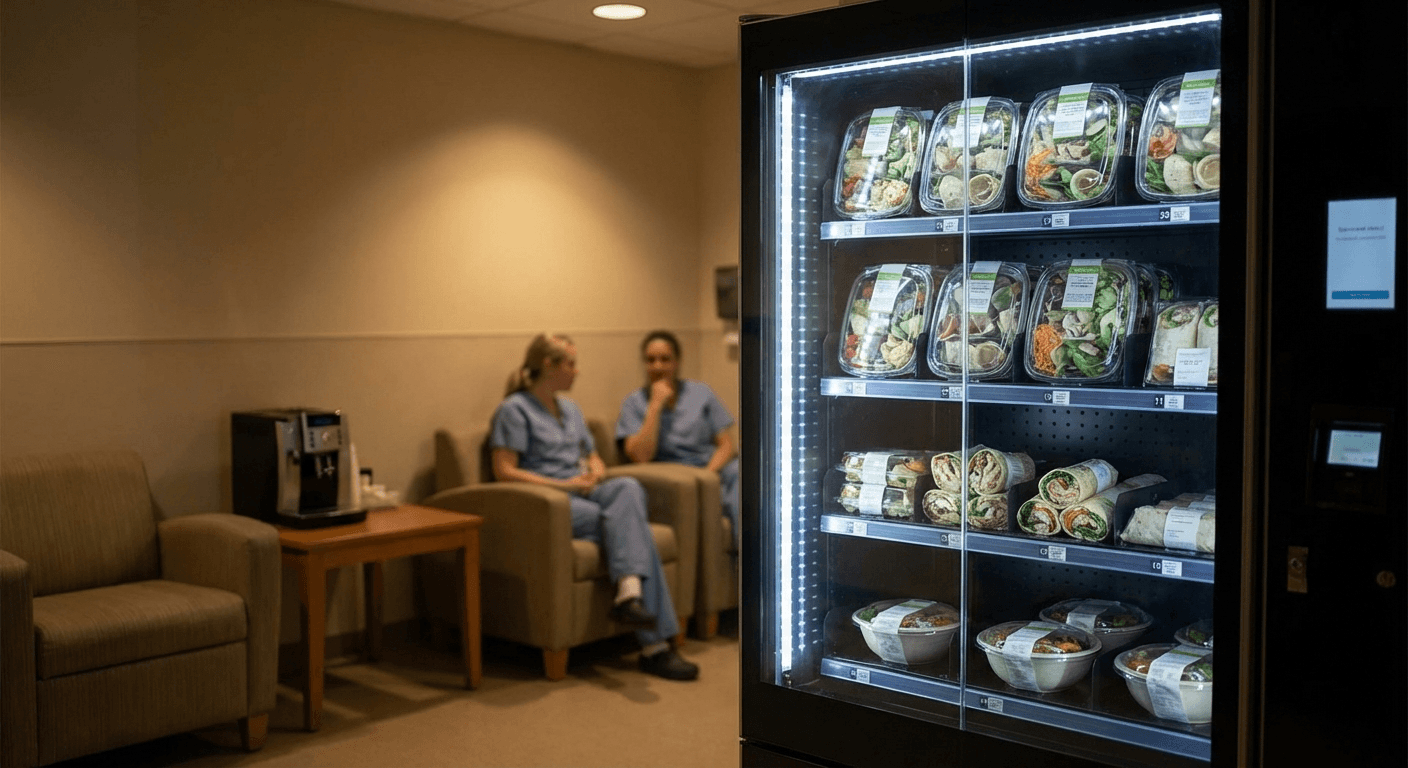
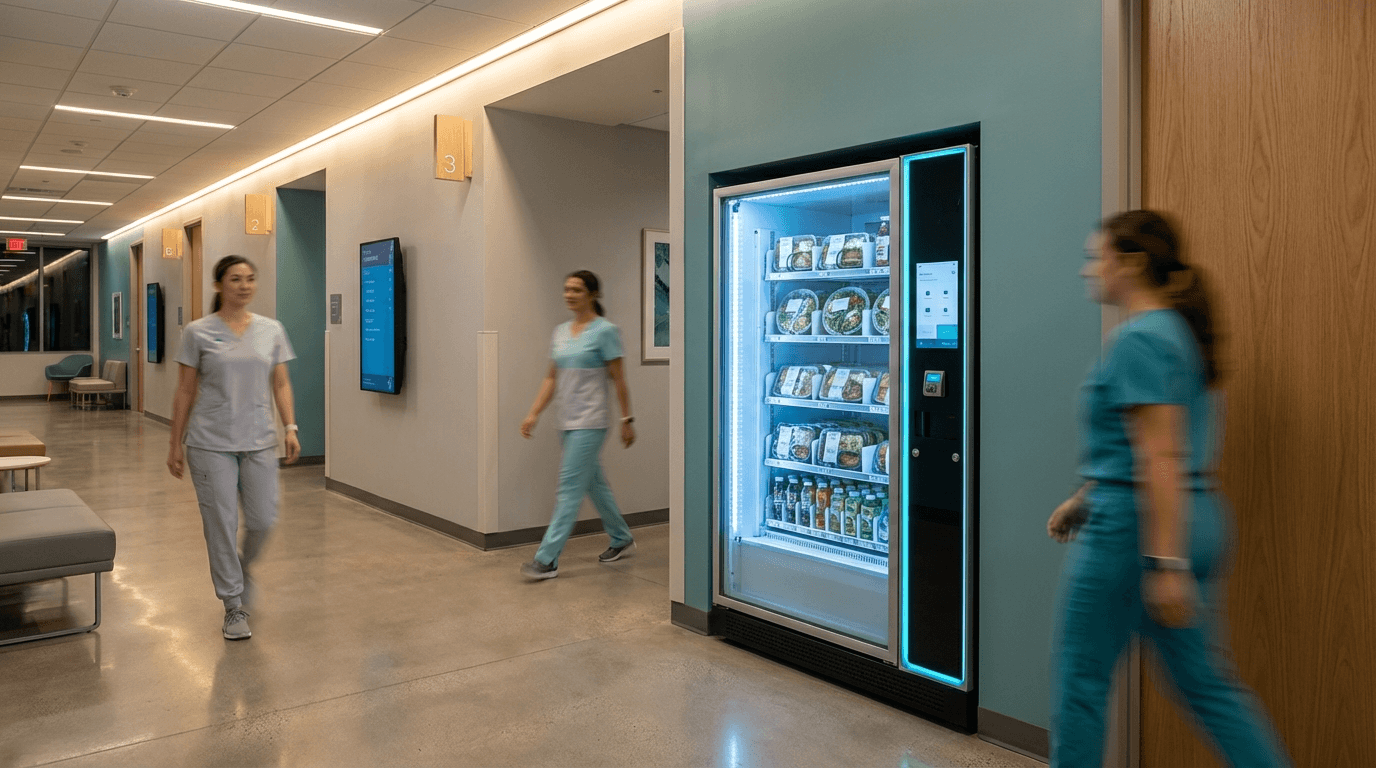
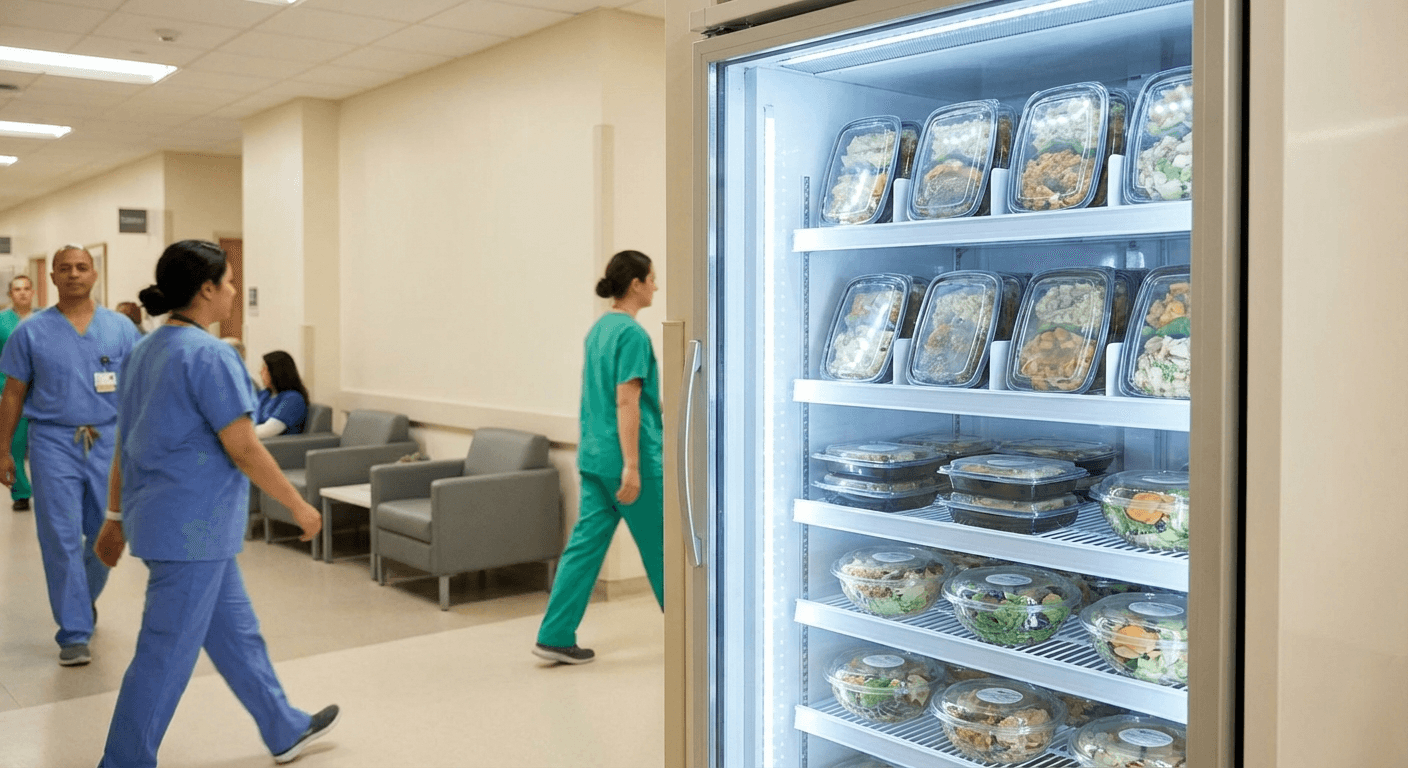
Smart coolers are refrigerated vending units that hold fresh-prepared meals — salads, sandwiches, hot entrées in microwave-safe containers, soups, yogurt, fresh beverages — available 24 hours a day.
What Makes Them Ideal for Emergency Departments
Speed of access: Staff tap to pay and walk out in under 2 minutes. No ordering, no waiting, no leaving the floor.
Real food: Fresh-prepared meals designed for sustained energy, not vending snacks. High-protein options, balanced macros, and actual ingredients.
24/7 availability: The cooler is always stocked and always accessible, regardless of cafeteria hours.
Cashless payment: Contactless card, Apple Pay, Google Pay, or employee badge integration. No cash, no coins, no frustration.
Zero maintenance burden: The vendor handles all stocking, cleaning, temperature monitoring, and equipment maintenance.
Food safety compliance: Continuous temperature monitoring with automated alerts, HACCP-compliant food preparation, and documented cold chain management.
Ideal Placement in Emergency Departments
Location matters significantly for utilization. The best smart cooler placements in an ED environment:
- Primary ED break room — the most direct placement for highest utilization
- Nursing station break area — accessible during brief breaks without leaving the unit
- ED waiting area — serves patients' families staying for extended periods, generating additional revenue
- Trauma bay staff area — for high-acuity units where staff rarely leave their section
For large EDs or Level I trauma centers, placing units at multiple points throughout the department ensures that no staff member is ever far from food access.
Menu Design for ER Staff
What works in an ED break room differs from what works in a corporate lobby. Menu design should account for:
Shift timing: Night-shift workers need meals designed for off-peak eating — lighter options in the middle of the night that don't disrupt sleep after the shift ends, heavier options at the start of shift.
Energy needs: High-protein, complex-carbohydrate items that provide sustained energy rather than quick spikes. Think grilled protein bowls, hearty soups, Greek yogurt parfaits, eggs.
Speed of consumption: Items that can be eaten in 10 minutes or less and ideally don't require heating. When the break room gets a trauma call, you need food you can put down and come back to.
Dietary diversity: Healthcare workforces are diverse. Vegetarian, vegan, gluten-free, and low-sodium options should be consistently available, not occasional specials.
Comfort foods: After a particularly difficult shift or a hard patient loss, people reach for comfort. Having familiar, satisfying options alongside healthier choices serves the full spectrum of staff needs.
The Retention and Morale Case
Emergency departments face some of the highest turnover rates in healthcare. ER nurses and techs are in high demand, and the physical and emotional toll of ED work is real. Organizations that invest visibly in staff wellbeing — including something as practical as food access — see measurable differences in satisfaction and loyalty.
Staff who feel cared for stay longer. Staff who stay longer become more experienced. More experienced teams deliver better patient care and lower training costs. The upstream benefits of investing in something as simple as ER break room food access ripple through the entire department's performance.
For more on how healthcare staff retention connects to workplace amenities, see healthcare staff retention and workplace amenities.
Implementation: What the Process Looks Like
For emergency departments, a typical smart cooler implementation with a managed service vendor involves:
Site assessment (1–2 weeks): Reviewing ED layout, identifying optimal placement locations, assessing electrical and network infrastructure.
Menu planning: Developing an ED-specific menu in consultation with nurse managers or department leadership. Taste tests for staff before launch are highly recommended.
Installation (1 day): Equipment placement, electrical and internet connection, system setup. Most units are operational within a single business day.
Staff communication: Brief announcement through department channels explaining the new program, payment options, and how to provide feedback.
Ongoing optimization: Monthly usage reviews, menu adjustments based on what sells and what doesn't, regular check-ins with department leadership.
The vendor handles all stocking, maintenance, and food safety compliance. The ED team has no operational responsibility beyond occasionally communicating feedback.
Getting Started
Replenished Markets provides smart cooler fresh food programs for emergency departments and hospital facilities throughout metro Atlanta. We specialize in healthcare environments, understand the food safety standards hospitals require, and manage every aspect of the program so your team doesn't have to.
Contact us to schedule a site walk and complimentary taste test. We'll assess your ED's specific layout and staffing patterns and recommend a program that fits.
For a broader view of hospital food service solutions, see 24/7 hospital food service solutions.