How Much Does a Smart Cooler Cost?
How much does a smart cooler cost is one of the first questions facility managers ask — and the answer surprises most people.
For the majority of Atlanta businesses, the answer is zero upfront. The most common smart cooler arrangement is a managed service agreement where the vendor provides the equipment, handles all installation, stocks the food, and manages all maintenance — at no cost to the facility.
That said, there are multiple models available, and the right one depends on your facility's size, priorities, and how much operational control you want. This guide breaks down every option clearly.
The Three Smart Cooler Business Models
1. Managed Service (Most Common)
Upfront cost to facility: $0
Ongoing cost to facility: $0
In a managed service agreement, the vendor owns and operates everything:
- Equipment acquisition and installation
- Regular food restocking (based on consumption data)
- All maintenance and repairs
- Temperature monitoring and food safety compliance
- Payment processing
The vendor recoups costs through product sales. Some agreements include a revenue-sharing component where the facility earns a percentage of gross sales (typically 5–15% at high-volume accounts).
Best for: Corporate offices, healthcare facilities, and any organization that wants a zero-burden amenity without capital investment.
The trade-off: You don't own the equipment, and you're dependent on the vendor's service quality. This is why vendor selection matters — see how to choose a food vending partner.
2. Equipment Lease
Monthly cost: $200–$600/month (varies by unit and features)
Upfront cost: $0–$500 (first month + deposit in most cases)
Leasing gives you more control over equipment and service standards. You pay a predictable monthly fee, and maintenance may or may not be included depending on the lease terms.
Some leases include:
- Full-service maintenance coverage
- Technology upgrades as new units become available
- Flexibility to upgrade or add units as your needs grow
Leasing makes sense when:
- You want to own the customer relationship with staff (not have a vendor brand prominent in your break room)
- Your account is too small for a managed service vendor to profitably service
- You have in-house capacity to manage stocking and basic maintenance
The trade-off: Monthly costs add up, and if the lease doesn't include comprehensive maintenance, you'll pay for service calls separately.
3. Equipment Purchase
Purchase price: $5,000–$25,000+ (depending on unit size, features, and brand)
Ongoing costs: Maintenance contracts ($100–$300/month), stocking, utilities
Purchasing outright makes sense in a narrow set of circumstances:
- Very high-volume accounts where long-term economics favor ownership
- Organizations with in-house food service capacity that want to add fresh vending as an extension
- Facilities with specific equipment requirements not met by managed service offerings
Common purchase price ranges:
- Entry-level units (smaller, fewer features): $5,000–$8,000
- Mid-range commercial units: $10,000–$15,000
- Full-featured enterprise units: $18,000–$25,000+
The trade-off: High upfront investment, full maintenance responsibility, and no vendor expertise backing your program.
For most business customers, purchase is the hardest model to justify unless you have specific reasons to own.
What Affects Smart Cooler Pricing
Whether you're purchasing or evaluating a managed service agreement, these factors influence the economics:
Unit Size and Capacity
Larger units with more shelving, higher-capacity refrigeration, and larger touchscreens cost more to manufacture and service. A small break room unit serving 50 employees is priced differently than a high-capacity unit designed for a 500-person building.
Technology Features
Higher-end units include:
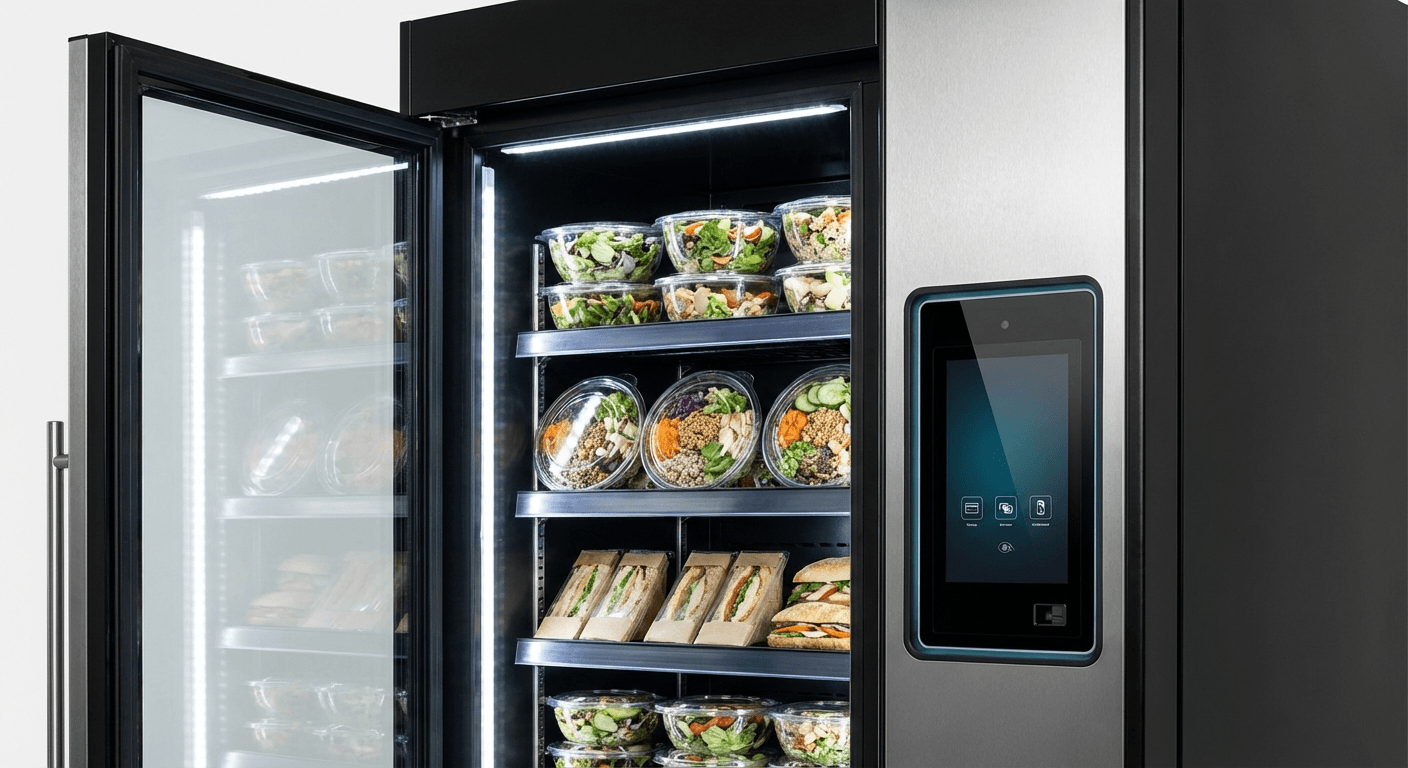
- Computer vision inventory tracking (more accurate than weight sensors alone)
- Multi-zone temperature control
- Advanced touchscreen interfaces with full nutritional info
- Integration with corporate badge and HR systems
- Detailed analytics dashboards
These features add cost to purchase price and may influence managed service availability — vendors typically deploy their best equipment at accounts that can generate sufficient volume to justify it.
Location and Installation Complexity
Standard installations (accessible floor space, existing 110V outlet, Wi-Fi present) cost vendors little. Difficult installations — basement locations requiring equipment rigging, buildings needing electrical upgrades, facilities requiring security clearance — add time and cost that vendors factor into their agreements.
Account Volume
This is the most important factor in managed service agreements. Vendors need sufficient product sales volume to profitably service an account. A 100-person office generates less revenue than a 500-person hospital floor, which affects what terms a vendor will offer.
If your facility is below a vendor's minimum volume threshold, they may decline the account entirely, offer limited service, or ask you to contribute to service costs. Understanding your expected utilization before approaching vendors helps set realistic expectations.
Service Frequency
Accounts that need more frequent restocking (high-volume, tight turnover cycles on fresh items) cost more to service. This usually isn't a visible line item in pricing — vendors build it into their product margins — but it explains why high-volume accounts often get better service terms and revenue sharing.
Hidden Costs to Watch For
Even in managed service agreements, watch for terms that create unexpected costs:
Early termination fees: Multi-year agreements often include penalties for early exit. Make sure you understand the exit terms before signing.
Service call charges: Some agreements exclude certain types of service calls (user error, physical damage, etc.) from the standard maintenance coverage.
Connectivity costs: If your facility needs a dedicated internet connection for the cooler's payment processing and monitoring systems, that may be your cost to provide.
Food minimum commitments: Some agreements require minimum monthly product purchase volumes. If your utilization doesn't hit the minimum, you may owe the difference.
Exclusivity provisions: Some contracts prevent you from using any other food vending service. Make sure you understand what you're restricting before signing.
How to Get the Best Terms
Know your volume: Estimate your headcount and realistic utilization before approaching vendors. High-volume accounts negotiate from a stronger position.
Get multiple quotes: At least 3 vendors, with comparable unit specs and service terms. Price differences are often less important than service quality differences, but competition produces better terms.
Ask about revenue sharing: If you're a high-volume account, you may qualify for revenue sharing that didn't appear in the initial proposal.
Negotiate performance clauses: Any multi-year agreement should include provisions allowing you to exit or renegotiate if service quality falls below documented standards.
Request references from comparable accounts: This is due diligence, not optional. Call them.
What Most Atlanta Businesses Actually Pay
For the vast majority of Atlanta businesses using smart coolers:
- Equipment cost: $0 (managed service)
- Installation cost: $0 (vendor handles)
- Monthly service cost: $0 (vendor-managed)
- Electricity: $30–$80/month depending on unit size and local rates
- Internet connectivity: $0 if existing Wi-Fi is adequate
The effective cost is your electricity bill. Revenue sharing from product sales at high-volume accounts can offset even that.
This is why the "how much does a smart cooler cost" question often ends with "less than you think" — and sometimes "nothing."
Compare Smart Cooler Models and Options
For more detail on how smart coolers compare to other food service options, see:
Get a Quote for Your Facility
Replenished Markets provides smart cooler programs for Atlanta businesses under a zero-cost managed service model. We'll assess your facility, recommend the right equipment, and walk through pricing and terms with no obligation.
Contact us to schedule your consultation and free taste test.