Smart Cooler vs Micro Market: How to Choose
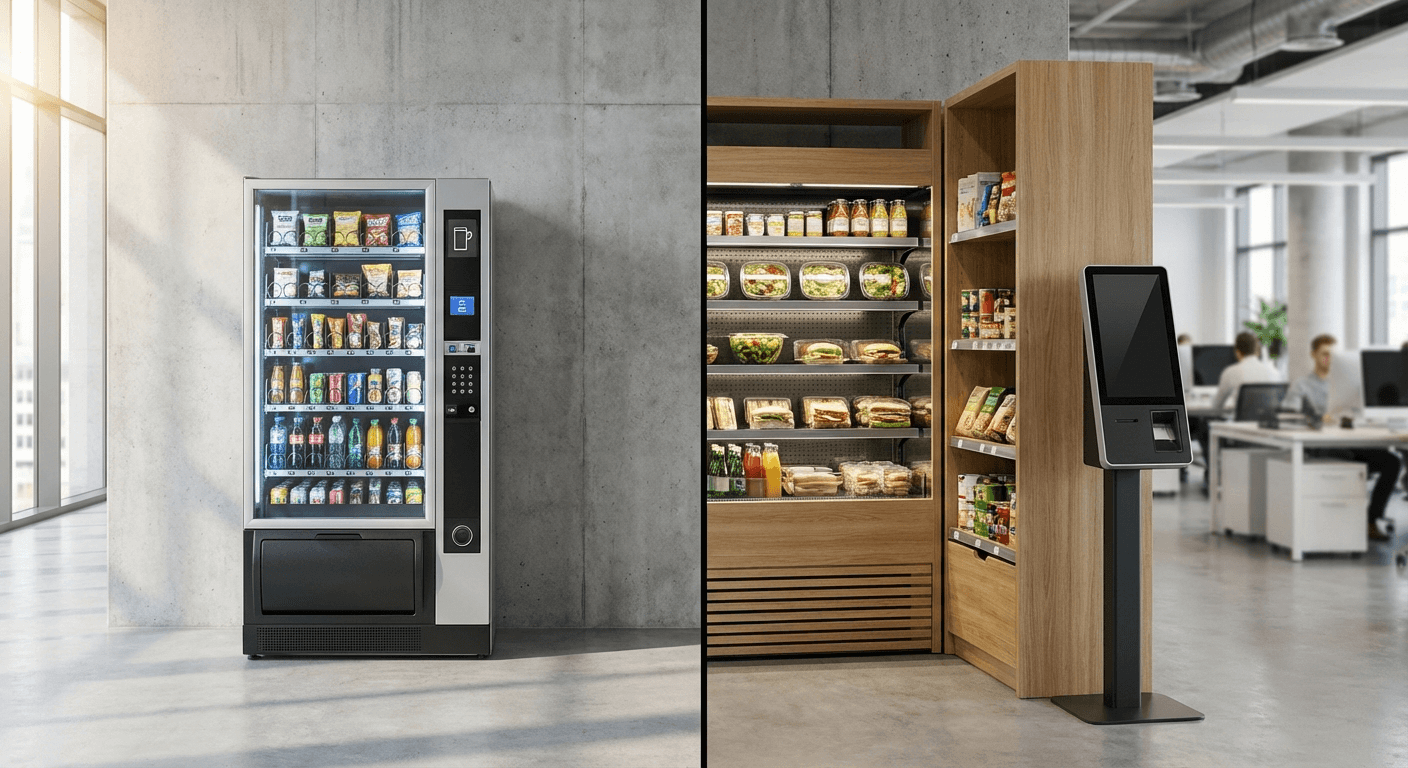
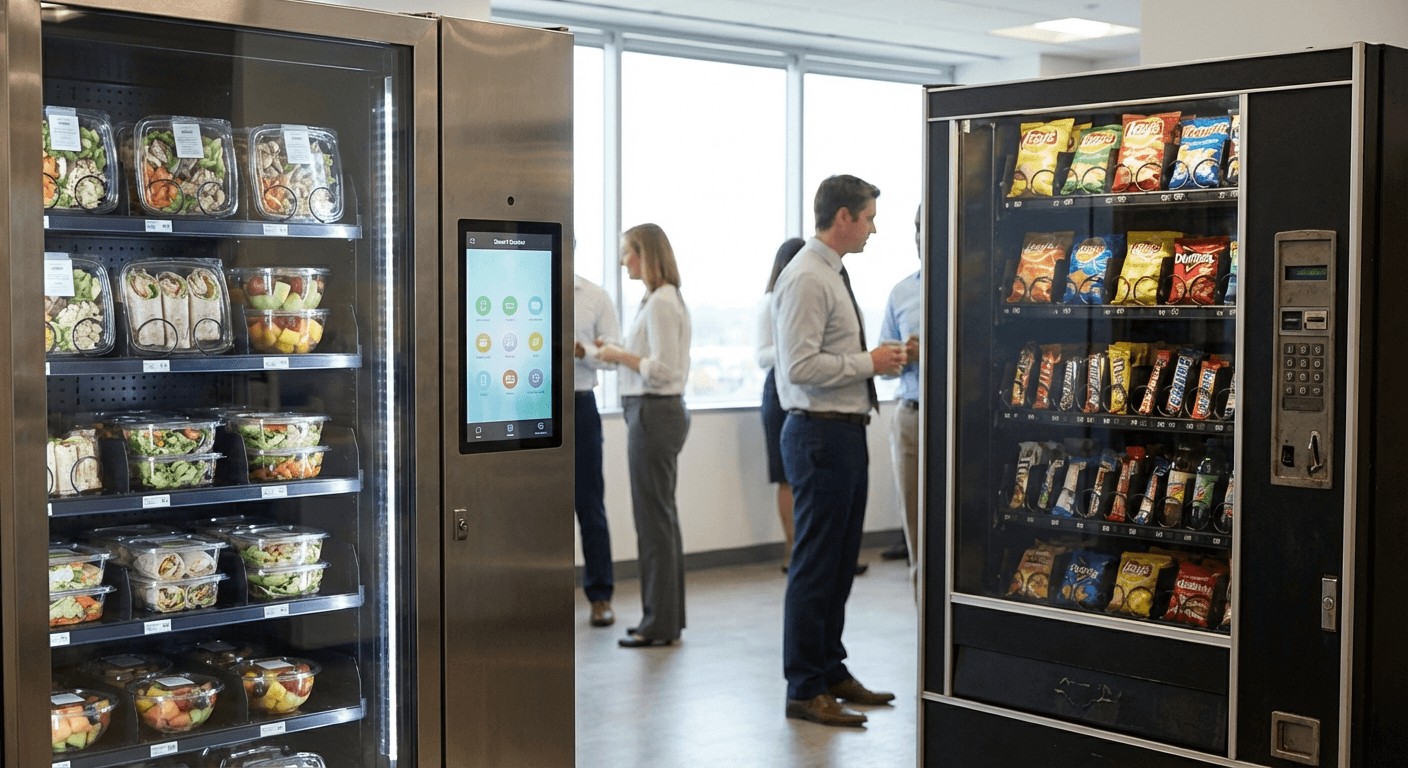
The smart cooler vs micro market decision comes up often for facility managers evaluating modern food service options. Both are substantial upgrades over traditional vending. Both offer fresh food, cashless payment, and better employee experiences. But they're designed for different facility types, and choosing the wrong one creates practical problems.
This guide lays out the complete comparison — space requirements, employee counts, product variety, cost, and operational complexity — so you can make a clear-headed decision.
What Is a Smart Cooler?
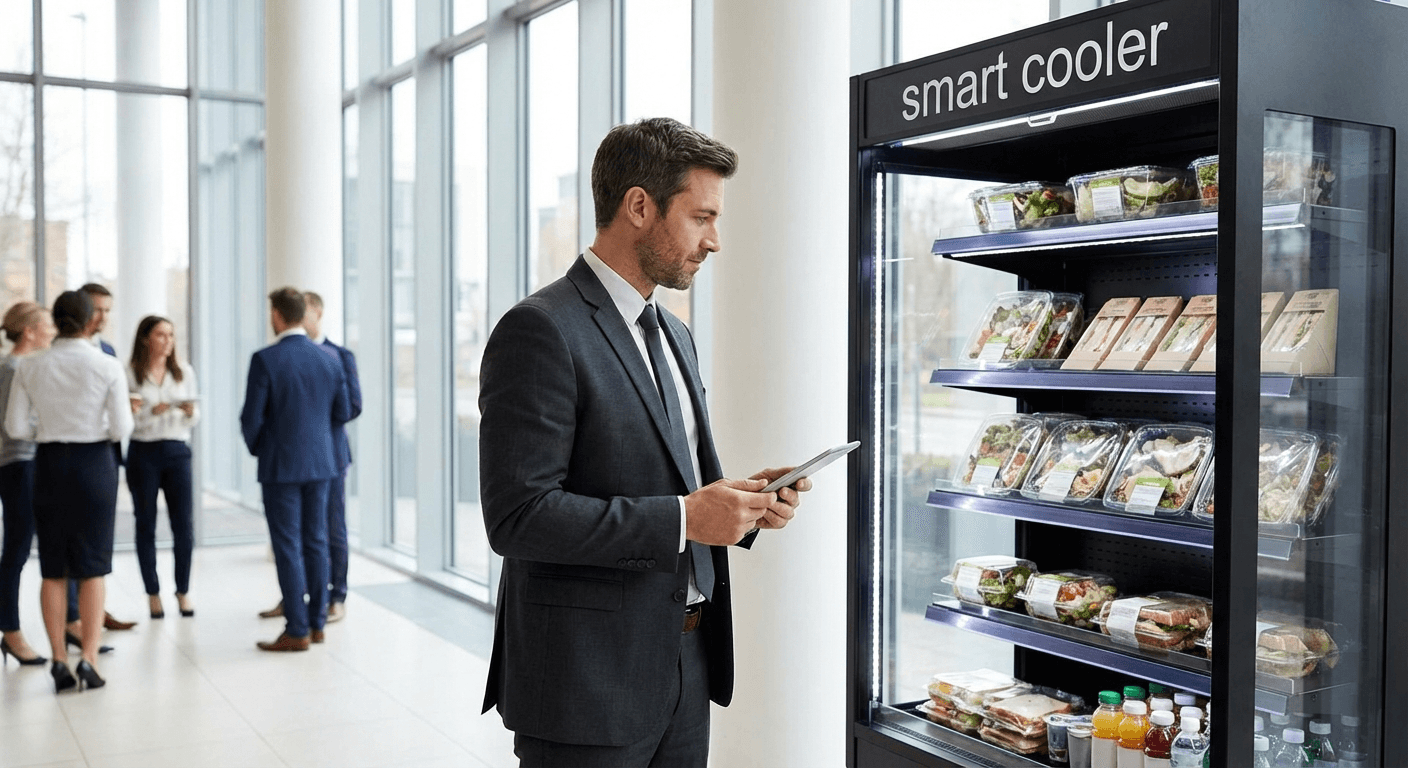
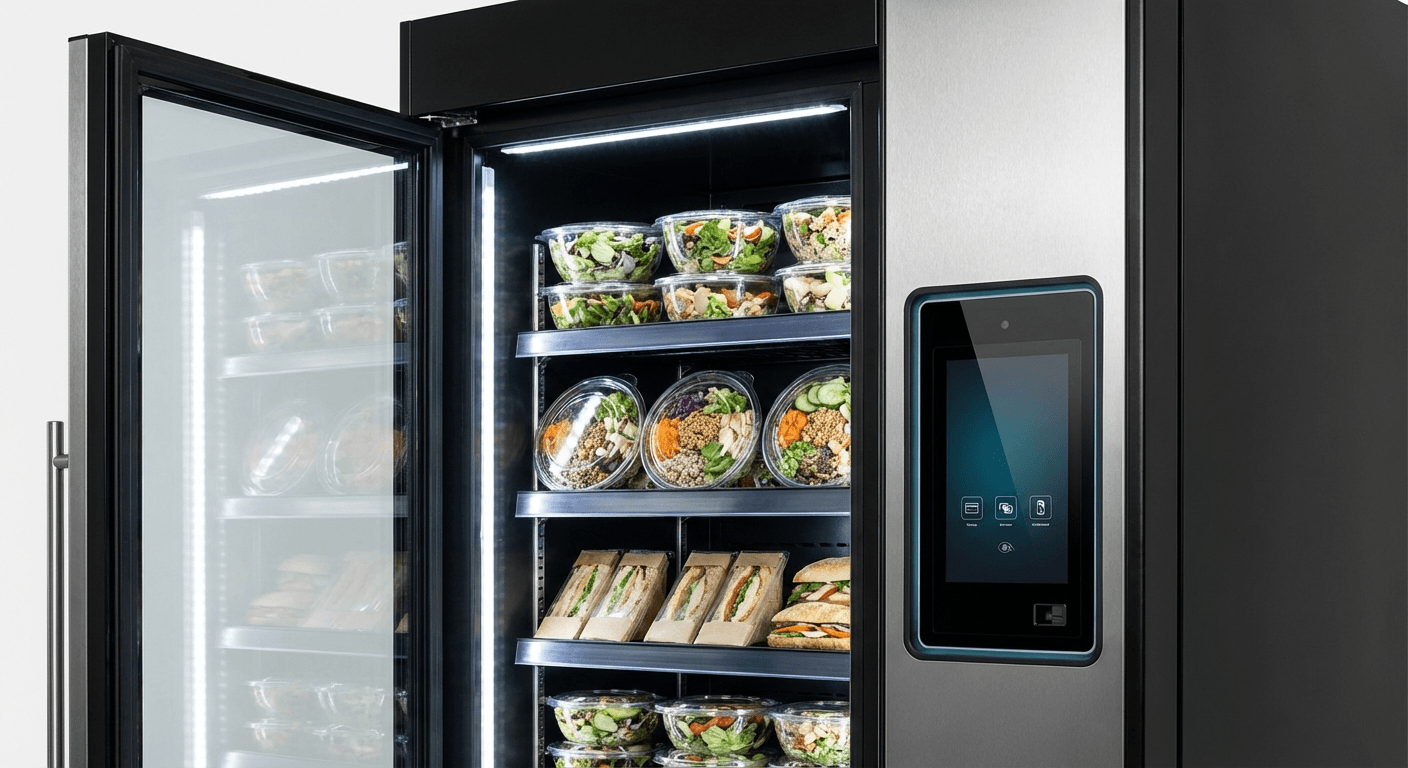
A smart cooler is a refrigerated vending unit, typically 6–8 feet wide and 3–4 feet deep, that holds fresh-prepared meals and beverages. It operates as a single self-contained unit: payment happens at the unit, the unit opens or dispenses the selected item, and the transaction is complete.
Smart coolers are the right choice for smaller facilities or spaces where a dedicated food area isn't feasible. A single unit fits in most break rooms without renovation or dedicated floor plan changes.
For a full overview, see what is a smart cooler.
What Is a Micro Market?
A micro market is an open-shelf food service area — similar to a small convenience store — that occupies a dedicated space within the facility. Products are displayed on open shelving, refrigerated cases, and ambient racks. Customers browse and select items freely, then pay at a central self-checkout kiosk.
Micro markets offer significantly broader product variety than smart coolers: fresh food, hot food (with a warming station), shelf-stable snacks, drinks, and personal care items can all coexist in the same space. The open browsing experience feels more like a store than a vending machine.
The trade-off: micro markets require dedicated space (typically 200–400 square feet), more complex installation, and higher service complexity. They make economic sense only at higher volume accounts.
See smart coolers vs micro markets for a side-by-side breakdown from Replenished Markets.
Side-by-Side Comparison
| Factor | Smart Cooler | Micro Market |
|---|---|---|
| Typical employee count | 50–300 | 200–500+ |
| Space required | 20–30 sq ft | 200–400 sq ft |
| Product variety | Medium (fresh + beverages) | High (fresh, hot, ambient, retail) |
| Installation complexity | Low (1 day, no construction) | Higher (shelving, kiosk, security) |
| Capital cost to facility | $0 (managed service) | $0–$5,000+ depending on model |
| Ongoing management burden | Minimal | Moderate |
| Shrinkage/theft risk | Low (locked access) | Moderate (open shelving) |
| User experience | Vending machine | Convenience store |
| 24/7 operation | Yes | Yes |
| Fresh food capability | Yes | Yes |
| Hot food capability | Limited (microwave only) | Yes (with warming station) |
When to Choose a Smart Cooler
Employee Count: 50–300
Smart coolers are optimized for mid-size facilities. At 50–150 employees, there's enough demand to justify a well-stocked unit without generating the volume that would justify a full micro market buildout. At 150–300, a smart cooler may still be the right choice if space is the constraint.
Below 50 employees, most vendors struggle to profitably service the account with fresh food on a regular rotation. Traditional vending or a break room refrigerator supplied by an employee program may be more appropriate.
Space Constraints
If your break room is a standard 200–400 sq ft room with no room for dedicated retail infrastructure, a smart cooler is the right choice. It needs approximately 20–30 sq ft of floor space and no construction.
Facilities That Prefer Controlled Access
In environments where open-shelf food creates shrinkage or access control concerns — hospitals, secure government facilities, some corporate environments — a locked-access smart cooler is preferable to a micro market. Payment is required before access is granted.
Simpler Program Management
Smart coolers are operationally simpler for both the vendor and the facility. Less complexity means fewer failure modes. For facility managers who want an amenity that runs reliably with minimal involvement, smart coolers are the cleaner option.
Multiple Small Locations
A single micro market requires critical mass in one location. Smart coolers can be distributed across multiple break rooms, floors, or departments in the same building — each serving 50–150 employees with minimal operational redundancy.
When to Choose a Micro Market
Employee Count: 200+
Micro markets become economically and logistically viable at higher population densities. You need enough daily transaction volume to justify the dedicated space, higher equipment investment, and more complex restocking operations.
Available Dedicated Space
A micro market needs 200–400 square feet of dedicated, accessible space — essentially a small break room that becomes a retail area. If you have this space and it's currently underutilized, converting it to a micro market can dramatically improve its functionality.
Broad Product Variety Is a Priority
If your workforce demands a wider product range — ambient snacks, hot food, personal care items, newspapers, over-the-counter medications alongside fresh food — a micro market accommodates all of this. A smart cooler cannot.
Premium Experience for a Single Large Account
A company with 400+ employees in a single location can justify a premium micro market experience: custom signage, branded environment, full product variety. It becomes a genuine amenity amenity — a destination space, not just a vending area.
Common Scenarios and Recommendations
Scenario A: 150-person suburban corporate office, standard break room
→ Smart cooler. Limited space, adequate employee count, no dedicated food area.
Scenario B: 500-person hospital floor building with existing cafeteria space that closes at 8 PM
→ Micro market in the cafeteria space for daytime use + smart coolers near nursing stations for 24/7 access. Hybrid approach is often the right answer for large healthcare facilities.
Scenario C: 80-person manufacturing plant, three shifts, no cafeteria
→ Smart cooler, possibly two units distributed across break areas.
Scenario D: 300-person corporate campus with dedicated wellness room and amenity investment budget
→ Micro market. Volume justifies it, space exists, premium experience aligns with the program.
Scenario E: 50-person professional office in Midtown Atlanta with walking distance to restaurants
→ Smart cooler for evening and weekend coverage, supplementing walkable lunch options.
Can You Have Both?
Yes, and many facilities do. Smart coolers and micro markets complement each other rather than competing. A common configuration for large corporate campuses or hospital systems:
- Micro market in the primary common area or main floor cafeteria space — serves peak-hour demand with the full product range
- Smart coolers on upper floors, in specialized departments, or for 24/7 access coverage — serve off-hours demand without requiring micro market staffing or maintenance
This hybrid approach maximizes coverage and employee satisfaction across diverse facility needs.
Questions to Guide Your Decision
- How many employees will use the program daily?
- How much dedicated floor space is available?
- Do employees need hot food, or is fresh food and beverages sufficient?
- Is this program a primary food source (no nearby restaurants) or a supplement?
- How much operational complexity is your team willing to manage?
- What is your budget, and does managed service work for your situation?
Talk Through Your Options with Replenished Markets
Replenished Markets offers both smart cooler and micro market programs for Atlanta-area facilities. We'll help you assess which model makes sense for your specific situation — without pushing you toward the more expensive option if the simpler one is the right fit.
Contact us to schedule a consultation. We'll review your facility, discuss your workforce, and recommend the right program. You can also explore our micro markets page for more detail on that option.