24/7 Hospital Food Service: Why Most Hospitals Haven't Solved It Yet
24/7 hospital food service is one of healthcare's most persistent operational blind spots. Hospitals operate around the clock — patient care never stops — but hospital cafeterias typically close by 8 PM. When night-shift nurses, ER technicians, security staff, and environmental services workers need a real meal at 2 AM, their choices are grim: a decades-old vending machine stocked with candy bars, or a 20-minute drive to a fast-food window.
This isn't just a comfort issue. Malnourished, fatigued healthcare workers make more errors. In a setting where errors cost lives, the lack of good 24/7 food access is a patient safety issue hiding in the breakroom.
Here's how Atlanta healthcare facilities are solving it.
Why Traditional Solutions Fall Short
Cafeteria Extension
Keeping cafeteria staff on overnight seems like the obvious answer — until you do the math. Overnight staffing premiums, food waste from low-volume service, and the infrastructure cost of keeping a full kitchen running 24/7 make extended cafeteria hours financially unsustainable for most hospitals.
A facility might spend $80,000–$150,000 per year on overnight cafeteria staffing while serving fewer than 30 people per night. The economics don't work.
Traditional Vending Machines
The spiral vending machines found in most hospital hallways were designed for convenience stores, not healthcare workers pulling 12-hour shifts. They offer:
- Shelf-stable snacks with minimal nutritional value
- High-sodium, high-sugar options that cause energy crashes
- Frequent mechanical failures at the worst possible times
- Cash-only or unreliable card readers
- No temperature monitoring or food safety compliance
Nurses surveyed about workplace food options consistently rank traditional vending as one of their top frustrations. It's not just the food quality — it's the feeling that leadership doesn't care enough to do better.
Food Delivery Services
Delivery apps work fine during business hours. At 3 AM in a hospital, they introduce security complications (delivery drivers in restricted areas), inconsistent availability, and per-order costs that add up fast for staff using them regularly. They also don't solve the access problem for workers who can't leave their unit.
What 24/7 Hospital Food Service Actually Requires
Effective around-the-clock food access in a hospital setting needs four things:
- Fresh food — not shelf-stable snacks but real meals that sustain a 12-hour shift
- Always-on availability — no closing time, no minimum order, no waiting
- Zero operational burden — hospital staff can't manage a food service program
- Integrated payment — badge swipe, tap-to-pay, or mobile wallet; no cash
Smart coolers check all four boxes.
How Smart Coolers Solve the 24/7 Hospital Food Service Problem
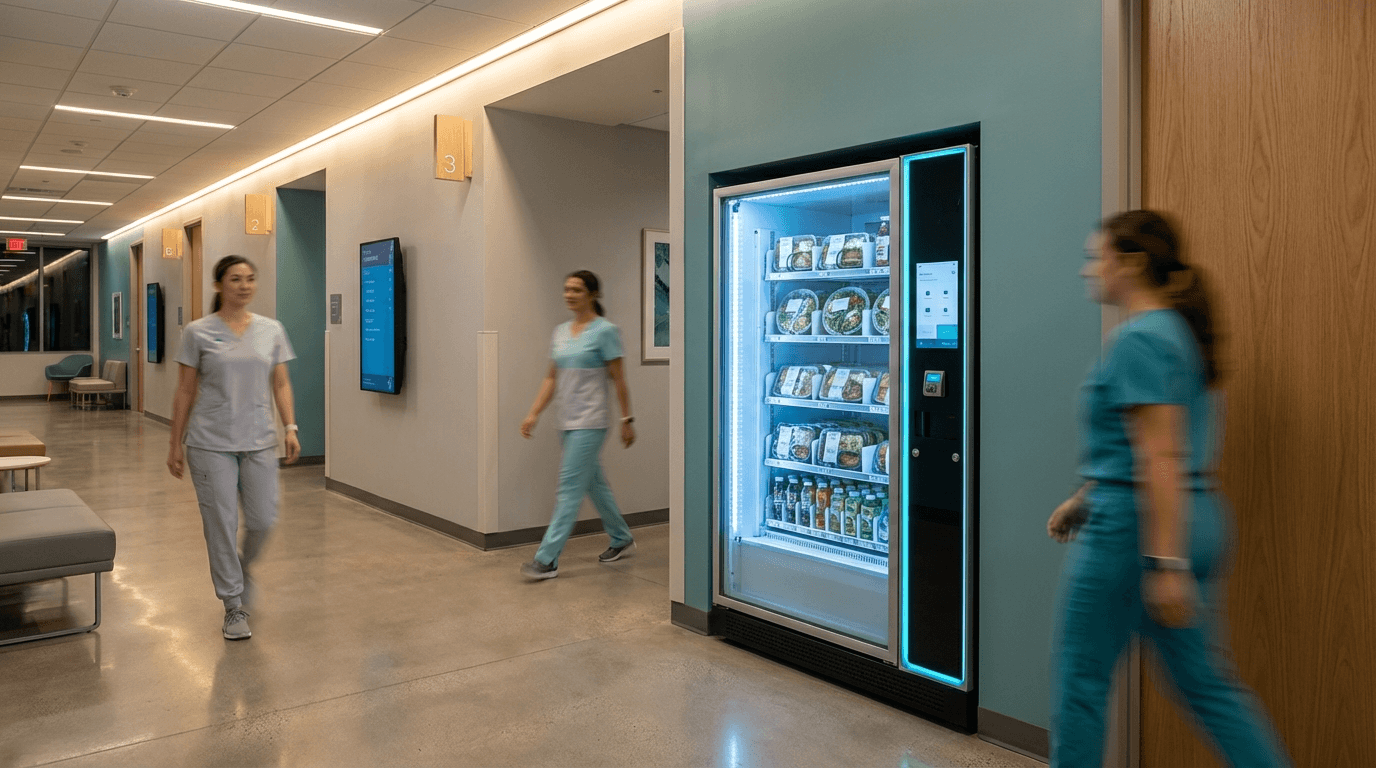
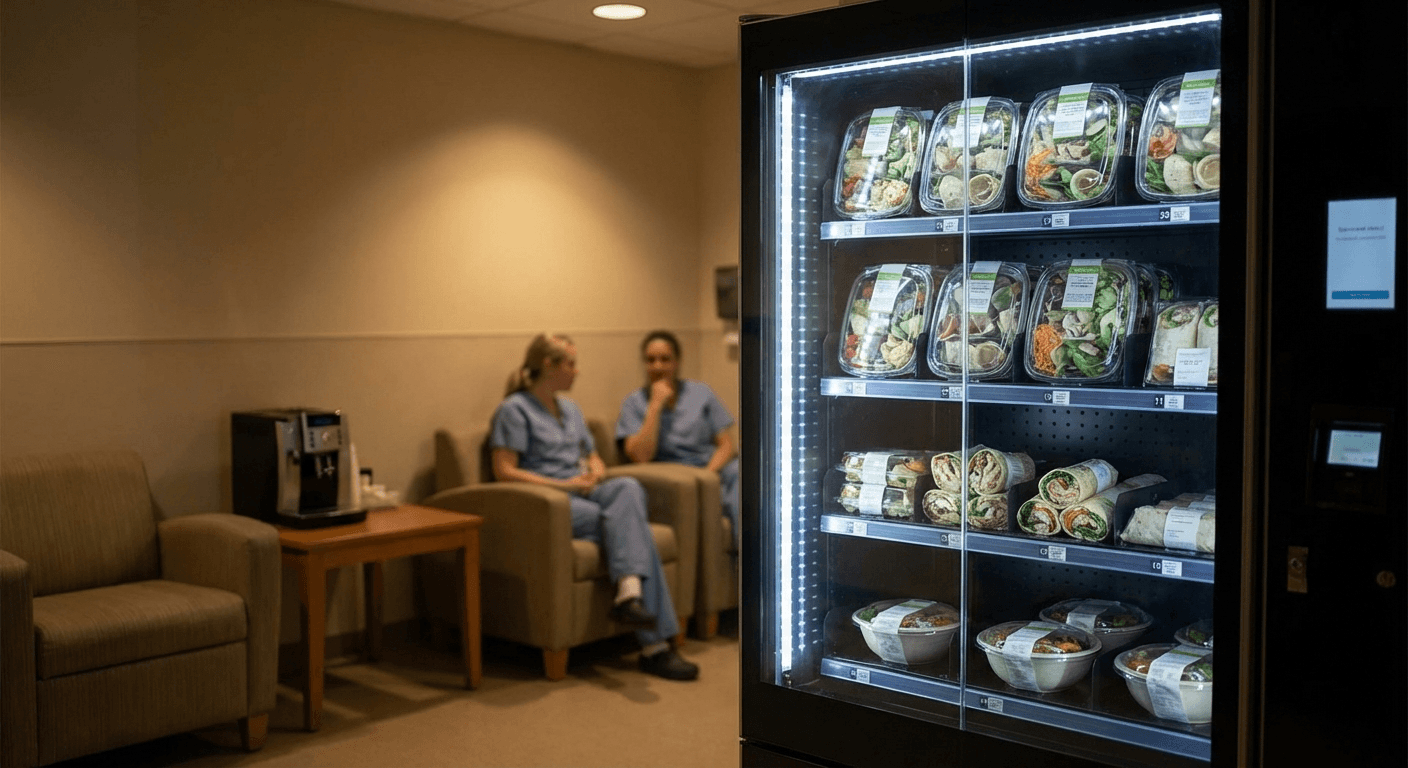
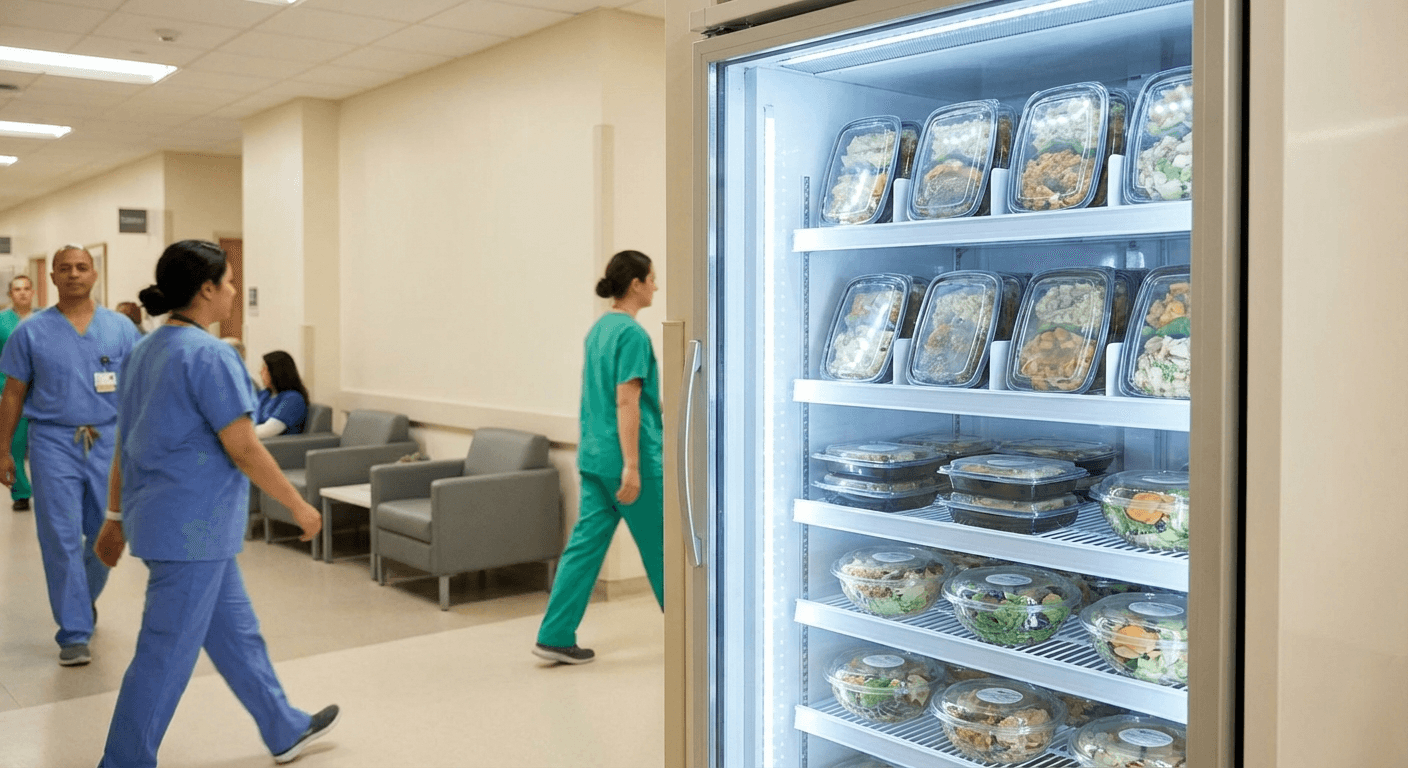
A smart cooler is a refrigerated vending unit that holds fresh meals — prepared salads, sandwiches, hot entrées in microwave-safe containers, yogurt, fruit — and operates 24/7 without any staff involvement. Units are restocked by the vendor based on consumption data, temperature is monitored continuously, and payment happens via contactless card, mobile wallet, or employee badge.
For hospitals, this means:
- Night-shift workers get access to the same quality food as day-shift workers
- ER and ICU teams can grab a meal in under 2 minutes during unpredictable breaks
- Facility management has no restocking, no maintenance, and no food safety liability
- Administration can use the program as a documented staff wellness and retention benefit
Placement Strategy
Where you put smart coolers determines how well they perform. High-traffic locations with the most night-shift activity generate the best results:
Priority locations:
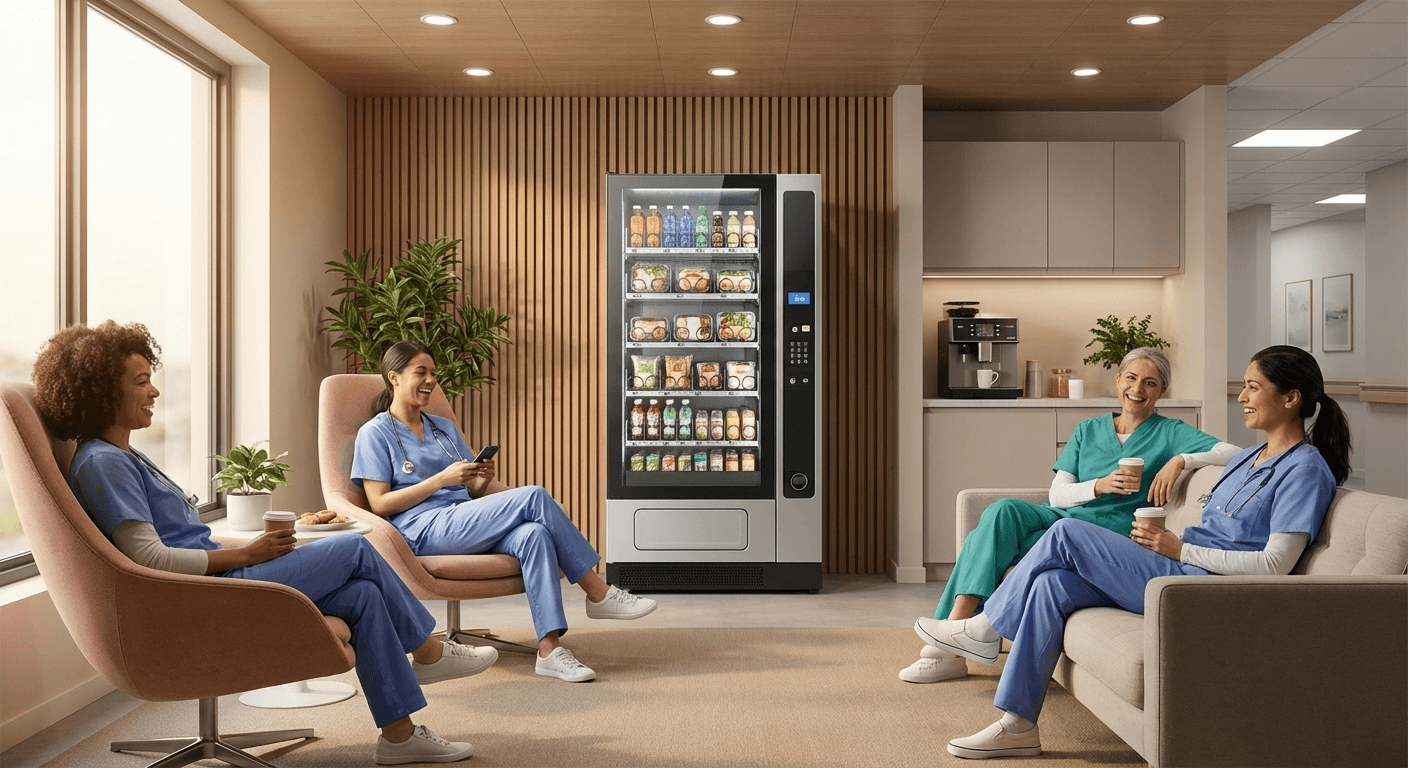
- Emergency department break rooms
- ICU and CCU staff areas
- Main nursing station corridors (one per floor in larger facilities)
- Security and environmental services offices
- On-call physician rooms
Secondary locations:
- Visitor waiting areas (for families staying overnight)
- Administrative break rooms
- Pharmacy and lab staff areas
Menu Design for Healthcare Workers
Hospital smart cooler menus work best when they're designed around shift schedules and the physical demands of healthcare work.
For night-shift workers specifically:
- High-protein options that provide sustained energy without sugar crashes
- Light meals that won't sit heavily during the last hours of a shift
- Caffeinated beverages alongside hydration options
- Comfort foods that feel like a real meal, not a compromise
Dietary inclusion matters:
- Vegetarian and vegan options for the significant portion of healthcare staff with plant-based diets
- Gluten-free meals clearly labeled
- Low-sodium options for staff managing their own health conditions
- Portions designed for adults doing physically and mentally demanding work
Food Safety in a Hospital Environment
Hospitals hold food vendors to a higher standard than most industries — and they should. Smart cooler vendors serving healthcare facilities should maintain:
- HACCP certification for all food preparation
- Continuous temperature monitoring with real-time alerts for excursions outside safe ranges (35–41°F)
- Cold chain documentation from kitchen to cooler
- Product liability insurance (minimum $2M is standard)
- Daily restocking schedules that ensure freshness — no product should sit more than 48–72 hours
Ask any vendor you're evaluating for their temperature monitoring protocol and food safety certifications before signing an agreement.
Staff Impact: The Retention Argument
The business case for 24/7 hospital food service goes beyond nutrition. Healthcare facilities across the country are using smart cooler programs as a documented element of their nursing retention strategy.
Replacing a registered nurse costs between $40,000 and $80,000 when you account for recruitment, onboarding, temporary staffing coverage, and the productivity ramp-up period for new hires. If better food access reduces annual turnover by even a small number, the program pays for itself many times over.
Night-shift workers, who are disproportionately affected by cafeteria closures, report higher job satisfaction at facilities that have invested in their food access. It's a small thing that signals something important: the organization sees us.
For a deeper look at this dynamic, see healthcare staff retention and workplace amenities.
What Implementation Looks Like
Working with a managed service vendor, a typical hospital implementation follows this timeline:
Week 1–2: Site assessment — location scouting, electrical and network verification, union consultation if applicable
Week 3: Equipment delivery and installation (typically 2–4 hours per unit)
Week 4: Initial stocking and staff communication; taste test events if desired
Month 2: Menu optimization based on early consumption data; feedback collection
Month 3+: Steady-state operations with ongoing menu rotation and data reviews
The facility provides floor space and an electrical outlet. Everything else — equipment, stocking, maintenance, payment processing, food safety compliance — is the vendor's responsibility.
Common Objections Addressed
"We have a vending contract."
Most traditional vending contracts cover shelf-stable items in spiral machines. Fresh, refrigerated food is typically outside the contract scope. Review the language carefully — odds are smart coolers don't conflict.
"We can't risk food safety liability."
With the right vendor, you carry no liability. Food preparation, temperature management, and product rotation are all vendor responsibilities covered by their insurance.
"Our night-shift volumes are too low."
Low utilization in the first few weeks is normal. As staff discover the program and trust the food quality, usage grows. Vendors with healthcare experience know this and build ramp-up periods into their agreements.
"What about union agreements?"
Introducing smart coolers as a staff benefit — not a cost-cutting measure — typically resolves union concerns. Involving union representatives in the planning process early prevents friction later.
Getting Started
Replenished Markets provides smart cooler installation, stocking, and service for healthcare facilities across metro Atlanta. We specialize in hospital environments, work within existing food service structures, and handle every aspect of the program so your team doesn't have to.
Contact us to schedule a site assessment and taste test. We'll walk through your facility's specific needs, recommend placement, and provide a proposal with no obligation.
For more on how hospitals in Atlanta are approaching this, see why hospitals are switching to fresh food vending in 2026.