Smart Cooler Programs for Senior Living Communities
Smart coolers for senior living communities are reshaping how assisted living facilities, independent living campuses, and memory care centers approach between-meal nutrition access.
Scheduled dining works well as a framework — but residents have needs between breakfast, lunch, and dinner. Visiting family members arrive at all hours. Staff working evening and overnight shifts need real food without leaving the facility. A smart cooler program addresses all three populations without adding operational complexity to your already-stretched team.
Here's what a well-run smart cooler program looks like in a senior living environment and how to evaluate whether it's right for your community.
The Nutrition Gap in Senior Living
Most senior living communities operate structured dining programs that serve residents three meals a day. These programs are important, carefully managed, and generally well-regarded by residents and families.
The gap isn't in scheduled meals — it's in everything between them.
Between-Meal Snack Access
Residents who want a snack at 3 PM or a light bite at 9 PM after evening activities have limited options in most communities. A vending machine (if one exists) typically offers chips and candy. A refrigerator in the dining room may not be accessible after staff go home. Reaching family members to bring something feels like an imposition.
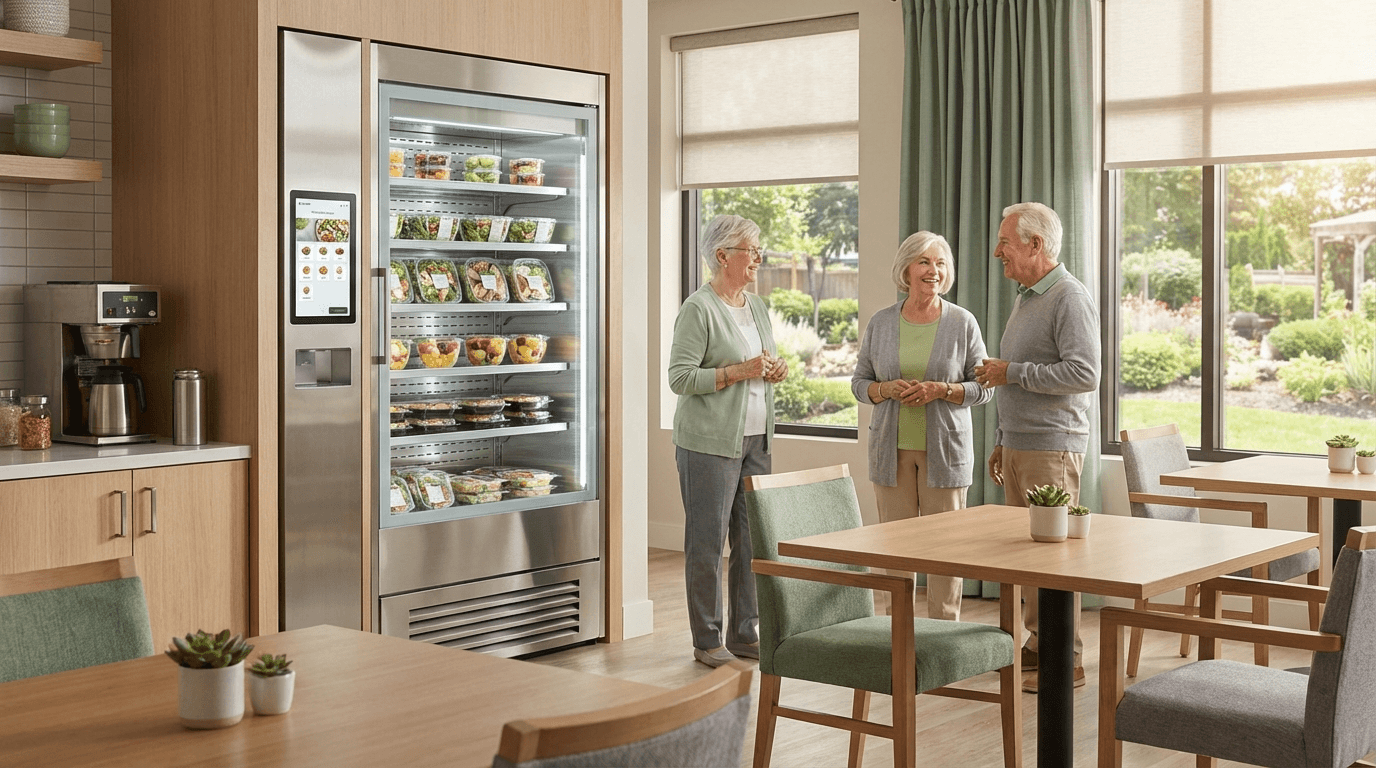
Smart coolers provide an accessible, dignity-preserving option: residents or staff can walk to the unit, select what they want, and pay with a tap — independently, without waiting for anyone's help.
Family Member Access
Families of senior living residents are often present during evening hours, sometimes staying overnight when a loved one is ill or transitioning. A family member sitting in a common area at 11 PM has no food options at most communities.
Smart coolers in lobby or common area locations serve visiting families without requiring any staff involvement — and generate goodwill from a population that significantly influences occupancy decisions.
Staff Nutrition
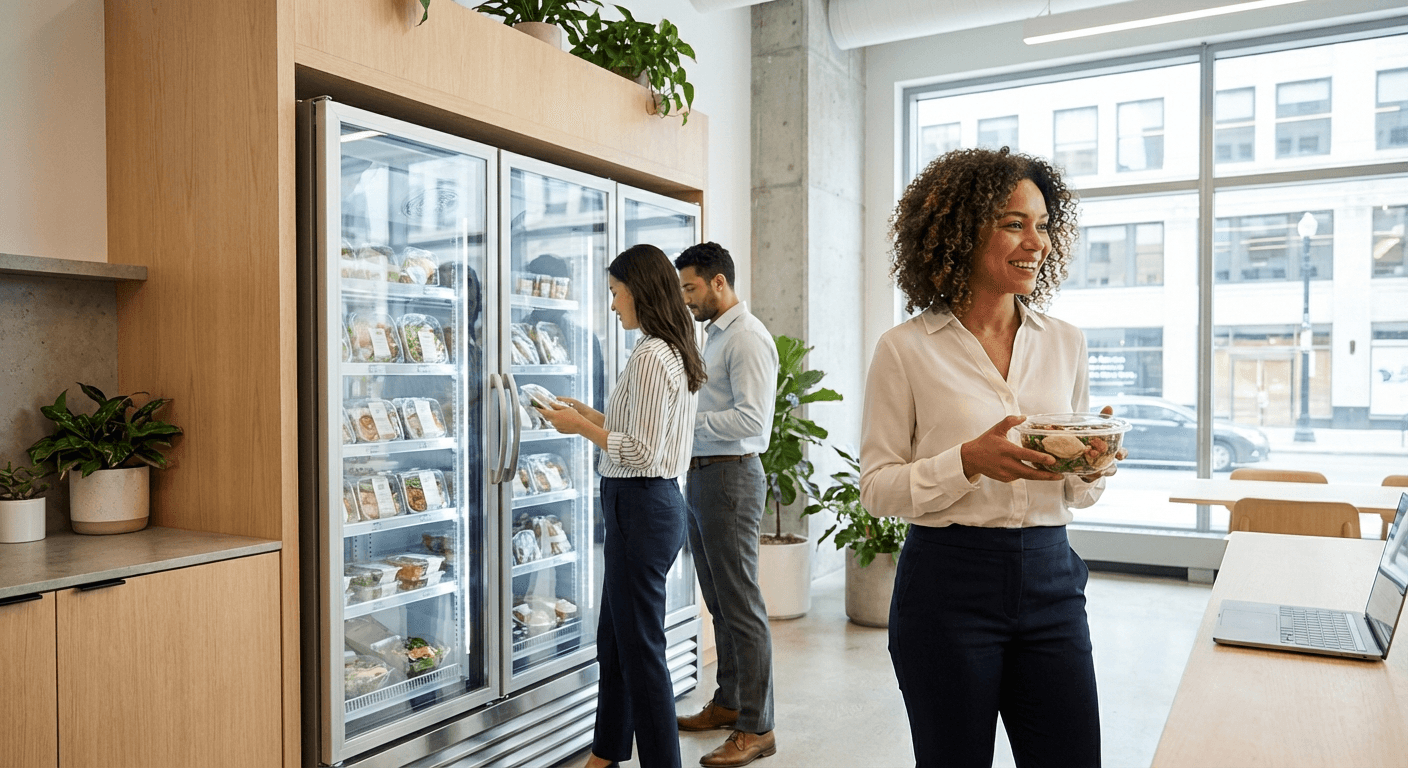
Senior living community staff — caregivers, nurses, maintenance, security — work evenings and overnight shifts with the same food access challenges as healthcare workers elsewhere. Night-shift staff deserve real food, not whatever's left in the breakroom from the afternoon.
For more on how food access affects healthcare-adjacent staff, see healthcare staff retention and workplace amenities.
What Smart Coolers Offer in a Senior Living Setting
Convenient, Accessible Placement
Smart coolers are compact enough to place in common areas, near the dining room, in lobby spaces, or in staff break rooms without requiring construction or dedicated space. Most units need approximately 6–8 feet of floor space and a standard electrical outlet.
For memory care units where resident access to a standard unit may not be appropriate, staff-only placement in break rooms is the right configuration.
Resident-Appropriate Food Options
A senior living smart cooler menu should reflect the specific needs of older adults and the dietary preferences common in your community's resident population:
Snack options:
- Fresh fruit cups and pre-cut vegetables
- Yogurt and cheese portions
- Hummus and whole-grain crackers
- Nuts and trail mixes
- Light pastries and baked goods
Light meal options:
- Fresh sandwiches and wraps
- Soup cups (microwavable)
- Salads with quality protein
Beverage options:
- Juices and smoothies
- Sparkling water
- Specialty coffee drinks
Staff-specific options (if the unit is accessible to staff): Heartier protein meals, higher-calorie options for workers doing physical caregiving work.
A good vendor will customize the menu for your specific community rather than deploying a generic planogram.
Dietary Accommodation
Senior populations have diverse and often medically-driven dietary needs. A smart cooler program serving a senior living community should accommodate:
- Low-sodium options for residents with cardiovascular or kidney conditions
- Diabetic-friendly choices (low glycemic index, controlled carbohydrates)
- Soft-texture options for residents with swallowing difficulties
- Allergen labeling clearly visible on all items
- Gluten-free items for residents with celiac or gluten sensitivity
Work with your vendor to ensure the menu reflects your resident population's medical and dietary profile.
Technology That Doesn't Intimidate
Many older residents aren't comfortable with complex technology, and some may have cognitive limitations that make a complicated payment process frustrating. Modern smart coolers have been designed for accessibility:
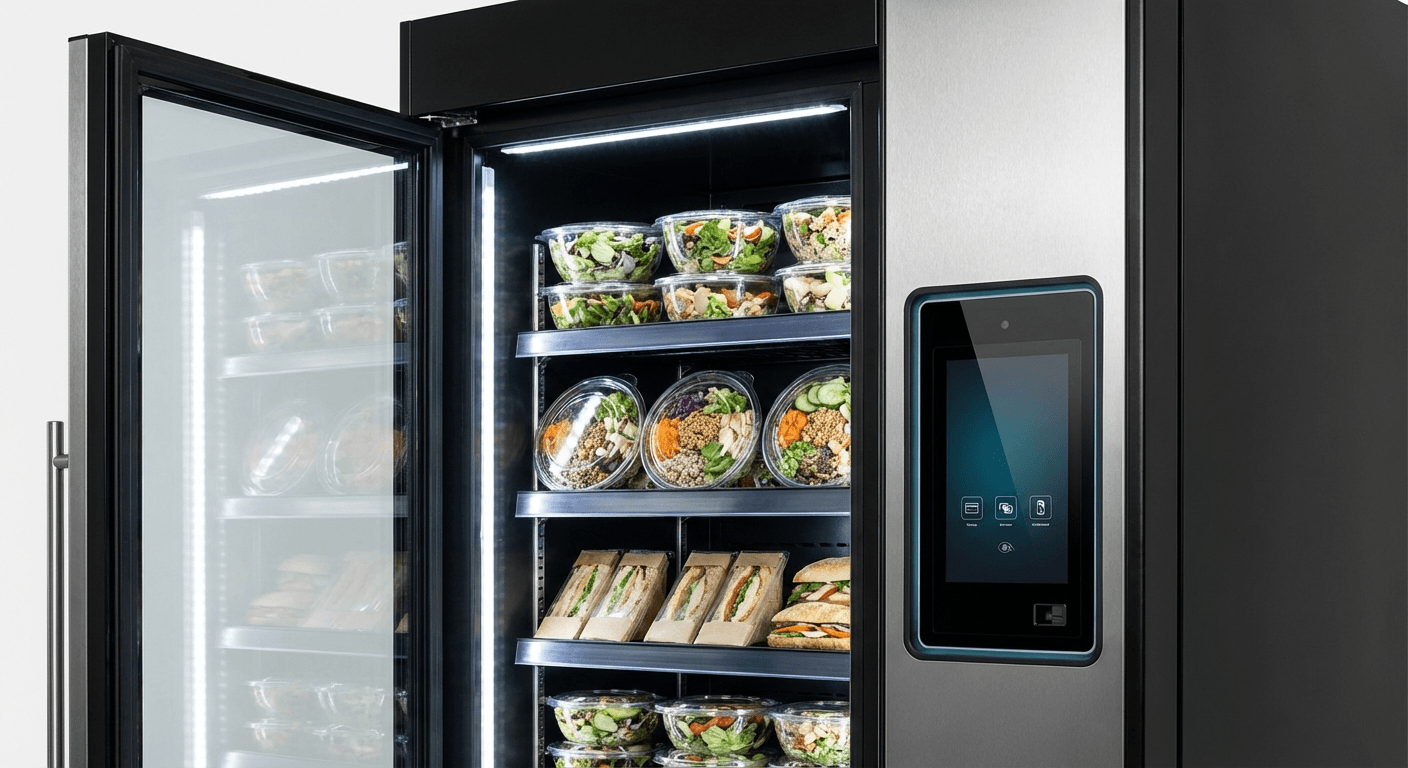
- Large touchscreen displays with clear typography
- Simple tap-to-pay that works with any credit or debit card
- Apple Pay and Google Pay compatibility for tech-comfortable residents
- No cash handling required
For residents who have concerns about the technology, a brief orientation from a staff member — typically 5 minutes — is all they need.
Benefits for Administrators
Zero Operational Burden
Senior living community administrators and directors are already managing complex, regulated operations. A smart cooler program in managed service doesn't add to that burden — it subtracts from it.
The vendor provides the equipment, restocks based on demand data, handles maintenance and food safety, and delivers monthly reports. Your team's involvement is minimal: occasional feedback on what residents and staff like, and that's it.
Revenue Potential
In managed service agreements, some vendors offer revenue sharing — a percentage of gross product sales paid back to the facility. For high-volume accounts, this is meaningful income. For lower-volume communities, it may not be available, but the program cost is still zero.
Family and Resident Satisfaction Scores
Family satisfaction is increasingly important in senior living occupancy and marketing. Families who visit and find a well-stocked, clean, accessible smart cooler in the lobby notice. It's a visible signal of investment in the resident experience.
Online reviews for senior living communities frequently reference the quality of food and the overall environment. A smart cooler is a small but visible positive data point.
Staff Retention
As with any organization where staff work non-standard hours, food access improvement contributes to retention. Senior living has significant turnover challenges — anything that visibly improves the daily work experience for caregivers and nurses helps.
How Implementation Works
Phase 1: Assessment
Replenished Markets visits your community to:
- Identify optimal placement locations (lobby, common area, staff break room, or all three)
- Assess electrical and network requirements
- Review resident demographics and dietary considerations
- Discuss menu preferences and any medical dietary constraints
Phase 2: Menu Planning and Agreement
We develop a community-specific menu proposal and service agreement. You review and approve before anything is installed.
Phase 3: Installation
Equipment delivery and setup typically takes a single day. We handle all installation, stock the initial inventory, and conduct a brief orientation for any staff who will help residents use the unit.
Phase 4: Ongoing Service
Our team restocks based on consumption data, handles all maintenance, and delivers monthly utilization reports. You provide feedback on what's working; we adjust accordingly.
Is a Smart Cooler Right for Your Senior Living Community?
A smart cooler program works well for communities that:
- Have 50+ residents or staff who would potentially use a between-meal food option
- Have common areas or break rooms where a unit can be placed safely and accessibly
- Want to improve resident or family satisfaction without significant operational investment
- Have staff working evenings and overnight who have poor food access
It's less ideal for:
- Very small communities where volume is too low for a vendor to profitably service
- Memory care-only facilities where resident access to the unit unsupervised is a safety concern (though staff-only placement can still work)
Get Started with a Senior Living Smart Cooler Program
Replenished Markets provides smart cooler programs for senior living communities across metro Atlanta. We understand the unique needs of your environment — dietary requirements, family involvement, staff retention challenges — and build programs accordingly.
Contact us to schedule a visit and learn what a program would look like for your community. You can also explore our dedicated page on fresh food vending for senior living for more detail on how we serve this market.