Smart Coolers for Atlanta Universities: Solving the Campus Dining Gap
Smart coolers for Atlanta universities address one of the most persistent food service challenges in higher education: students, faculty, and staff need food access at times when dining halls don't operate.
Late-night study sessions in the library. Early morning research in lab buildings. Evening seminars and events. Study groups that run until 1 AM during finals week. All of these scenarios create real nutritional needs that traditional campus dining can't serve economically or logistically.
Smart coolers fill this gap — providing fresh meals, snacks, and beverages in the locations where campus life actually happens, at the hours when people actually need them.
The Campus Dining Gap in Atlanta
Atlanta's major universities — Georgia Tech, Georgia State, Emory, Clark Atlanta, Morehouse, Spelman, Kennesaw State — each operate dining hall programs designed around peak-hour demand. These programs work well for standard meal periods: breakfast from 7–10 AM, lunch from 11 AM–2 PM, dinner from 5–8 PM.
The gap is everywhere else.
Students pulling late-night study sessions can't access a hot meal at 11 PM. Graduate students and researchers working off-hours in lab or office buildings rarely have a dining option nearby. Staff who arrive before 7 AM or stay after 8 PM fall outside normal service windows. Faculty who eat dinner at their desks during evening classes have nothing available.
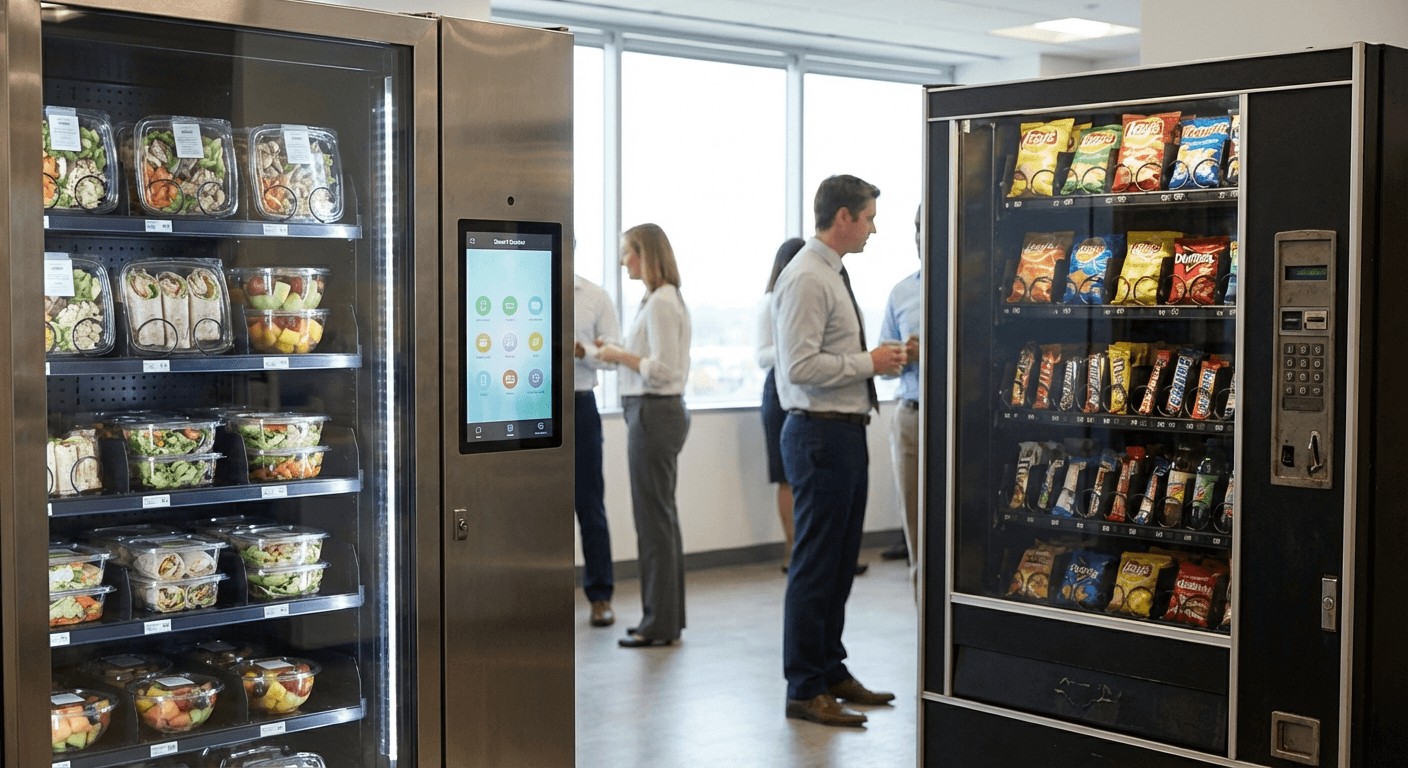
Traditional vending machines filled this gap for decades with the same inadequate result: chips, candy, and stale packaged sandwiches. The nutritional quality that academic institutions publicly advocate for in their wellness programs is conspicuously absent from their vending strategy.
Smart coolers close the gap with food worth eating.
Where Smart Coolers Work Best on Campus
Residence Halls and Dormitories
Dormitory lounges and common areas are high-traffic, high-need locations for smart coolers. Residents who want a meal after the dining hall closes — whether at 10 PM or 2 AM — have nowhere else to turn.
Smart coolers in residential buildings give students access to fresh food without requiring them to leave their residence, cross campus, or violate any curfews. The convenience is genuine, and the utilization rates in dormitory placements are typically among the highest on campus.
Libraries and Academic Buildings
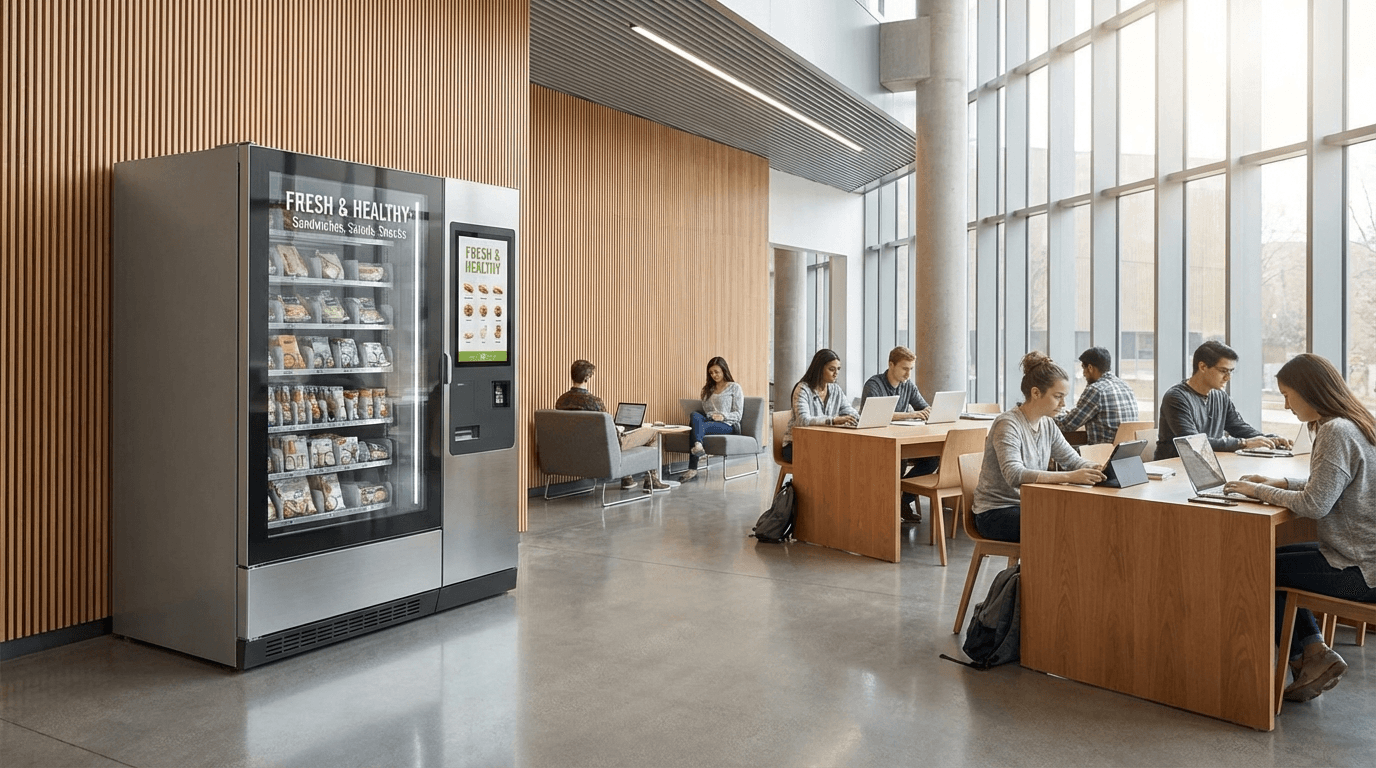
Students studying in the library at midnight aren't going to leave to find food. But they'll walk 50 feet to a smart cooler in the lobby.
High-traffic academic buildings and libraries are ideal second locations after residence halls. These placements serve the late-study population most affected by dining hall hours, with the added benefit of providing quick nourishment that helps sustain focus during marathon study sessions.
Student Unions and Common Areas
Student unions that close their food service operations at 9 PM but remain open for events until midnight create a natural smart cooler placement opportunity. The space already serves students; extending food access through a smart cooler requires only a unit and an electrical outlet.
Faculty and Staff Buildings
Academic staff — particularly graduate students, research faculty, and administrative staff — work irregular hours that frequently fall outside dining hall service windows. Office buildings, research facilities, and departmental common areas serve this population without requiring access to student-facing locations.
Gyms and Recreation Centers
Campus recreation centers attract fitness-focused students and staff who have specific post-workout nutrition needs: protein, hydration, recovery-focused snacks. Smart coolers in recreation center lobbies serve this specific population with an appropriate product mix.
What Atlanta Universities Are Solving
Food Deserts on Campus
Many Atlanta campus buildings are located in areas — or on parts of campus — where getting food requires significant transit time. A late-night walk across Georgia Tech's campus in winter, or navigating Georgia State's urban campus after evening classes, isn't the same as walking down the hall to the building's smart cooler.
Distributed smart coolers across campus reduce the distance any student needs to travel to find food, effectively eliminating food deserts within the campus footprint.
Student Wellness and Academic Performance
There's well-established research on the relationship between nutrition and cognitive performance. Students who skip meals or eat poor-quality food have measurable decreases in concentration, problem-solving ability, and academic performance.
Universities that invest in accessible, quality food options — including smart coolers — are making an investment in student academic outcomes, not just convenience.
Faculty and Graduate Student Recruitment
Graduate students and faculty evaluate university environments partly on quality of daily life. A campus where the only food option after 7 PM is a vending machine with granola bars is a campus that signals it doesn't invest in the people who work there.
This is a smaller signal than research funding or lab quality, but it accumulates. Universities competing for top graduate students and faculty benefit from demonstrating investment in daily experience.
Menu Design for University Smart Coolers
University populations are diverse, food-conscious, and accustomed to variety. Smart cooler menus for college campuses should reflect this:
Fresh meal options:
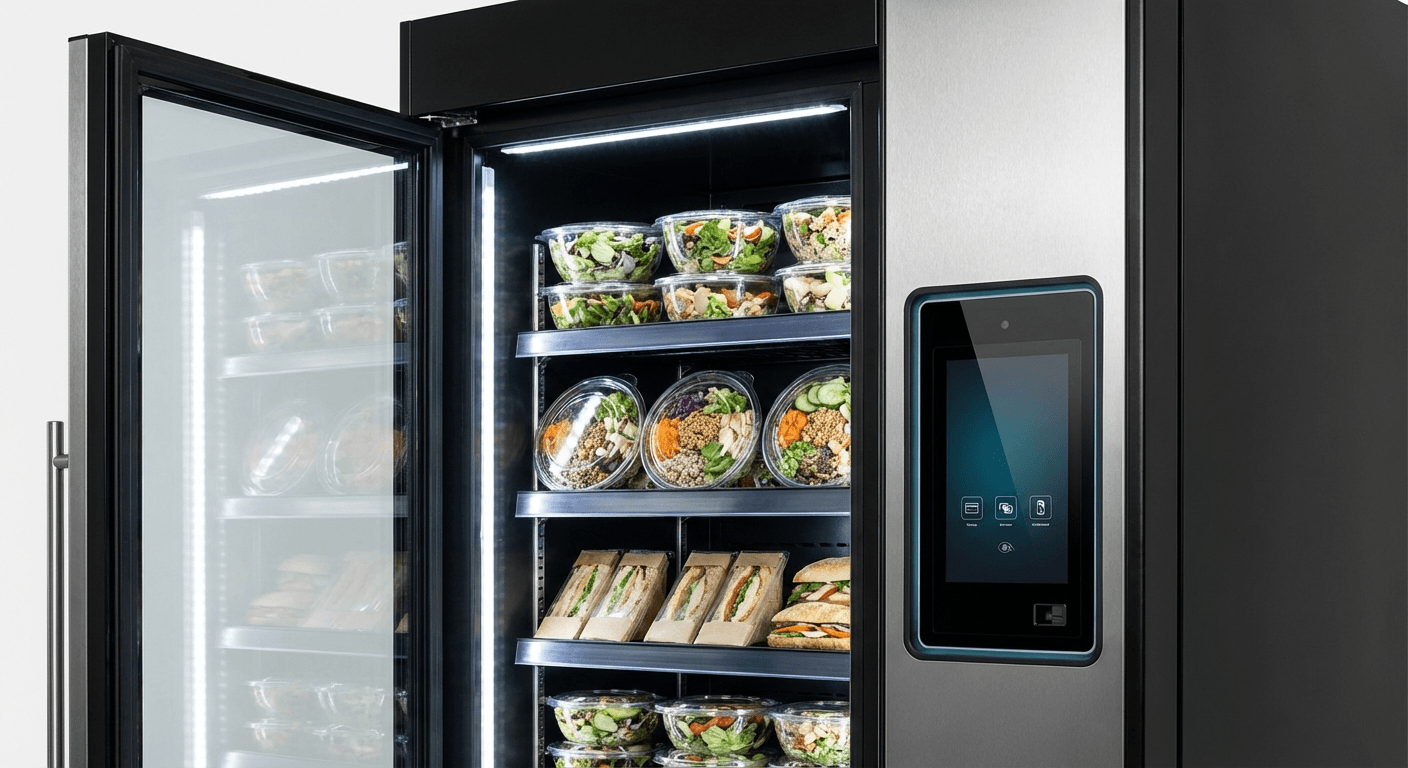
- Salads and grain bowls (high demand from health-conscious students)
- Sandwiches and wraps with quality protein
- Sushi and international dishes reflecting campus diversity
- Hot entrées in microwave-safe containers (particularly valuable late night)
- Soups and comfort foods during exam periods
Snacks and lighter options:
- Fresh fruit cups and vegetable portions
- Yogurt and granola
- Hummus with crackers or vegetables
- Energy-dense snacks for all-night study sessions
Beverages:
- Cold brew coffee and energy drinks (significant demand in university settings)
- Fresh juices and smoothies
- Electrolyte beverages
- Sparkling water and specialty drinks
Dietary diversity (non-negotiable for diverse university populations):
- Vegan and vegetarian options consistently available, not as occasional specials
- Halal-friendly items clearly labeled
- Gluten-free choices for students with celiac or sensitivity
- Allergen labeling on all products
Regular menu rotation — weekly or bi-weekly — is essential in university settings. Students visit multiple times per week. A static menu loses adoption within a few weeks.
Payment Integration with Student IDs
Most Atlanta-area universities operate meal plan programs tied to student ID cards. Smart coolers that integrate with campus ID systems — allowing students to pay using their meal plan balance — dramatically increase adoption rates and simplify the payment experience.
This integration requires coordination between the vendor and the university's dining or IT department. It's technically feasible for most modern campus ID systems and worth pursuing during the procurement conversation.
For students without meal plan balances, contactless credit/debit card payment, Apple Pay, and Google Pay provide universal cashless access.
Implementation for Atlanta Campuses
Procurement Process
University procurement typically involves:
- Facilities management or campus dining office evaluation
- RFP or vendor qualification process
- Compliance review (particularly for student-facing installations)
- Contract approval
Campus dining departments at universities with existing food service contracts need to review whether smart coolers represent a conflict with those contracts. In most cases, smart coolers serving non-dining-hall locations and hours are complementary, not competitive.
Pilot Program Approach
Many universities start with a pilot installation — one or two units in the highest-traffic, most service-gap-affected locations. Common pilot choices:
- Main library (late-night study population)
- Largest dormitory complex (highest residential density)
Pilot data (utilization rates, popular items, usage timing) makes the case for expansion and informs optimal placement of subsequent units.
Get Smart Coolers for Your Atlanta Campus
Replenished Markets works with educational institutions across metro Atlanta to implement smart cooler programs that genuinely serve campus populations. We understand university environments, provide equipment appropriate for high-traffic institutional settings, and manage all stocking and maintenance.
Contact us to discuss your campus's specific needs and start the conversation about what a program would look like. You can also explore fresh food vending for universities for more detail on our higher education approach.