Smart Cooler Food Safety: How It Works and What to Require
Smart cooler food safety is the first concern most facility managers raise when considering fresh food vending — and it's a legitimate one. Serving perishable food to employees, patients, or students creates real liability if the food safety chain breaks down anywhere.
The good news: well-designed smart cooler programs have more robust food safety controls than most traditional food service operations. The key word is well-designed. Not all vendors operate the same standards. This guide explains how the technology works, what a proper food safety chain looks like from kitchen to cooler, and what questions to ask any vendor you're evaluating.
Why Temperature Is the Foundation of Smart Cooler Food Safety
Food safety for perishable items is fundamentally a temperature problem. Bacteria that cause foodborne illness — Listeria, Salmonella, E. coli — grow rapidly between 41°F and 135°F. The FDA's definition of the "danger zone" is precisely this range.
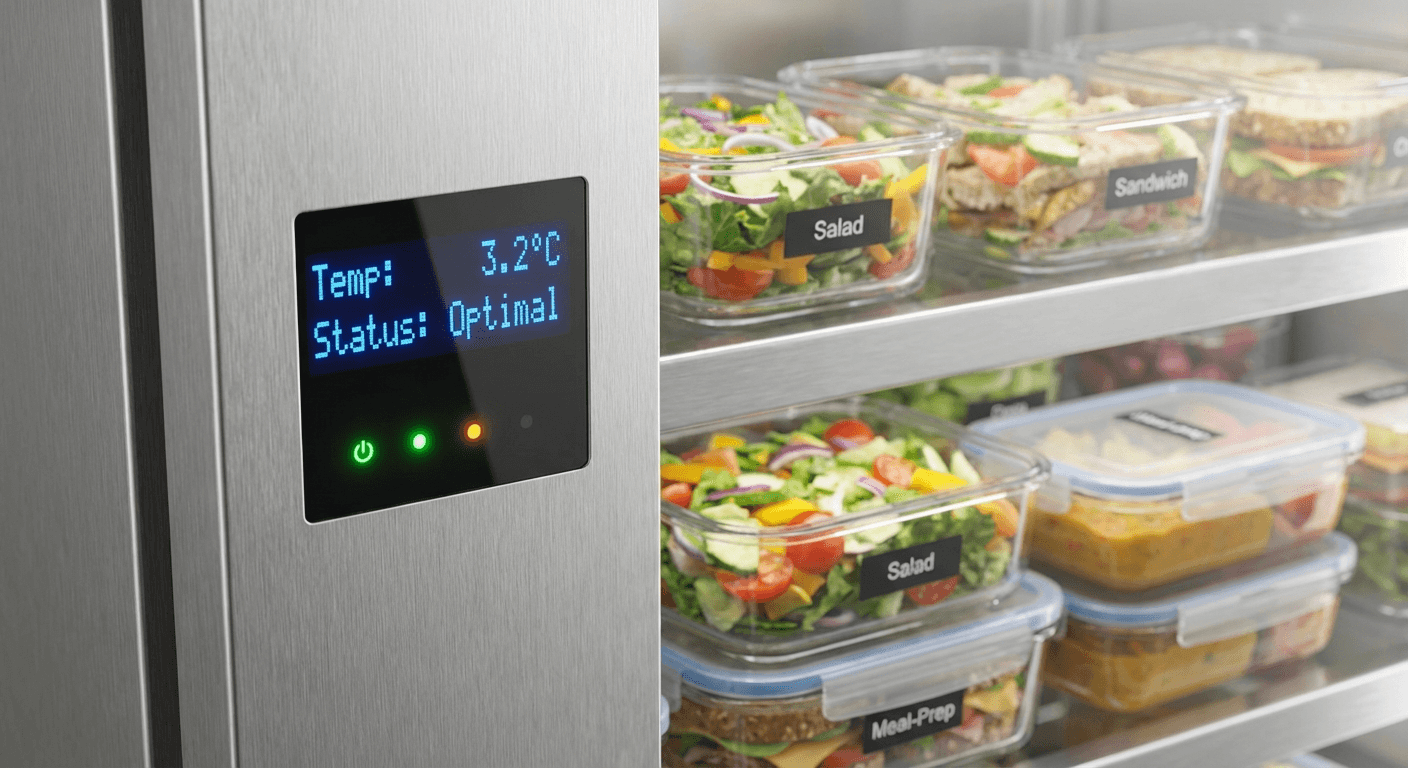
A smart cooler must maintain interior temperatures at or below 41°F at all times. This isn't just a regulatory requirement — it's the physical mechanism by which food safety is preserved. Miss it consistently, and the food becomes unsafe regardless of how fresh it started.
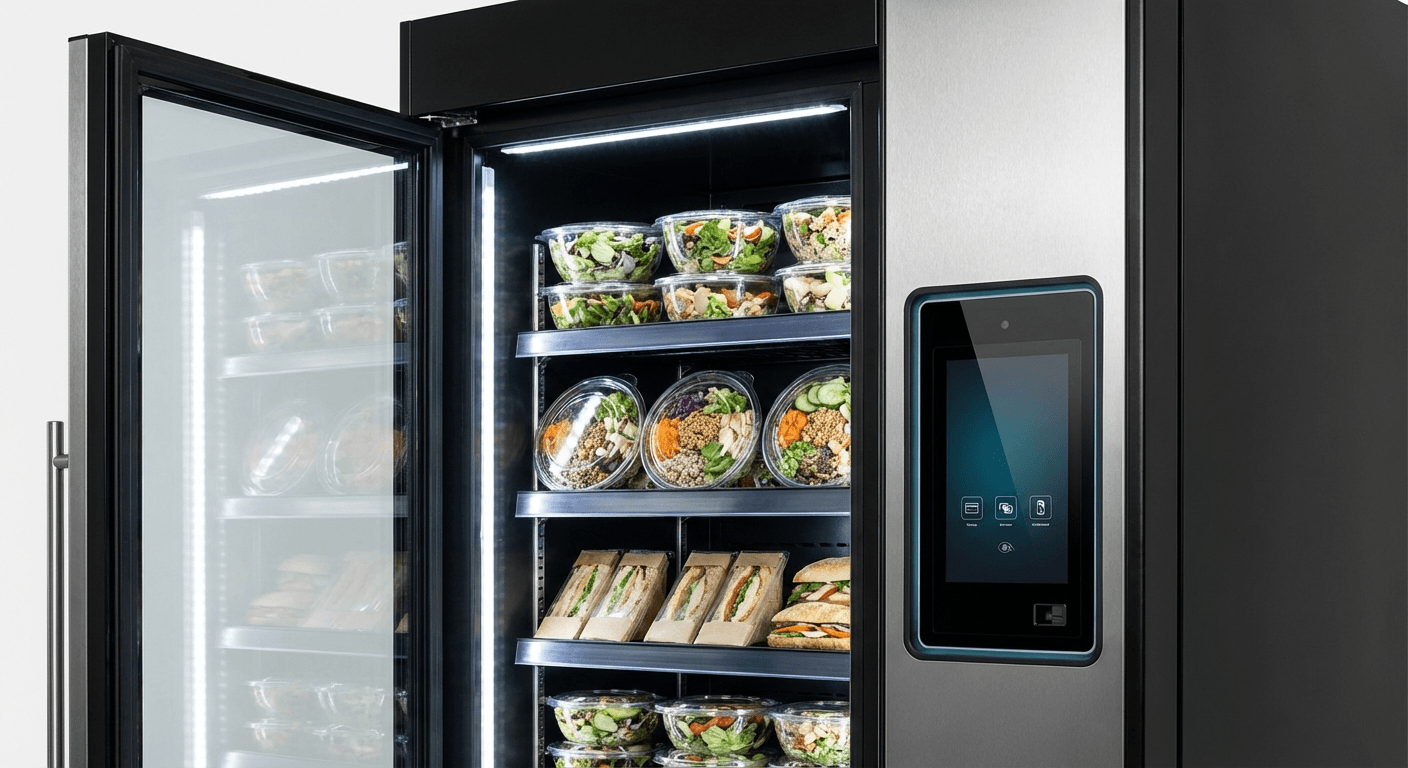
Modern smart coolers use multiple systems to ensure temperature stays in the safe range:
Multi-Sensor Temperature Monitoring
Rather than relying on a single thermometer, commercial smart coolers use multiple temperature sensors at different points within the unit — top shelf, bottom shelf, door area, and compressor area. This ensures complete coverage and catches localized temperature issues (like a malfunctioning shelf zone) that a single sensor might miss.
Temperature readings are recorded continuously — typically every 15 to 30 minutes — and logged in a cloud-based management system accessible to the vendor.
Automated Alert Systems
When temperature exceeds the safe threshold, the monitoring system triggers immediate alerts to the vendor's service team. Response protocols typically require:
- Alert acknowledged within 15–30 minutes
- Remote diagnostic assessment within 30 minutes
- Technician dispatched if the issue can't be resolved remotely
- Product removed if temperature has been out of range for a defined period
Ask any vendor you evaluate: what triggers an alert, who receives it, and what is the documented response protocol?
Variable-Speed Compressor Technology
Modern units use variable-speed compressors that actively maintain temperature rather than cycling on and off like older refrigeration systems. This produces more stable, consistent temperatures with less fluctuation — important for food safety and for food quality (temperature fluctuation accelerates spoilage even within the safe range).
The Full Food Safety Chain
A smart cooler's food safety depends on the entire chain from food preparation to product in the unit — not just the unit's temperature controls.
Kitchen Standards
Food prepared for smart coolers should be produced in a licensed commercial kitchen operating under HACCP (Hazard Analysis and Critical Control Points) protocols. HACCP is the gold standard framework for commercial food safety, requiring:
- Identification and monitoring of critical control points in the food preparation process
- Documented procedures for responding when critical limits are exceeded
- Ongoing record-keeping and verification
Ask vendors: where is the food prepared, and does that kitchen hold HACCP certification? A vendor who can't answer this question clearly is a vendor to avoid.
Cold Chain from Kitchen to Cooler
Food prepared safely in a HACCP kitchen can become unsafe if it's transported and stocked without cold chain maintenance. Proper protocols include:
- Maintaining refrigerated transport from kitchen to facility (no ambient temperature exposure during transit)
- Limiting time food spends outside refrigeration during the stocking process (industry standard: no more than 30 minutes of cumulative exposure)
- Checking and logging unit temperature at every stocking visit
- Removing and discarding any products that have been exposed to unsafe temperatures
Ask vendors: what is their cold chain protocol? Do they log unit temperature at stocking visits?
Expiration Dating and Rotation
All products should have clear expiration dates. Vendor protocols should require:
- Daily review of product expiration dates during stocking visits (or automated expiration tracking if the unit uses RFID)
- Removal of products before their expiration date — not after
- First-in, first-out (FIFO) rotation so older products sell before newer ones
In units with RFID inventory tracking, expiration management is partially automated — the system flags products approaching expiration without requiring manual review. This is a significant food safety improvement over units that rely entirely on manual rotation.
Food Safety in Specific Environments
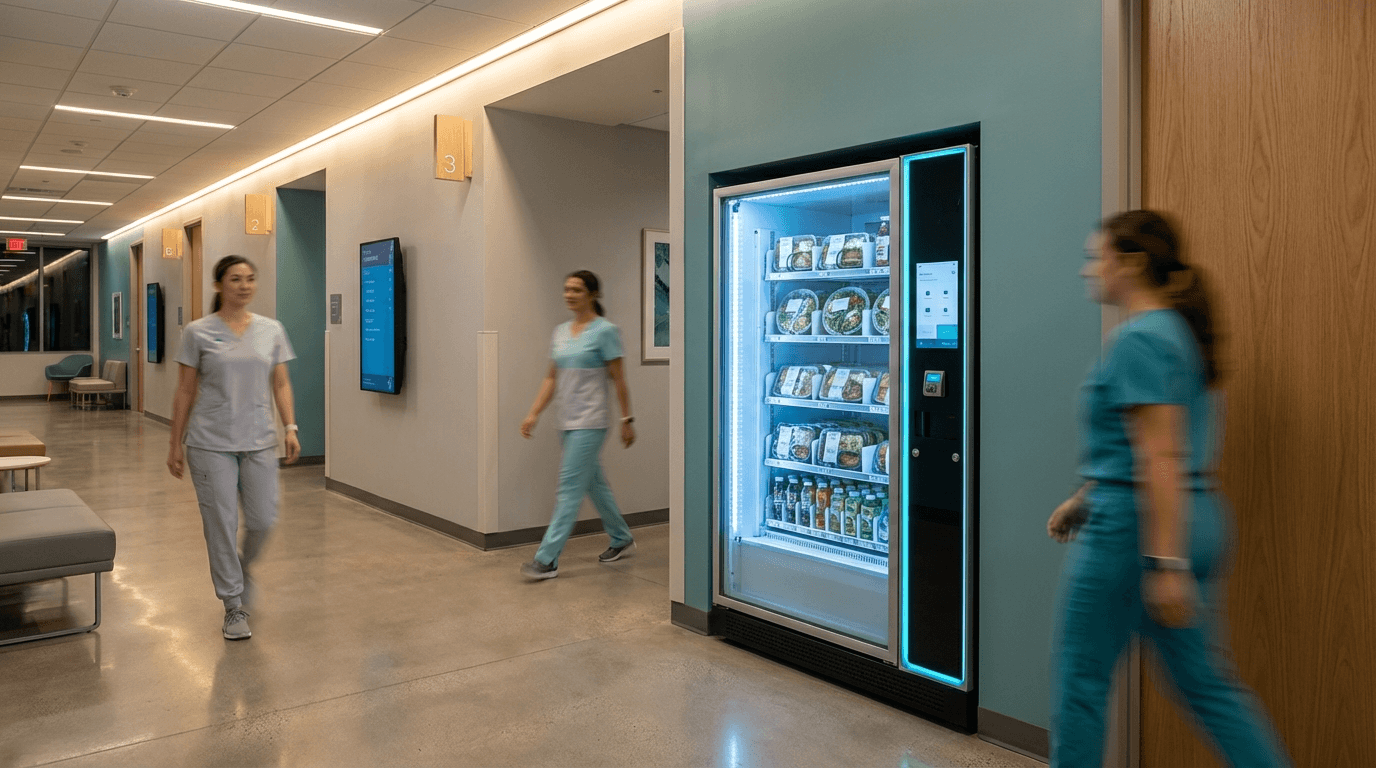
Healthcare Facilities
Hospitals and medical facilities hold food vendors to higher standards than most commercial environments. When evaluating vendors for healthcare placement, require:
- HACCP certification documentation for the food preparation kitchen
- Documented cold chain protocols and temperature logs
- Product liability insurance (minimum $2 million, often more for healthcare)
- Response time guarantees for temperature alerts (under 2 hours for healthcare environments)
- References from other healthcare facilities they currently serve
For more on healthcare-specific food service requirements, see 24/7 hospital food service solutions.
Schools and Universities
Educational institutions — particularly K-12 schools — may have USDA nutrition guidelines and state food safety regulations governing what can be sold on campus. Vendors serving schools should understand these requirements and design menus accordingly.
University environments are generally more flexible, but food safety documentation requirements from campus dining offices are common.
Outdoor or Non-Climate-Controlled Spaces
Smart coolers placed in areas without climate control — loading docks, warehouses, outdoor pavilions — face higher ambient temperatures, particularly in Atlanta's summer heat. This increases compressor workload and the risk of temperature excursions.
For these placements, verify that the unit is rated for the ambient temperature range of the environment, and confirm that the vendor's temperature monitoring is calibrated to account for higher ambient conditions.
What to Require from Any Smart Cooler Vendor
Use this checklist when evaluating vendors:
Food preparation:
- [ ] HACCP-certified kitchen with documentation available on request
- [ ] Licensed commercial kitchen (state or local license visible)
- [ ] Documented preparation procedures for high-risk items
Cold chain:
- [ ] Refrigerated transport protocol with no ambient exposure windows
- [ ] Temperature logged at each stocking visit
- [ ] Written cold chain policy available
Unit monitoring:
- [ ] Continuous (automated) temperature monitoring, not manual daily checks
- [ ] Multiple sensors per unit
- [ ] Automated alerts with documented response protocol
- [ ] Cloud-based log accessible to facility management on request
Product rotation:
- [ ] Clear expiration dates on all products
- [ ] FIFO rotation protocol
- [ ] Expiration tracking (manual or RFID-assisted)
Insurance and liability:
- [ ] Product liability insurance certificate (minimum $2M general liability)
- [ ] Documented process for product recall notification if needed
Regulatory compliance:
- [ ] Health department registration/permit for vending operations (required in Georgia)
- [ ] Compliance with local county health department food safety regulations
Georgia-Specific Requirements
In Georgia, commercial vending operations must comply with food safety regulations administered by the Georgia Department of Agriculture and local county health departments. Smart cooler vendors operating in Atlanta-area facilities should hold appropriate permits.
As a facility manager, you're not responsible for the vendor's compliance — but confirming that vendors operate within regulatory requirements protects your organization from liability exposure if a food safety incident occurs.
What Replenished Markets Does
At Replenished Markets, every smart cooler we operate includes:
- HACCP-compliant food preparation from licensed Atlanta-area kitchens
- Continuous automated temperature monitoring with 24/7 alerts
- Cold chain documentation from kitchen to cooler
- Daily product rotation and expiration management
- Full product liability insurance
- Compliance with Georgia Department of Agriculture requirements
We make temperature logs and food safety documentation available to facilities on request — particularly useful for healthcare clients with their own compliance reporting requirements.
Contact us to learn more about our food safety practices and schedule a site assessment. You can also review our overview of what is a smart cooler for more context on the technology.