Smart Cooler Payment Options: The Complete Guide for 2026
Smart cooler payment options have become a significant factor in whether employees actually use a fresh food vending program — or walk past it. The wrong payment setup creates friction. Friction kills adoption. An underutilized smart cooler is a program that fails on its core purpose.
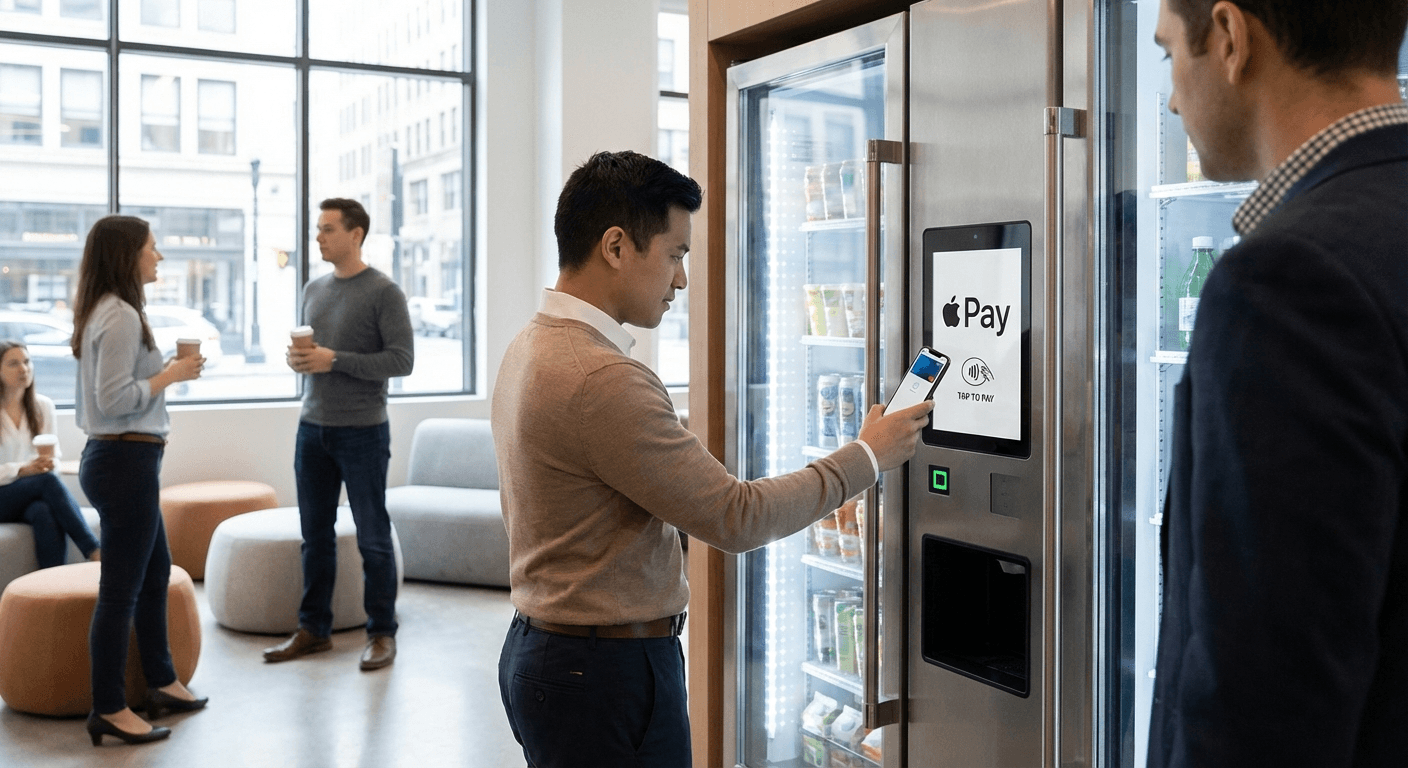
In 2026, the baseline expectation for any commercial payment experience is tap-to-pay with a mobile wallet or contactless card. Employees carry these payment methods everywhere. They use them at coffee shops, on transit, and at grocery checkouts. When they arrive at a smart cooler that requires cash, they move on.
This guide covers the full range of payment options available in modern smart coolers, what creates the best employee experience, and what to require when evaluating vendors.
Why Payment Experience Determines Program Success
The relationship between payment friction and vending adoption is direct. Studies of vending technology adoption consistently show that payment options are among the top factors affecting whether employees use a machine regularly.
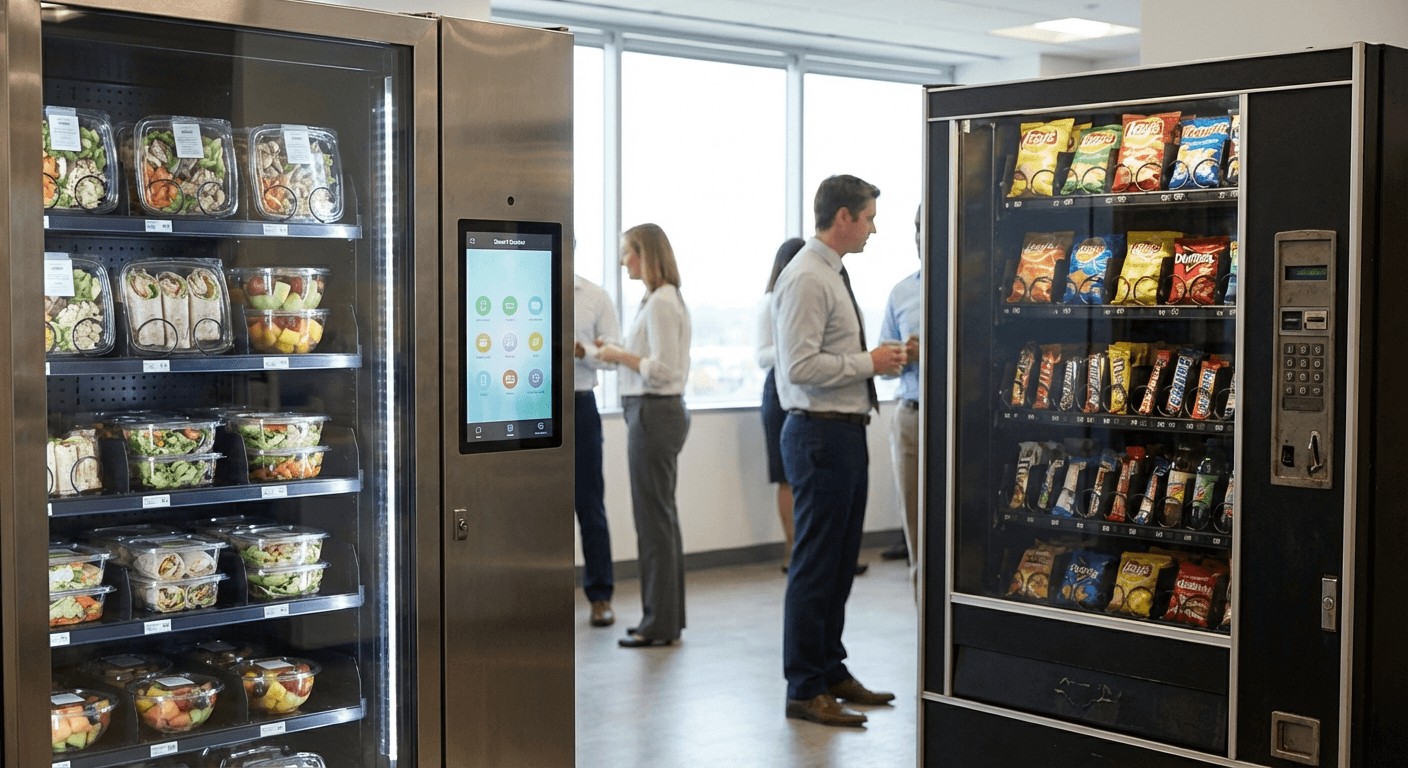
Traditional vending machines failed on this dimension because:
- Cash and coin requirements excluded employees who don't carry them
- Card readers frequently malfunctioned
- No mobile wallet support meant employees had to find their physical card
- Slow payment processes created frustration during short breaks
Smart coolers built with modern payment infrastructure eliminate all of these problems. The transaction experience should be faster than paying for coffee at Starbucks.
Core Payment Options for Smart Coolers
Contactless Card Payment (Tap-to-Pay)
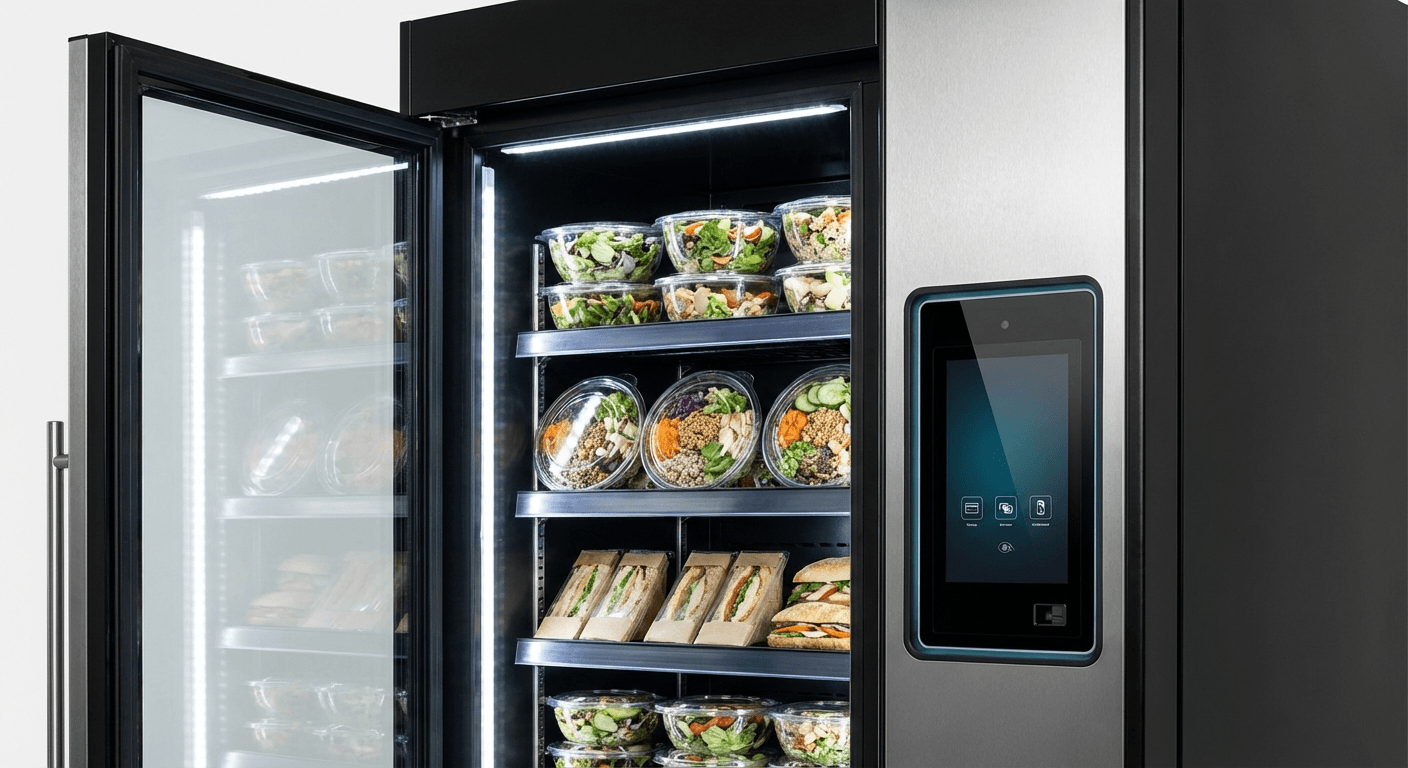
The most universally accessible cashless option. Any credit or debit card with NFC (Near Field Communication) capability works — tap the card to the reader, payment completes in under 2 seconds.
Penetration of NFC-capable cards is high among working adults. This should be the baseline payment method for any smart cooler program in 2026.
What to verify: Does the reader accept all major networks (Visa, Mastercard, Amex, Discover)? Is the reader NFC-compliant to the latest EMV standard? Does it accept international cards?
Apple Pay and Google Pay
Mobile wallet payments through iOS and Android are the fastest-growing payment method among working adults. The experience is frictionless: face ID or fingerprint unlock, hold the phone to the reader, done.
For employees who rarely carry a physical card (increasingly common, particularly among younger workers), mobile wallet acceptance is the difference between using the cooler or not.
What to verify: Does the payment terminal support both Apple Pay and Google Pay? Are there any compatibility gaps with specific device models?
Chip-and-Swipe Card (EMV)
Standard chip-and-swipe as a fallback for cards without contactless capability. This is increasingly a secondary method as NFC adoption grows, but it remains important for accessibility.
Note: Magnetic stripe-only card acceptance (swipe without chip) is being phased out by major card networks. A terminal that accepts chip transactions (either contact or contactless) is required.
Employee Badge and Corporate Account Integration
For corporate campuses and facilities with badged access systems, badge payment integration is a significant quality-of-life improvement. Employees tap their existing employee ID to pay — no separate payment card required.
This integration also enables:
- Meal subsidy programs: Employers can load a daily or weekly food allowance onto employee accounts, reducing out-of-pocket cost and increasing program adoption
- Usage reporting by employee: HR teams can track participation in wellness or benefit programs
- Seamless experience: One card (the badge they're already carrying) handles access and food payment
Setting up badge integration requires coordination between the vendor and your HR/facilities systems team. It's not complex for most modern badge systems, but it does require planning.
What to verify: What badge systems does the vendor support? What data does badge payment generate, and who has access to it?
Mobile App Pre-Ordering
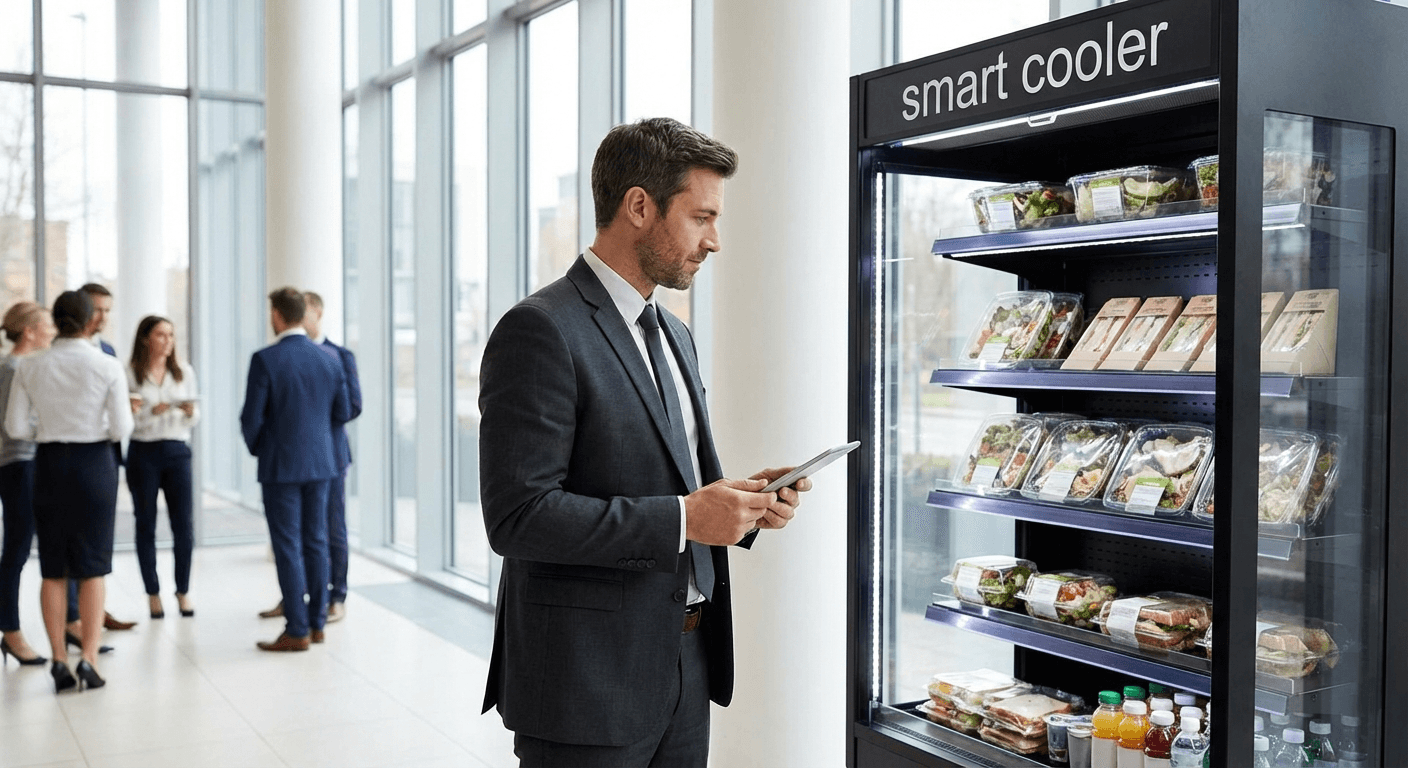
Some smart cooler platforms offer a companion mobile app that allows employees to:
- Browse available items before walking to the cooler
- Pre-order and pay from their phone
- Receive pickup confirmation when their order is ready
- Review purchase history and nutritional information
This feature is particularly useful in high-traffic environments where wait times at the cooler can build during peak periods. It also supports employees who want to plan their meals rather than decide on the spot.
What to verify: Does the app require account creation, or can users purchase as a guest? Is the app maintained and actively developed, or is it a legacy product with limited support?
Cash (Legacy)
Including cash acceptance as a fallback is a legitimate consideration for facilities with a workforce segment that regularly uses cash — some manufacturing plants, for example, or facilities with a significant population that doesn't carry bank cards.
However, cash handling adds operational complexity: the vendor must collect and reconcile cash, the unit needs cash management hardware, and the user experience is slower and less reliable.
For most corporate and healthcare environments in 2026, cash-only or cash-primary users are a small enough minority that the added operational complexity doesn't justify it. Assess your specific workforce before requiring cash capability.
PCI Compliance: The Security Requirement
Any smart cooler that processes card payments must comply with PCI DSS (Payment Card Industry Data Security Standard). This is a non-negotiable requirement, not an optional add-on.
PCI compliance ensures that:
- Card data is encrypted at the point of capture and never stored in readable form on the device
- Payment processing happens through certified secure channels
- Regular security assessments are conducted on payment systems
Ask every vendor you evaluate for their PCI compliance status. They should be able to provide documentation or reference their payment processor's certifications. Vendors who are vague about PCI compliance are a security risk.
Payment Accessibility for All Users
A payment system that works for most employees but fails for some isn't acceptable as the sole food access option in a facility.
Consider:
- Employees without smartphones: Contactless card acceptance covers this group
- Employees without credit/debit cards: Requires either cash acceptance or a facility-managed prepaid program
- Employees with physical limitations: Is the card reader at an accessible height? Can users with limited hand dexterity complete a tap payment easily?
- International employees: Does the reader accept international Visa and Mastercard cards?
ADA compliance for payment terminal height and interface accessibility is a requirement, not a consideration. Verify this during site assessment.
What to Require When Evaluating Vendors
When assessing smart cooler vendors on payment capability, require:
Mandatory:
- [ ] NFC contactless card acceptance (Visa, Mastercard, Amex, Discover)
- [ ] Apple Pay support
- [ ] Google Pay support
- [ ] EMV chip card as fallback
- [ ] PCI DSS compliance documentation
- [ ] ADA-compliant terminal placement
Strongly recommended:
- [ ] Mobile app with pre-order capability
- [ ] Badge/corporate account integration capability
- [ ] Usage reporting by payment method
Ask about:
- [ ] Cash acceptance if relevant to your workforce
- [ ] Meal subsidy or corporate account funding mechanism
- [ ] Payment history reporting for employee wellness programs
Payment Options and Program Adoption: The Data
Facilities that upgrade from cash-only or limited-payment traditional vending to modern smart coolers with full cashless options consistently report significant increases in utilization. This is expected — you've removed the primary barrier for a large portion of the potential user base.
For programs designed as employee benefits or wellness initiatives, the payment experience directly affects whether the benefit achieves its stated purpose. A benefit that employees can't easily access is a benefit that fails.
Get a Payment Technology Assessment
Replenished Markets' smart coolers support all major cashless payment methods including contactless cards, Apple Pay, Google Pay, and employee badge integration. Our payment terminals are PCI compliant, NFC-enabled, and designed for fast, frictionless transactions.
Contact us to schedule a consultation and see the payment experience firsthand. You can also explore what is a smart cooler for a complete technology overview.